What does Lamentations 3:38 mean?
"Out of the mouth of the most High proceedeth not evil and good?" - Lamentations 3:38

Lamentations 3:38 in the King James Version of the Bible reads: "Out of the mouth of the most High proceedeth not evil and good?"
Lamentations is a book in the Old Testament that is traditionally attributed to the prophet Jeremiah. The book is a collection of five poetic laments expressing grief and sorrow over the destruction of Jerusalem and the suffering of the people of Judah. The verse in question comes from the third chapter, in which Jeremiah reflects on the suffering and devastation that has befallen the people and wrestles with the meaning of this suffering in relation to the nature and character of God.
The verse presents a profound theological question about the nature of God and the problem of evil. It suggests that both evil and good do not come from the mouth of the Most High, or God. This raises questions about the source and origin of evil, as well as the role of divine providence in the face of suffering and injustice.
It is important to consider the context of this verse within the larger passage and the book of Lamentations as a whole. The book is a lament over the destruction of Jerusalem, the exile of the people, and the suffering and anguish that they endure. The author directly addresses God and the question of why such devastation has been allowed to happen. The verse reflects the author's deep struggle with the existence of evil and the apparent absence of divine intervention.
The theological and philosophical implications of this verse are significant. It touches on the age-old question of theodicy, which is the attempt to reconcile the existence of evil and suffering with the existence of a benevolent and all-powerful God. The verse seems to question whether God is the source of both good and evil, or whether evil exists independently of God.
One possible interpretation of this verse is that it reflects the belief in the sovereignty of God. In this view, everything that happens, including both good and evil, is ultimately under the control of God. This does not mean that God is the source of evil, but rather that nothing happens without God allowing it to happen. This raises challenging questions about the nature of human free will and the problem of moral responsibility in the face of a providential God.
Another interpretation is that the verse is a rhetorical device used to express the perplexity and anguish of the author in the face of suffering and destruction. It reflects the human struggle to understand and make sense of the world, particularly in the midst of suffering and injustice. The author may be wrestling with the apparent contradiction between the belief in a good and just God and the reality of evil and suffering in the world.
Symbolically, the verse can be seen as a reflection of the human condition. It speaks to the universal experience of grappling with the existence of evil and the search for meaning and purpose in the midst of suffering. It acknowledges the human tendency to question and doubt, even in the context of faith and devotion.
In conclusion, Lamentations 3:38 is a verse that raises profound theological and philosophical questions about the nature of God and the problem of evil. It reflects the author's deep struggle with the existence of suffering and the apparent absence of divine intervention. The verse invites readers to confront the complex and challenging realities of the world, and to wrestle with the ultimate questions of human existence.
Have questions about Lamentations 3:38?
Dive deeper into this scripture with Bible Chat — an AI-powered tool for exploring God's Word through conversation. Ask questions, get context, and grow in your understanding of the Bible.
Get Our Apps


Lamentations 3:38 Artwork

Lamentations 3:38 - "Out of the mouth of the most High proceedeth not evil and good?"

"Out of the mouth of the most High proceedeth not evil and good?" - Lamentations 3:38

Lamentations 3:8 - "Also when I cry and shout, he shutteth out my prayer."
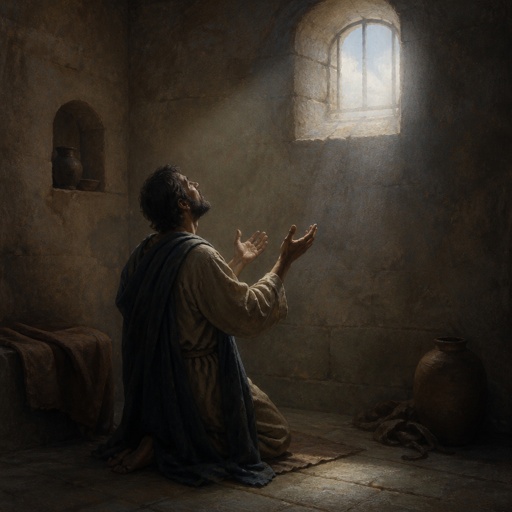
"Also when I cry and shout, he shutteth out my prayer." - Lamentations 3:8

Lamentations 3:13

Lamentations 3:1-18

Lamentations 3:31 - "For the Lord will not cast off for ever:"

Jeremiah 48:38 - "There shall be lamentation generally upon all the housetops of Moab, and in the streets thereof: for I have broken Moab like a vessel wherein is no pleasure, saith the LORD."

Lamentations 3:23 - "They are new every morning: great is thy faithfulness."

Lamentations 5:3 - "We are orphans and fatherless, our mothers are as widows."

Lamentations 3:36 - "To subvert a man in his cause, the Lord approveth not."

Lamentations 3:3 - "Surely against me is he turned; he turneth his hand against me all the day."

Lamentations 3:27 - "It is good for a man that he bear the yoke in his youth."

Lamentations 3:47 - "Fear and a snare is come upon us, desolation and destruction."

Lamentations 3:19 - "Remembering mine affliction and my misery, the wormwood and the gall."

Lamentations 3:34 - "To crush under his feet all the prisoners of the earth,"

Lamentations 3:50 - "Till the LORD look down, and behold from heaven."

Lamentations 3:37 - "¶ Who is he that saith, and it cometh to pass, when the Lord commandeth it not?"

Lamentations 3:29 - "He putteth his mouth in the dust; if so be there may be hope."

Lamentations 3:2 - "He hath led me, and brought me into darkness, but not into light."

Lamentations 3:21 - "This I recall to my mind, therefore have I hope."

Lamentations 3:45 - "Thou hast made us as the offscouring and refuse in the midst of the people."

Lamentations 3:49 - "Mine eye trickleth down, and ceaseth not, without any intermission,"

Lamentations 3:20 - "My soul hath them still in remembrance, and is humbled in me."

Lamentations 3:35 - "To turn aside the right of a man before the face of the most High,"

Lamentations 3:46 - "All our enemies have opened their mouths against us."

Lamentations 3:63 - "Behold their sitting down, and their rising up; I am their musick."

Lamentations 3:33 - "For he doth not afflict willingly nor grieve the children of men."

Lamentations 3:65 - "Give them sorrow of heart, thy curse unto them."

Lamentations 3:66 - "Persecute and destroy them in anger from under the heavens of the LORD."