What does Judges 8:5 mean?
"And he said unto the men of Succoth, Give, I pray you, loaves of bread unto the people that follow me; for they be faint, and I am pursuing after Zebah and Zalmunna, kings of Midian." - Judges 8:5
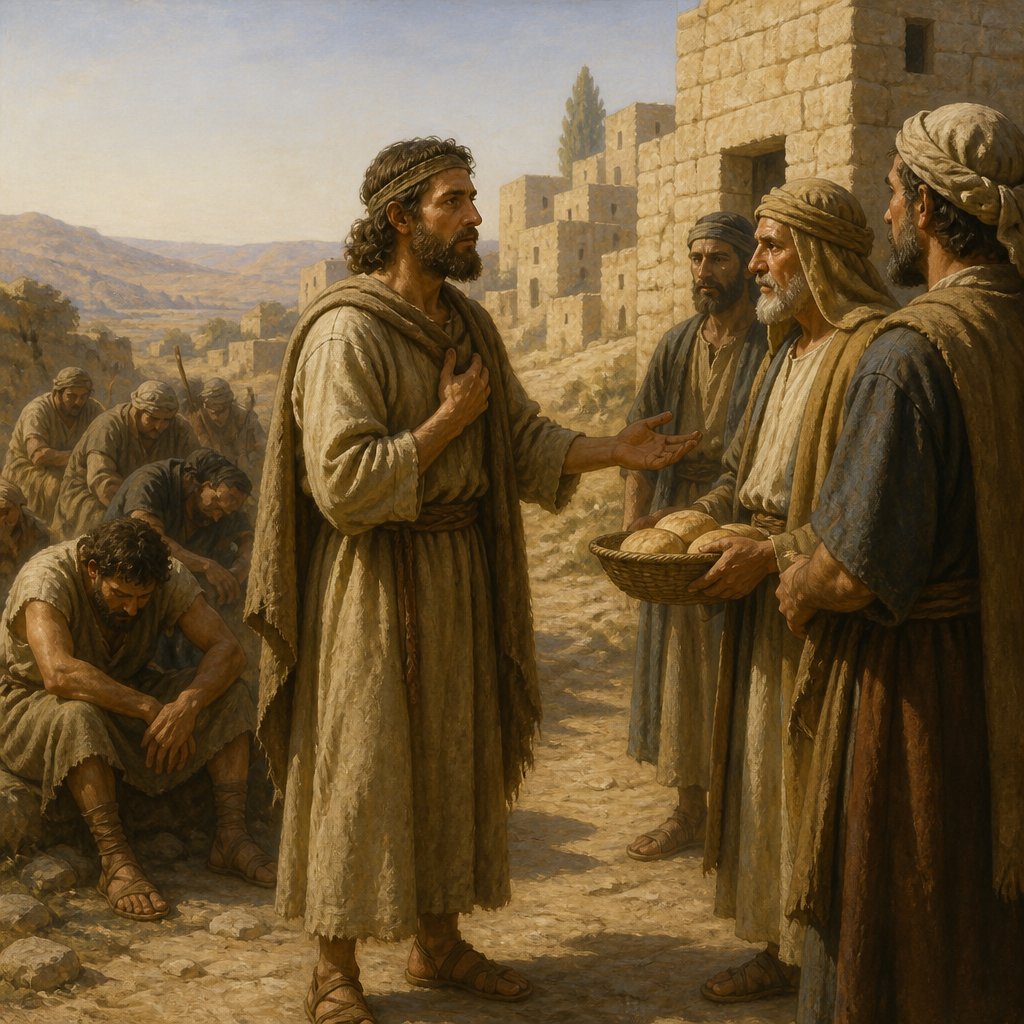
In the book of Judges, chapter 8, verse 5, the King James Version (KJV) of the Bible reads: "And he said unto the men of Succoth, Give, I pray you, loaves of bread unto the people that follow me; for they be faint, and I am pursuing after Zebah and Zalmunna, kings of Midian."
This verse appears in the context of the story of Gideon, a judge of Israel who led the Israelites in battle against the Midianites. Gideon and his men were pursuing the kings of Midian, Zebah and Zalmunna, after a decisive victory over the Midianite army.
The verse reveals Gideon's request for assistance from the men of Succoth. Gideon and his men were weary from their pursuit of the Midianite kings, and he asked the men of Succoth for loaves of bread to sustain his followers. The men of Succoth, however, refused to help Gideon and his men, demonstrating a lack of support and compassion in a time of need.
The verse communicates several important themes that are central to the narrative of the book of Judges and the broader biblical story. One of the key themes presented in this verse is the significance of hospitality and compassion. Gideon's request for bread reflects the basic human need for sustenance and the value of showing kindness and generosity to those in need. The refusal of the men of Succoth to provide bread highlights their lack of compassion and their failure to demonstrate hospitality to their fellow Israelites. This theme underscores the importance of caring for others and the moral obligation to offer assistance to those who are in need.
Another theme evident in this verse is the idea of leadership and the responsibilities of those in positions of power. Gideon, as a leader and judge of Israel, was responsible for guiding and protecting his people. His request for bread for his weary followers emphasizes his concern for their well-being and his commitment to supporting and caring for his troops. In contrast, the response of the men of Succoth exposes their lack of respect for Gideon's authority and their refusal to support his efforts in pursuing the Midianite kings. This theme reflects the concept of righteous leadership and the expectations of loyalty and cooperation within the community of believers.
Furthermore, this verse also carries symbolic significance within the broader biblical narrative. The bread requested by Gideon represents not only physical sustenance but also spiritual nourishment. In the New Testament, Jesus Christ is described as the "bread of life" (John 6:35), and the act of sharing bread holds deep symbolic meaning in the Christian tradition. Gideon's request for bread can be seen as a precursor to the spiritual nourishment offered by Christ to all who follow him.
The refusal of the men of Succoth to provide bread can also be interpreted symbolically as a rejection of God's chosen leader and an act of disloyalty to the broader community of Israel. This theme is relevant to the larger narrative of the book of Judges, which depicts a cycle of disobedience, conflict, and restoration among the Israelites. The refusal of the men of Succoth to support Gideon reflects a recurring pattern of discord and lack of unity within the nation of Israel, illustrating the consequences of division and selfishness.
In conclusion, Judges 8:5 conveys important themes related to compassion, leadership, and spiritual symbolism within the biblical narrative. The verse serves as a poignant reminder of the moral obligations of hospitality and support for others, as well as the responsibilities of leaders within the community of believers. It also carries symbolic significance in its portrayal of the broader spiritual nourishment offered by Christ and the consequences of disunity and disobedience within the faith community. Overall, this verse offers valuable insights into the moral and spiritual values upheld in the biblical tradition and provides timeless lessons for readers seeking guidance and understanding in their own lives.
Have questions about Judges 8:5?
Dive deeper into this scripture with Bible Chat — an AI-powered tool for exploring God's Word through conversation. Ask questions, get context, and grow in your understanding of the Bible.
Get Our Apps


Judges 8:5 Artwork
Judges 8:5 - "And he said unto the men of Succoth, Give, I pray you, loaves of bread unto the people that follow me; for they be faint, and I am pursuing after Zebah and Zalmunna, kings of Midian."
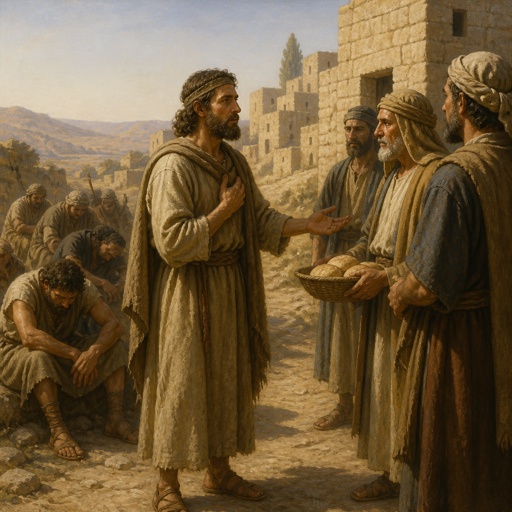
"And he said unto the men of Succoth, Give, I pray you, loaves of bread unto the people that follow me; for they be faint, and I am pursuing after Zebah and Zalmunna, kings of Midian." - Judges 8:5

Judges 5:8 - "They chose new gods; then was war in the gates: was there a shield or spear seen among forty thousand in Israel?"
"They chose new gods; then was war in the gates: was there a shield or spear seen among forty thousand in Israel?" - Judges 5:8

1 Samuel 8:5 - "And said unto him, Behold, thou art old, and thy sons walk not in thy ways: now make us a king to judge us like all the nations."

Judges 5:7

Judges 9:8-15

John 8:15 - "Ye judge after the flesh; I judge no man."

Judges 10:5 - "And Jair died, and was buried in Camon."

Judges 12:8 - "¶ And after him Ibzan of Beth-lehem judged Israel."

Judges 5:5 - "The mountains melted from before the LORD, even that Sinai from before the LORD God of Israel."

Judges 5:1 - "Then sang Deborah and Barak the son of Abinoam on that day, saying,"

Judges 2:5 - "And they called the name of that place Bochim: and they sacrificed there unto the LORD."

Judges 8:17 - "And he beat down the tower of Penuel, and slew the men of the city."

Judges 8:29 - "And Jerubbaal the son of Joash went and dwelt in his own house."

Proverbs 8:16 - "By me princes rule, and nobles, even all the judges of the earth."

Judges 5:20 - "They fought from heaven; the stars in their courses fought against Sisera."

Judges 5:22 - "Then were the horsehoofs broken by the means of the pransings, the pransings of their mighty ones."

Judges 8:13 - "¶ And Gideon the son of Joash returned from battle before the sun was up,"

Judges 8:8 - "¶ And he went up thence to Penuel, and spake unto them likewise: and the men of Penuel answered him as the men of Succoth had answered him."

"And Jair died, and was buried in Camon." - Judges 10:5

Psalms 7:8 - "The LORD shall judge the people: judge me, O LORD, according to my righteousness, and according to mine integrity that is in me."

Judges 5:29 - "Her wise ladies answered her, yea, she returned answer to herself,"

Judges 5:10 - "Speak, ye that ride on white asses, ye that sit in judgment, and walk by the way."

Judges 5:2 - "Praise ye the LORD for the avenging of Israel, when the people willingly offered themselves."

Judges 1:5 - "And they found Adoni-bezek in Bezek: and they fought against him, and they slew the Canaanites and the Perizzites."

1 Corinthians 5:12 - "For what have I to do to judge them also that are without? do not ye judge them that are within?"

Judges 2:8 - "And Joshua the son of Nun, the servant of the LORD, died, being an hundred and ten years old."

Judges 3:5 - "¶ And the children of Israel dwelt among the Canaanites, Hittites, and Amorites, and Perizzites, and Hivites, and Jebusites:"

Judges 5:18 - "Zebulun and Naphtali were a people that jeoparded their lives unto the death in the high places of the field."