What does Judges 8:13 mean?
"¶ And Gideon the son of Joash returned from battle before the sun was up," - Judges 8:13
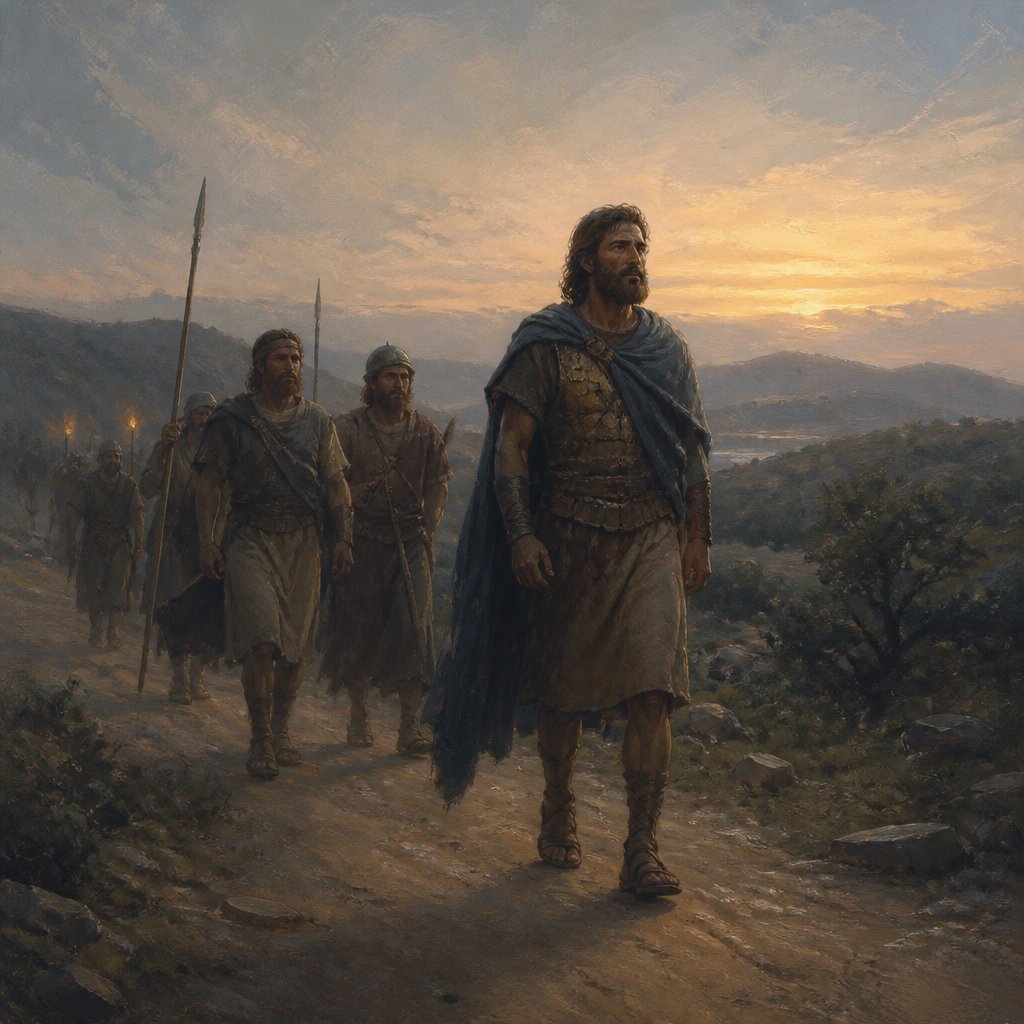
"Then Gideon the son of Joash returned from battle before the sun was up."
The book of Judges is a historical account of the Israelites during a time when they were ruled by various leaders, known as judges, before the establishment of the monarchy. Gideon, also known as Jerubbaal, was one of these judges, chosen by God to deliver the Israelites from the oppression of the Midianites. In Judges 8:13, we find Gideon returning from battle, having just defeated the armies of Midian.
The context of this verse is important in understanding its significance. Gideon's victory over the Midianites was a crucial moment in the history of the Israelites, as it marked the end of their oppression and the beginning of a period of peace and prosperity. Gideon's leadership and military prowess played a crucial role in delivering his people from their enemies, and this verse marks the culmination of his success in battle.
One of the key themes of this verse is the concept of divine intervention. Throughout the book of Judges, we see how God raises up various individuals to deliver the Israelites from their enemies. Gideon is one such individual, chosen by God to lead his people to victory. The fact that Gideon returned from battle before the sun was up underscores the idea that it was God's power and presence that ultimately secured the victory for the Israelites. This theme of divine intervention is central to the biblical narrative and serves as a reminder of God's faithfulness and sovereignty.
Another theme present in this verse is the idea of leadership and bravery. Gideon's willingness to confront the Midianite army with a greatly outnumbered force demonstrated his courage and determination. His leadership and strategic prowess were essential in achieving the victory, and this verse serves as a tribute to his achievements. Gideon's actions exemplify the qualities of a strong and fearless leader, and his obedience to God's call illustrates the importance of faith and trust in God's plan.
Symbolism also plays a significant role in this verse. The return of Gideon before the sun was up can be seen as a symbol of the dawn of a new era for the Israelites. The darkness of oppression and conflict was lifted, and a new day of freedom and peace was beginning. The rising of the sun can be interpreted as a metaphor for the revelation of God's deliverance and the promise of a brighter future for the Israelites.
Furthermore, Gideon's victory can be seen as a foreshadowing of the ultimate deliverance brought by Jesus Christ. Throughout the Old Testament, we see how God raises up various leaders and judges to rescue his people from their enemies. Gideon's victory is one example of this pattern, but it also points to the ultimate deliverance that would be achieved through the sacrifice of Jesus Christ. As Christians, we can look to Gideon's triumph as a reminder of God's faithfulness and his ultimate plan for redemption.
In conclusion, Judges 8:13 captures a significant moment in the history of the Israelites, as Gideon returns from battle having secured a decisive victory over the Midianites. This verse encompasses themes of divine intervention, leadership, and symbolism, and serves as a testament to God's sovereignty and faithfulness. Gideon's triumph ultimately points to the greater deliverance achieved through Jesus Christ, and it continues to be a source of inspiration and encouragement for believers today.
Have questions about Judges 8:13?
Dive deeper into this scripture with Bible Chat — an AI-powered tool for exploring God's Word through conversation. Ask questions, get context, and grow in your understanding of the Bible.
Get Our Apps


Judges 8:13 Artwork

Judges 8:13 - "¶ And Gideon the son of Joash returned from battle before the sun was up,"
"¶ And Gideon the son of Joash returned from battle before the sun was up," - Judges 8:13

Judges 13:8 - "¶ Then Manoah intreated the LORD, and said, O my Lord, let the man of God which thou didst send come again unto us, and teach us what we shall do unto the child that shall be born."

Judges 9:8-15

Judges 2:13 - "And they forsook the LORD, and served Baal and Ashtaroth."

Judges 13:13 - "And the angel of the LORD said unto Manoah, Of all that I said unto the woman let her beware."

Judges 12:13 - "¶ And after him Abdon the son of Hillel, a Pirathonite, judged Israel."

John 8:15 - "Ye judge after the flesh; I judge no man."

Judges 12:8 - "¶ And after him Ibzan of Beth-lehem judged Israel."

Judges 18:13 - "And they passed thence unto mount Ephraim, and came unto the house of Micah."

Judges 8:17 - "And he beat down the tower of Penuel, and slew the men of the city."

Judges 8:29 - "And Jerubbaal the son of Joash went and dwelt in his own house."

Proverbs 8:16 - "By me princes rule, and nobles, even all the judges of the earth."

Judges 13:3 make the Angel of the Lord male

Judges 8:8 - "¶ And he went up thence to Penuel, and spake unto them likewise: and the men of Penuel answered him as the men of Succoth had answered him."

Judges 13:25 - "And the Spirit of the LORD began to move him at times in the camp of Dan between Zorah and Eshtaol."

Psalms 96:13 - "Before the LORD: for he cometh, for he cometh to judge the earth: he shall judge the world with righteousness, and the people with his truth."

Psalms 7:8 - "The LORD shall judge the people: judge me, O LORD, according to my righteousness, and according to mine integrity that is in me."

Judges 13:2 - "¶ And there was a certain man of Zorah, of the family of the Danites, whose name was Manoah; and his wife was barren, and bare not."

Judges 2:8 - "And Joshua the son of Nun, the servant of the LORD, died, being an hundred and ten years old."

"And they forsook the LORD, and served Baal and Ashtaroth." - Judges 2:13

Judges 13:24 - "¶ And the woman bare a son, and called his name Samson: and the child grew, and the LORD blessed him."

Judges 10:13 - "Yet ye have forsaken me, and served other gods: wherefore I will deliver you no more."

Gideon's ephod in Judges 8:29 and peoplw worshipping him

"¶ And after him Ibzan of Beth-lehem judged Israel." - Judges 12:8

Judges 18:8 - "And they came unto their brethren to Zorah and Eshtaol: and their brethren said unto them, What say ye?"

Romans 14:13 - "Let us not therefore judge one another any more: but judge this rather, that no man put a stumblingblock or an occasion to fall in his brother's way."

Judges 13:21 - "But the angel of the LORD did no more appear to Manoah and to his wife. Then Manoah knew that he was an angel of the LORD."

"Ye judge after the flesh; I judge no man." - John 8:15

"¶ And after him Abdon the son of Hillel, a Pirathonite, judged Israel." - Judges 12:13