What does Judges 6:12 mean?
"And the angel of the LORD appeared unto him, and said unto him, The LORD is with thee, thou mighty man of valour." - Judges 6:12
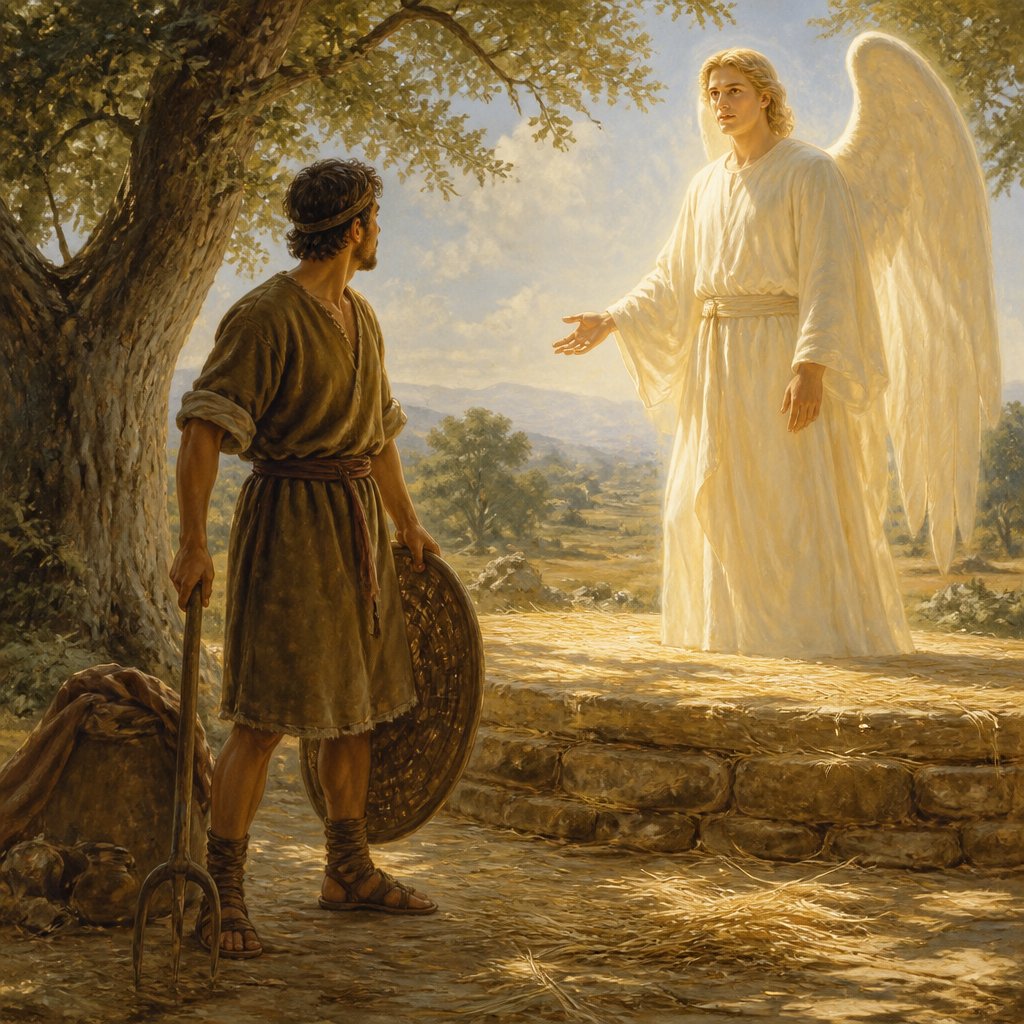
The verse Judges 6:12 from the King James Version of the Bible reads, "And the angel of the Lord appeared unto him, and said unto him, The Lord is with thee, thou mighty man of valour."
This verse is a part of the Old Testament book of Judges, which depicts the tumultuous time in Israel's history following the exodus from Egypt. The period of the Judges is characterized by the cycle of sin, oppression, repentance, and deliverance. In this specific verse, the angel of the Lord appears to Gideon, a man who will later be chosen by God to deliver the Israelites from the oppression of the Midianites.
The appearance of the angel of the Lord is significant in this verse as it signifies the divine intervention in the affairs of Israel. The angel's greeting to Gideon, "The Lord is with thee, thou mighty man of valour," is a declaration of God's presence and power in the life of Gideon. This encounter serves as a call to Gideon to rise up and take on the role that God has prepared for him, despite his initial feelings of inadequacy.
The themes present in this verse are the sovereignty of God, divine calling, and God's presence with His chosen people. The sovereignty of God is evident in the fact that the angel of the Lord appears to Gideon, marking him as a chosen vessel for God's purposes. The divine calling of Gideon is also highlighted, as the angel's words convey a message of purpose and destiny for Gideon. Additionally, the assurance of God's presence with Gideon as he embarks on his mission is a recurring theme throughout the Bible, emphasizing the faithfulness of God to His people.
The context of this verse is important for understanding its significance. At the time of Gideon's call, the Israelites were suffering under the oppression of the Midianites, who had ravaged the land, destroyed crops, and impoverished the people. In the midst of this crisis, Gideon is presented as an unlikely hero—a humble farmer from the tribe of Manasseh. His response to the angel's declaration reveals his feelings of inadequacy and unworthiness for the task set before him. However, the angel's words serve to reassure Gideon of God's presence and empowerment in fulfilling his calling.
The symbolism in this verse is rich and multi-layered. The appearance of the angel of the Lord serves as a symbol of divine intervention and supernatural communication. The angel's message to Gideon, addressing him as a "mighty man of valour," symbolizes the potential for greatness and courage that Gideon possesses, despite his perceived limitations. This symbolism speaks to the universal truth that God often chooses the weak and the humble to accomplish His purposes, thereby demonstrating His own strength and glory.
In conclusion, Judges 6:12 from the King James Version of the Bible holds deep significance within the larger narrative of the book of Judges and the overarching themes of the Bible as a whole. This verse emphasizes the sovereignty of God, the divine calling of His chosen vessels, and the assurance of His presence with them. The encounter between the angel of the Lord and Gideon serves as a powerful example of God's ability to transform ordinary individuals into instruments of His will, and it encourages believers to trust in His faithfulness and provision as they answer His call.
Have questions about Judges 6:12?
Dive deeper into this scripture with Bible Chat — an AI-powered tool for exploring God's Word through conversation. Ask questions, get context, and grow in your understanding of the Bible.
Get Our Apps


Judges 6:12 Artwork

Judges 6:12 - "And the angel of the LORD appeared unto him, and said unto him, The LORD is with thee, thou mighty man of valour."
"And the angel of the LORD appeared unto him, and said unto him, The LORD is with thee, thou mighty man of valour." - Judges 6:12

Judges 12:6 - "Then said they unto him, Say now Shibboleth: and he said Sibboleth: for he could not frame to pronounce it right. Then they took him, and slew him at the passages of Jordan: and there fell at that time of the Ephraimites forty and two thousand."

Judges 12:12 - "And Elon the Zebulonite died, and was buried in Aijalon in the country of Zebulun."

Judges 12:11 - "¶ And after him Elon, a Zebulonite, judged Israel; and he judged Israel ten years."

Judges 6:6 - "And Israel was greatly impoverished because of the Midianites; and the children of Israel cried unto the LORD."

Judges 12:8 - "¶ And after him Ibzan of Beth-lehem judged Israel."

Judges 12:10 - "Then died Ibzan, and was buried at Beth-lehem."

Judges 12:13 - "¶ And after him Abdon the son of Hillel, a Pirathonite, judged Israel."

"And Elon the Zebulonite died, and was buried in Aijalon in the country of Zebulun." - Judges 12:12

Job 12:17 - "He leadeth counsellors away spoiled, and maketh the judges fools."

1 Corinthians 6:2 - "Do ye not know that the saints shall judge the world? and if the world shall be judged by you, are ye unworthy to judge the smallest matters?"

Judges 12:7 - "And Jephthah judged Israel six years. Then died Jephthah the Gileadite, and was buried in one of the cities of Gilead."

Judges 4:12 - "And they shewed Sisera that Barak the son of Abinoam was gone up to mount Tabor."

Judges 9:12 - "Then said the trees unto the vine, Come thou, and reign over us."

Judges 3:6 - "And they took their daughters to be their wives, and gave their daughters to their sons, and served their gods."

Luke 6:37 - "Judge not, and ye shall not be judged: condemn not, and ye shall not be condemned: forgive, and ye shall be forgiven:"

Judges 17:12 - "And Micah consecrated the Levite; and the young man became his priest, and was in the house of Micah."

1 Corinthians 5:12 - "For what have I to do to judge them also that are without? do not ye judge them that are within?"

Judges 6:36-40 – Gideon’s fleece test for dew.

John 12:47 - "And if any man hear my words, and believe not, I judge him not: for I came not to judge the world, but to save the world."

Judges 12:15 - "And Abdon the son of Hillel the Pirathonite died, and was buried in Pirathon in the land of Ephraim, in the mount of the Amalekites."

Judges 12:14 - "And he had forty sons and thirty nephews, that rode on threescore and ten ass colts: and he judged Israel eight years."

Judges 6:7 - "¶ And it came to pass, when the children of Israel cried unto the LORD because of the Midianites,"

Psalms 141:6 - "When their judges are overthrown in stony places, they shall hear my words; for they are sweet."

"¶ And after him Ibzan of Beth-lehem judged Israel." - Judges 12:8

"Then died Ibzan, and was buried at Beth-lehem." - Judges 12:10

2 Chronicles 19:6 - "And said to the judges, Take heed what ye do: for ye judge not for man, but for the LORD, who is with you in the judgment."

"¶ And after him Elon, a Zebulonite, judged Israel; and he judged Israel ten years." - Judges 12:11

Judges 6:23 - "And the LORD said unto him, Peace be unto thee; fear not: thou shalt not die."