What does Judges 4:14 mean?
"And Deborah said unto Barak, Up; for this is the day in which the LORD hath delivered Sisera into thine hand: is not the LORD gone out before thee? So Barak went down from mount Tabor, and ten thousand men after him." - Judges 4:14
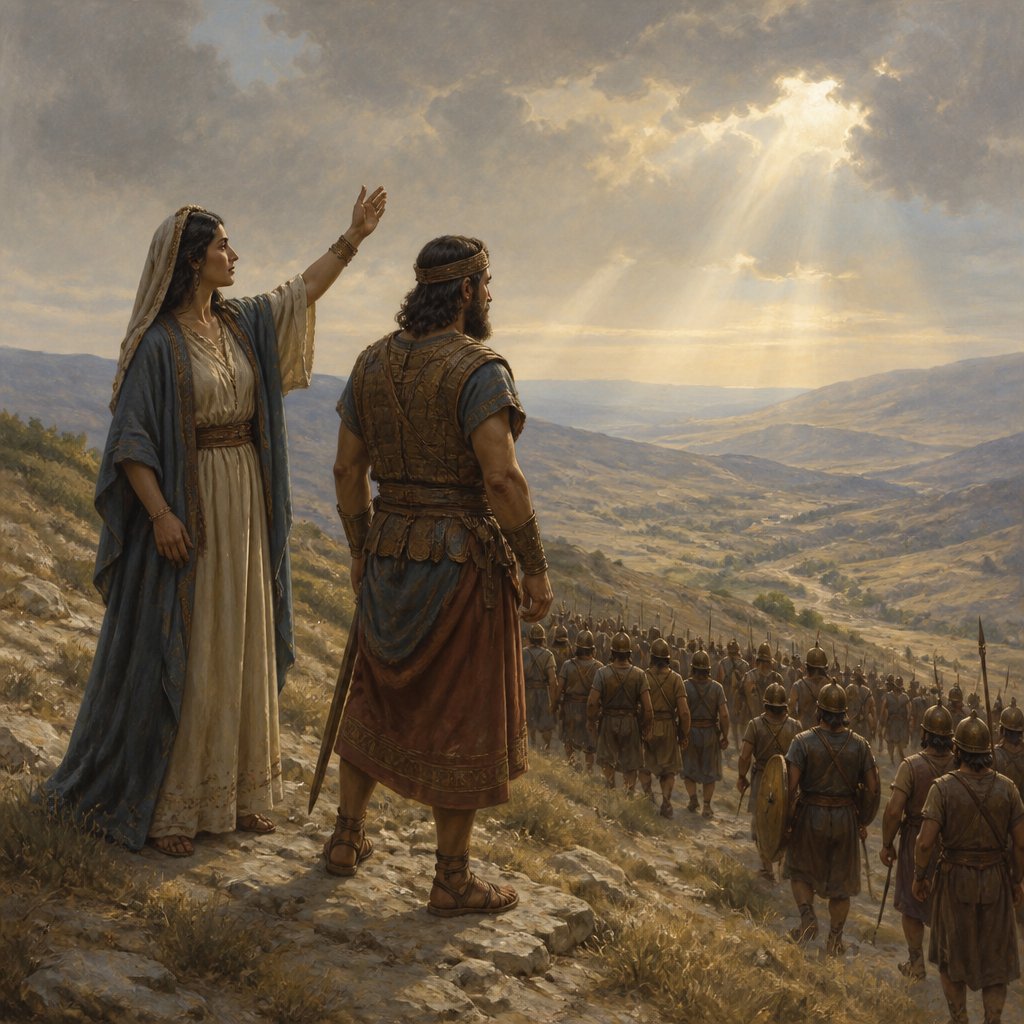
The Bible verse Judges 4:14 in the King James Version reads, "And Deborah said unto Barak, Up; for this is the day in which the Lord hath delivered Sisera into thine hand: is not the Lord gone out before thee? So Barak went down from mount Tabor, and ten thousand men after him."
This verse is found in the book of Judges, which covers the period of history in Israel before the establishment of the monarchy, when the Israelites were ruled by a series of leaders, known as judges, who were raised up by God to deliver them from their enemies. The verse tells the story of the prophetess Deborah encouraging the military leader Barak to go up against the Canaanite general Sisera, who was oppressing the Israelites.
The verse can be analyzed in several ways, hence offering layers of meaning and commentary.
First, this verse reveals the theme of obedience to God's will. Deborah, acting under the inspiration of God, commands Barak to lead the Israelite army into battle against Sisera, assuring him of God's divine intervention in the impending conflict. This illustrates the belief that the Israelites should always act in accordance with God's commands and trust in His deliverance.
The verse also exemplifies the concept of divine intervention and providence. It conveys the idea that the victory over their enemies was not the result of Israel's own military prowess, but rather the direct result of God's action. The emphasis on the Lord's role in delivering Sisera into Barak's hand reinforces the overarching theme in the Bible of God's sovereignty and his willingness to help his chosen people.
Moreover, the verse offers a lesson on faith and leadership. Barak's response to Deborah's command demonstrates his trust in God and his willingness to submit to God's appointed leader. His obedience also serves as an example of righteous leadership, where he heeds the guidance of a prophetess and ultimately fulfills his role as a leader of God's people.
The geographical context of the verse also holds significance. Mount Tabor, from which Barak descends with his army, carries symbolic weight. In the ancient Near East, mountains were often associated with divine encounters and the presence of God. Thus, the imagery of Barak descending from Mount Tabor to confront the enemy underscores the divine mandate of the emerging conflict.
The verse also contains symbolism in the number "ten thousand men." In ancient Hebrew culture, numbers were often used symbolically, and "ten thousand" symbolized completeness and fullness. Therefore, the mention of "ten thousand men" following Barak emphasizes the completeness of the Israelite army and suggests that it was fully equipped and prepared for the upcoming battle.
In conclusion, Judges 4:14 in the King James Version carries deep theological, moral, and historical significance. It emphasizes themes of obedience to God's will, faith, divine intervention, and righteous leadership. The verse also makes use of symbolic imagery and contextual elements to convey its message. By delving into these aspects, one can gain a deeper understanding of the profound meaning and relevance of this verse in the biblical narrative.
Have questions about Judges 4:14?
Dive deeper into this scripture with Bible Chat — an AI-powered tool for exploring God's Word through conversation. Ask questions, get context, and grow in your understanding of the Bible.
Get Our Apps


Judges 4:14 Artwork

Judges 4:14 - "And Deborah said unto Barak, Up; for this is the day in which the LORD hath delivered Sisera into thine hand: is not the LORD gone out before thee? So Barak went down from mount Tabor, and ten thousand men after him."

Judges 4:14-15 (Victory in Battle) “Then Deborah said to Barak, ‘Go! This is the day the Lord has given Sisera into your hands. Has not the Lord gone ahead of you?’ So Barak went down Mount Tabor, followed by ten thousand men.”
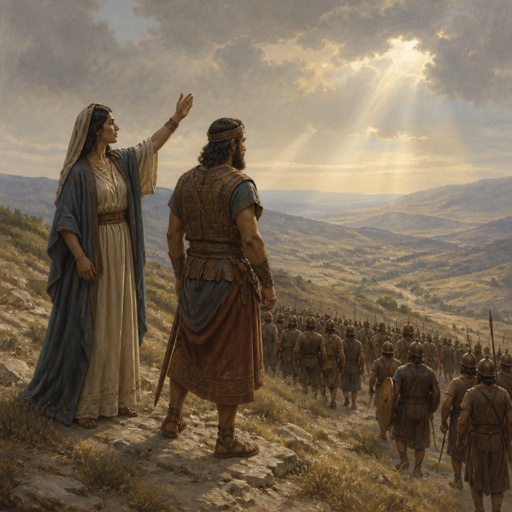
"And Deborah said unto Barak, Up; for this is the day in which the LORD hath delivered Sisera into thine hand: is not the LORD gone out before thee? So Barak went down from mount Tabor, and ten thousand men after him." - Judges 4:14

Judges 14:4 - "But his father and his mother knew not that it was of the LORD, that he sought an occasion against the Philistines: for at that time the Philistines had dominion over Israel."

Judges 4:4

Judges 4:4 - "¶ And Deborah, a prophetess, the wife of Lapidoth, she judged Israel at that time."

Judges 11:14 - "And Jephthah sent messengers again unto the king of the children of Ammon:"

Judges 14:11 - "And it came to pass, when they saw him, that they brought thirty companions to be with him."

Judges 14:1 - "And Samson went down to Timnath, and saw a woman in Timnath of the daughters of the Philistines."

Judges 14:7 - "And he went down, and talked with the woman; and she pleased Samson well."

Judges 3:14 - "So the children of Israel served Eglon the king of Moab eighteen years."

Judges 4:4 - "¶ And Deborah, a prophetess, the wife of Lapidoth, she judged Israel at that time."

Judges 14:14 - "And he said unto them, Out of the eater came forth meat, and out of the strong came forth sweetness. And they could not in three days expound the riddle."
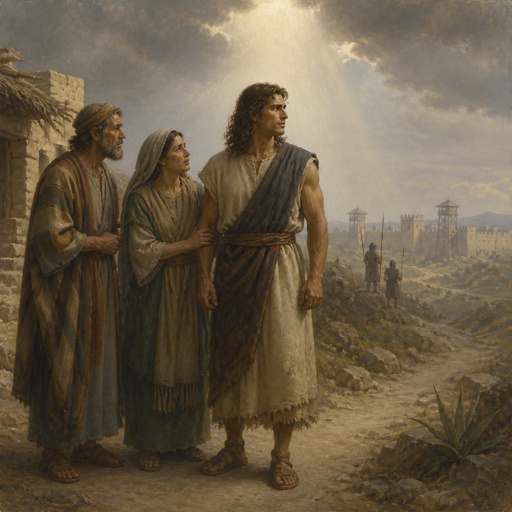
"But his father and his mother knew not that it was of the LORD, that he sought an occasion against the Philistines: for at that time the Philistines had dominion over Israel." - Judges 14:4

Judges 9:14 - "Then said all the trees unto the bramble, Come thou, and reign over us."

"¶ And Deborah, a prophetess, the wife of Lapidoth, she judged Israel at that time." - Judges 4:4

Judges 14:20 - "But Samson's wife was given to his companion, whom he had used as his friend."

James 2:4 - "Are ye not then partial in yourselves, and are become judges of evil thoughts?"

Judges 12:14 - "And he had forty sons and thirty nephews, that rode on threescore and ten ass colts: and he judged Israel eight years."

Judges 4:15 – "The Lord routed Sisera and all his chariots and army by the sword."

Romans 14:13 - "Let us not therefore judge one another any more: but judge this rather, that no man put a stumblingblock or an occasion to fall in his brother's way."

Judges 4:12 - "And they shewed Sisera that Barak the son of Abinoam was gone up to mount Tabor."

Judges 19:14 - "And they passed on and went their way; and the sun went down upon them when they were by Gibeah, which belongeth to Benjamin."

Judges 11:4 - "¶ And it came to pass in process of time, that the children of Ammon made war against Israel."

Judges 4:23 - "So God subdued on that day Jabin the king of Canaan before the children of Israel."

Judges 4:1 - "And the children of Israel again did evil in the sight of the LORD, when Ehud was dead."

Ezekiel 20:4 - "Wilt thou judge them, son of man, wilt thou judge them? cause them to know the abominations of their fathers:"

Judges 10:14 - "Go and cry unto the gods which ye have chosen; let them deliver you in the time of your tribulation."

Judges 20:14 - "But the children of Benjamin gathered themselves together out of the cities unto Gibeah, to go out to battle against the children of Israel."

Judges 14:10 - "¶ So his father went down unto the woman: and Samson made there a feast; for so used the young men to do."