What does Judges 4:11 mean?
"Now Heber the Kenite, which was of the children of Hobab the father in law of Moses, had severed himself from the Kenites, and pitched his tent unto the plain of Zaanaim, which is by Kedesh." - Judges 4:11
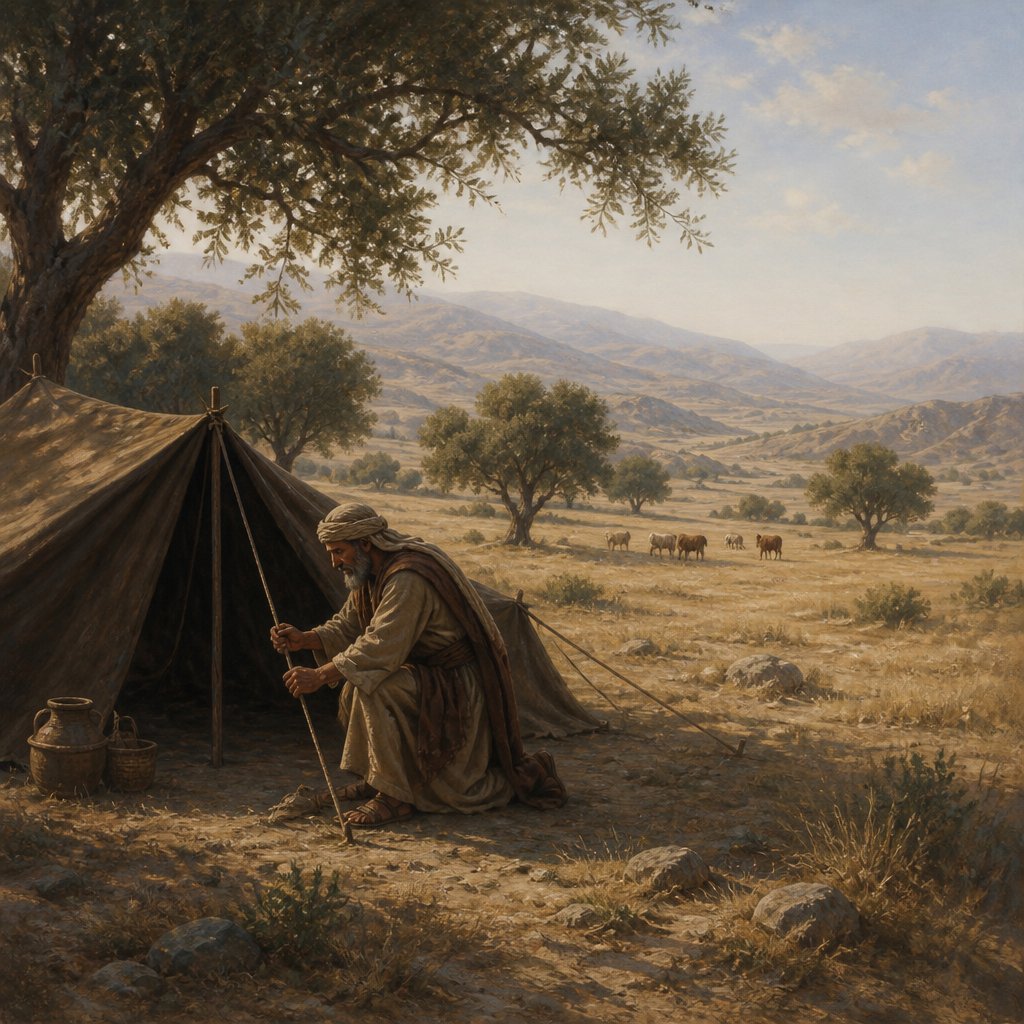
The verse Judges 4:11 from the King James Version of the Bible reads: "Now Heber the Kenite, which was of the children of Hobab the father in law of Moses, had severed himself from the Kenites, and pitched his tent unto the plain of Zaanaim, which is by Kedesh."
This verse is part of the Old Testament book of Judges, which contains accounts of various leaders and judges who governed the people of Israel before the monarchy was established. In this particular verse, we see a mention of Heber the Kenite, who is identified as the son-in-law of Moses's father-in-law, Hobab. Heber had separated himself from the Kenites and had pitched his tent near the plain of Zaanaim by Kedesh.
To understand the deeper meaning and commentary on this verse, it is important to consider the context in which it is placed within the larger narrative of the Book of Judges. The book as a whole deals with the period of Israel's history after the death of Joshua, when the Israelites were settling in the land of Canaan. During this time, the people of Israel repeatedly turned away from God, worshiped foreign gods, and were oppressed by neighboring nations. When the people cried out to God for deliverance, he would raise up individuals known as judges to lead them to victory and freedom. The verse Judges 4:11 plays a part in the story of one of these judges, Deborah.
In the earlier verses of chapter 4, we are introduced to the general Sisera, who had been oppressing the Israelites for twenty years. Deborah, a prophetess and judge of Israel, sends for Barak and instructs him to gather an army and lead an attack against Sisera. The verse in question, Judges 4:11, is part of the narrative that sets the stage for the upcoming battle between the forces of Barak and Sisera.
One of the key themes that can be drawn from this verse and the overall narrative of the Book of Judges is the theme of faithfulness and loyalty. Heber the Kenite's decision to separate himself from his people and settle near Kedesh shows a notable break from his past associations. This act of separation could be interpreted as a form of faithfulness to the Israelites and to their God. It stands in contrast to the faithlessness and unfaithfulness displayed by the Israelites in their continued worship of false gods and their subsequent oppression by Sisera and the Canaanites.
The figure of Heber the Kenite also serves as a symbol of the complex and varied allegiances present in the ancient Near East during this time. His connection to Moses's father-in-law, Hobab, links him to the Israelites, while his distinct separation from the Kenites suggests a shifting loyalty. This symbolizes the political and social dynamics at play in the region, where alliances and loyalties could change rapidly and where individuals and groups had to navigate a web of competing interests.
The geographical references in the verse, such as the plain of Zaanaim and Kedesh, also provide important context for understanding the events that are about to unfold. These specific locations ground the narrative in a tangible and specific historical setting, giving the story a sense of authenticity and realism. At the same time, these places carry symbolic weight as markers of the land that God had promised to the Israelites and as sites of the unfolding drama of deliverance and redemption.
In conclusion, Judges 4:11 from the King James Version of the Bible offers a window into the larger themes of faithfulness, loyalty, and the complex social and political dynamics of the ancient Near East. It sets the stage for the upcoming conflict between the forces of Barak and Sisera and provides important geographical and cultural context for understanding the events that are about to unfold. This verse, like the rest of the Book of Judges, invites readers to contemplate the intricate interplay of human agency and divine intervention and to reflect on the enduring significance of faithfulness in the face of shifting allegiances and political intrigue.
Have questions about Judges 4:11?
Dive deeper into this scripture with Bible Chat — an AI-powered tool for exploring God's Word through conversation. Ask questions, get context, and grow in your understanding of the Bible.
Get Our Apps


Judges 4:11 Artwork

Judges 4:11 - "Now Heber the Kenite, which was of the children of Hobab the father in law of Moses, had severed himself from the Kenites, and pitched his tent unto the plain of Zaanaim, which is by Kedesh."
"Now Heber the Kenite, which was of the children of Hobab the father in law of Moses, had severed himself from the Kenites, and pitched his tent unto the plain of Zaanaim, which is by Kedesh." - Judges 4:11

Judges 11:4 - "¶ And it came to pass in process of time, that the children of Ammon made war against Israel."

Judges 4:4

James 4:11 - "Speak not evil one of another, brethren. He that speaketh evil of his brother, and judgeth his brother, speaketh evil of the law, and judgeth the law: but if thou judge the law, thou art not a doer of the law, but a judge."

"¶ And it came to pass in process of time, that the children of Ammon made war against Israel." - Judges 11:4

Judges 4:4 - "¶ And Deborah, a prophetess, the wife of Lapidoth, she judged Israel at that time."

Isaiah 11:3-4 - "And he shall not judge after the sight of his eyes, neither reprove after the hearing of his ears: But with righteousness shall he judge the poor, and reprove with equity for the meek of the earth: and he shall smite the earth with the rod of his mouth, and with the breath of his lips shall he slay the wicked."

Judges 12:11 - "¶ And after him Elon, a Zebulonite, judged Israel; and he judged Israel ten years."

Isaiah 11:4 - "But with righteousness shall he judge the poor, and reprove with equity for the meek of the earth: and he shall smite the earth with the rod of his mouth, and with the breath of his lips shall he slay the wicked."

1 Corinthians 11:31 - "For if we would judge ourselves, we should not be judged."

Job 31:11 - "For this is an heinous crime; yea, it is an iniquity to be punished by the judges."

Psalms 148:11 - "Kings of the earth, and all people; princes, and all judges of the earth:"

Judges 2:11 - "¶ And the children of Israel did evil in the sight of the LORD, and served Baalim:"

Judges 11:14 - "And Jephthah sent messengers again unto the king of the children of Ammon:"

Judges 4:4 - "¶ And Deborah, a prophetess, the wife of Lapidoth, she judged Israel at that time."

Judges 3:11 - "And the land had rest forty years. And Othniel the son of Kenaz died."

Judges 14:11 - "And it came to pass, when they saw him, that they brought thirty companions to be with him."

"¶ And Deborah, a prophetess, the wife of Lapidoth, she judged Israel at that time." - Judges 4:4

Judges 11:11 - "Then Jephthah went with the elders of Gilead, and the people made him head and captain over them: and Jephthah uttered all his words before the LORD in Mizpeh."

James 2:4 - "Are ye not then partial in yourselves, and are become judges of evil thoughts?"

Judges 11:27 - "Wherefore I have not sinned against thee, but thou doest me wrong to war against me: the LORD the Judge be judge this day between the children of Israel and the children of Ammon."

Judges 17:11 - "And the Levite was content to dwell with the man; and the young man was unto him as one of his sons."

Judges 11:40 - "That the daughters of Israel went yearly to lament the daughter of Jephthah the Gileadite four days in a year."

Judges 11:6 - "And they said unto Jephthah, Come, and be our captain, that we may fight with the children of Ammon."

Judges 4:15 – "The Lord routed Sisera and all his chariots and army by the sword."

Judges 11:28 - "Howbeit the king of the children of Ammon hearkened not unto the words of Jephthah which he sent him."

Judges 1:11 - "And from thence he went against the inhabitants of Debir: and the name of Debir before was Kirjath-sepher:"

John 16:11 - "Of judgment, because the prince of this world is judged."

"¶ And after him Elon, a Zebulonite, judged Israel; and he judged Israel ten years." - Judges 12:11