What does Judges 4:10 mean?
"¶ And Barak called Zebulun and Naphtali to Kedesh; and he went up with ten thousand men at his feet: and Deborah went up with him." - Judges 4:10
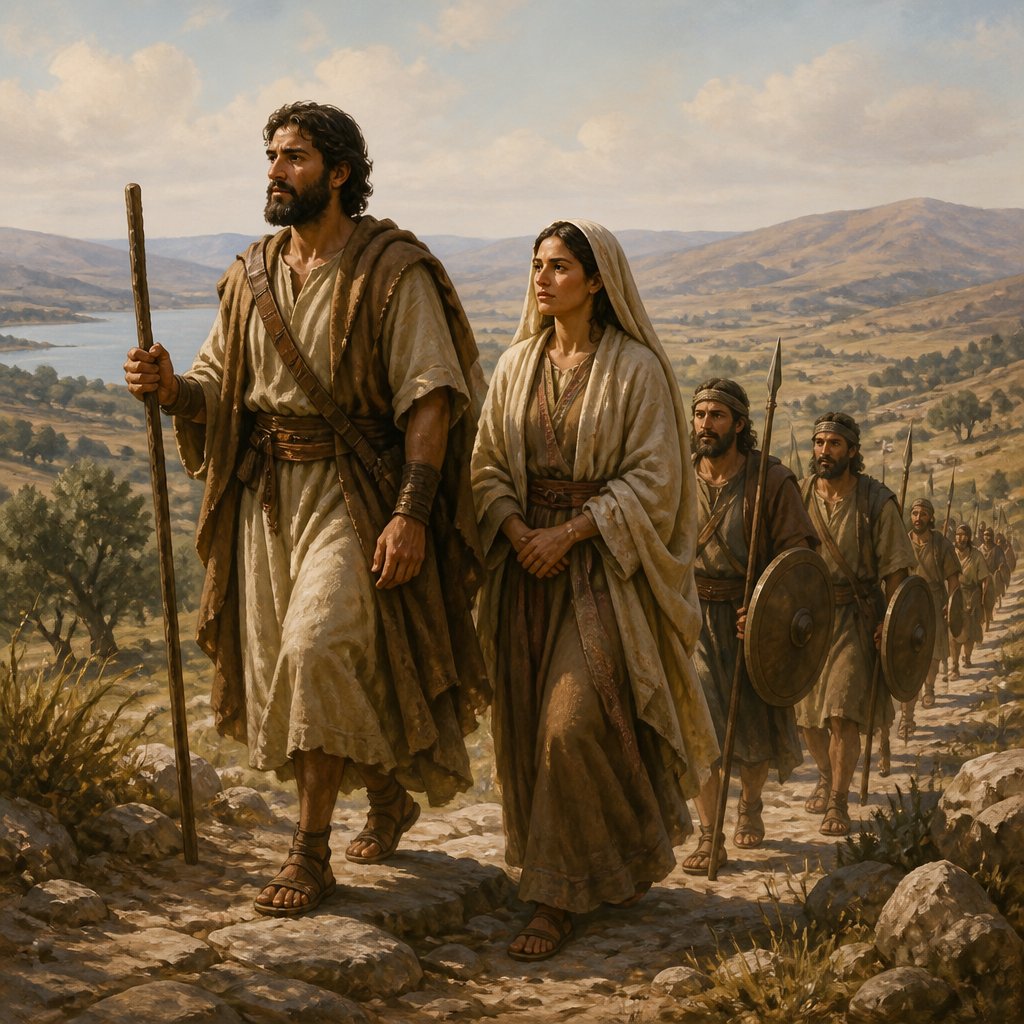
The Book of Judges is a historical and religious text in the Old Testament of the Bible, and it contains stories about the leaders and judges of Israel before the establishment of the monarchy. The verse Judges 4:10 from the King James Version (KJV) reads:
"And Barak called Zebulun and Naphtali to Kedesh; and he went up with ten thousand men at his feet: and Deborah went up with him."
This verse is part of a larger narrative in the Book of Judges, which details the account of the judge Deborah and her role in leading the Israelites to victory over their oppressors. To understand the meaning and commentary of this verse, it is important to consider the themes, context, and symbolism within the broader narrative.
The context of Judges 4:10 is that the Israelites had been oppressed by the Canaanites for twenty years, and Deborah, a prophetess and judge, arose to lead and deliver them from their oppressors. She called upon Barak, a military leader, to gather an army and confront the Canaanite commander Sisera. However, Barak was hesitant to go into battle without Deborah's presence, so she agreed to accompany him.
The themes present in this verse and the broader narrative include leadership, faith, obedience, and the faithfulness of God. Deborah's leadership and wisdom are evident as she calls upon Barak to gather the army, and her willingness to accompany him into battle emphasizes her courage and faith in God. Barak, on the other hand, is initially hesitant and lacking in confidence, but ultimately he obeys Deborah's command and leads the army into battle. The verse also highlights the collaboration between Barak and Deborah, as they work together to fulfill God's plan for the deliverance of the Israelites.
The symbolism in Judges 4:10 is also significant. The gathering of the tribes of Zebulun and Naphtali at Kedesh represents unity and solidarity among the Israelites, as they come together in response to Deborah's call for action. The number "ten thousand men at his feet" may symbolize a powerful and sizeable army, indicating the strength and determination of the Israelites in their struggle for liberation. Deborah's presence with Barak also symbolizes God's assurance and support in the midst of the battle, as she acts as a spiritual guide and leader.
In a broader theological context, this verse and the narrative as a whole exemplify the faithfulness of God in delivering his people from oppression. Despite the Israelites' disobedience and the cycle of sin and judgment that characterizes the period of the judges, God remains faithful to his covenant with Israel. He raises up leaders and judges, such as Deborah and Barak, to guide and deliver his people, demonstrating his mercy and grace even in the midst of their unfaithfulness.
In conclusion, Judges 4:10 from the King James Version contains a rich and profound narrative that speaks to themes of leadership, faith, obedience, and the faithfulness of God. The collaboration between Deborah and Barak, the symbolism of unity and solidarity among the Israelites, and the broader theological implications of God's faithfulness all contribute to a deeper understanding of this verse. It serves as a powerful reminder of God's sovereignty and his redemptive work in the lives of his people.
Have questions about Judges 4:10?
Dive deeper into this scripture with Bible Chat — an AI-powered tool for exploring God's Word through conversation. Ask questions, get context, and grow in your understanding of the Bible.
Get Our Apps


Judges 4:10 Artwork

Judges 4:10 - "¶ And Barak called Zebulun and Naphtali to Kedesh; and he went up with ten thousand men at his feet: and Deborah went up with him."
"¶ And Barak called Zebulun and Naphtali to Kedesh; and he went up with ten thousand men at his feet: and Deborah went up with him." - Judges 4:10

Judges 10:4 - "And he had thirty sons that rode on thirty ass colts, and they had thirty cities, which are called Havoth-jair unto this day, which are in the land of Gilead."

Judges 4:4

Judges 4:4 - "¶ And Deborah, a prophetess, the wife of Lapidoth, she judged Israel at that time."

Judges 10:5 - "And Jair died, and was buried in Camon."

Judges 12:10 - "Then died Ibzan, and was buried at Beth-lehem."

Judges 10:2 - "And he judged Israel twenty and three years, and died, and was buried in Shamir."

Judges 10:3 - "¶ And after him arose Jair, a Gileadite, and judged Israel twenty and two years."

Judges 4:4 - "¶ And Deborah, a prophetess, the wife of Lapidoth, she judged Israel at that time."

"¶ And Deborah, a prophetess, the wife of Lapidoth, she judged Israel at that time." - Judges 4:4

Judges 9:10 - "And the trees said to the fig tree, Come thou, and reign over us."

James 2:4 - "Are ye not then partial in yourselves, and are become judges of evil thoughts?"

Psalms 2:10 - "Be wise now therefore, O ye kings: be instructed, ye judges of the earth."

"And Jair died, and was buried in Camon." - Judges 10:5

Judges 5:10 - "Speak, ye that ride on white asses, ye that sit in judgment, and walk by the way."

Judges 4:15 – "The Lord routed Sisera and all his chariots and army by the sword."

Judges 7:10 - "But if thou fear to go down, go thou with Phurah thy servant down to the host:"

Judges 10:10 - "¶ And the children of Israel cried unto the LORD, saying, We have sinned against thee, both because we have forsaken our God, and also served Baalim."

Judges 4:12 - "And they shewed Sisera that Barak the son of Abinoam was gone up to mount Tabor."

"Then died Ibzan, and was buried at Beth-lehem." - Judges 12:10

Judges 11:4 - "¶ And it came to pass in process of time, that the children of Ammon made war against Israel."

Judges 4:23 - "So God subdued on that day Jabin the king of Canaan before the children of Israel."

Judges 4:1 - "And the children of Israel again did evil in the sight of the LORD, when Ehud was dead."

Ezekiel 20:4 - "Wilt thou judge them, son of man, wilt thou judge them? cause them to know the abominations of their fathers:"

Judges 10:7 - "And the anger of the LORD was hot against Israel, and he sold them into the hands of the Philistines, and into the hands of the children of Ammon."

Judges 10:13 - "Yet ye have forsaken me, and served other gods: wherefore I will deliver you no more."

Judges 16:4 - "¶ And it came to pass afterward, that he loved a woman in the valley of Sorek, whose name was Delilah."

Judges 10:16 - "And they put away the strange gods from among them, and served the LORD: and his soul was grieved for the misery of Israel."

Judges 10:17 - "Then the children of Ammon were gathered together, and encamped in Gilead. And the children of Israel assembled themselves together, and encamped in Mizpeh."