What does Judges 2:9 mean?
"And they buried him in the border of his inheritance in Timnath-heres, in the mount of Ephraim, on the north side of the hill Gaash." - Judges 2:9
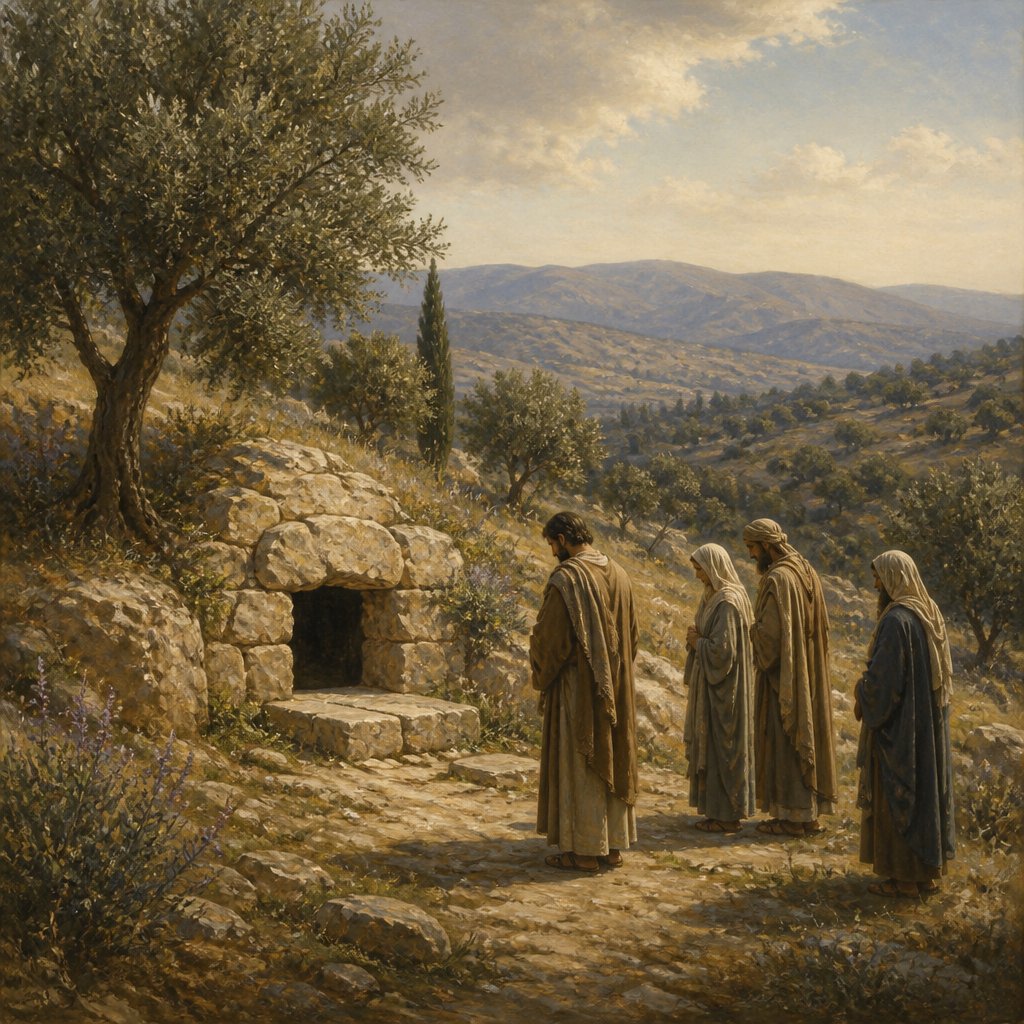
In Judges 2:9, the King James Version of the Bible states, "And they buried him in the border of his inheritance in Timnathheres, in the mount of Ephraim, on the north side of the hill Gaash." This passage may seem relatively straightforward at first glance, but a closer examination reveals layers of meaning, context, and symbolism that provide insight into the broader themes of the book of Judges and the biblical narrative as a whole.
To truly understand and appreciate the significance of this verse, it is essential to first consider its context within the larger narrative of the book of Judges. The book of Judges is situated within the historical and theological framework of the Old Testament, and it is a crucial part of the Deuteronomistic History, which includes the books of Deuteronomy, Joshua, Judges, 1 and 2 Samuel, and 1 and 2 Kings. The book of Judges follows the Israelites' conquest of the Promised Land under the leadership of Joshua and spans a period of approximately 340 years, from the death of Joshua to the rise of the monarchy with King Saul.
The verse in question comes at a pivotal moment in the narrative, as it describes the burial of Joshua, the former leader of the Israelites, in the land of his inheritance. Joshua is a central figure in the Israelites' journey to the Promised Land, and his death marks the end of an era and the beginning of a new chapter in the nation's history. This transition from the leadership of Joshua to the era of the judges is a recurring theme in the book of Judges, and it sets the stage for the cyclical pattern of apostasy, oppression, repentance, and deliverance that characterizes the period of the judges.
The act of burying Joshua in the border of his inheritance in Timnathheres holds profound symbolic significance within the biblical narrative. In ancient Israelite culture, burial practices were deeply meaningful and symbolized the connection between the land, the people, and their ancestral heritage. By burying Joshua in the land of his inheritance, the Israelites were not only honoring his memory and legacy but also reaffirming their own commitment to the covenant and the promises of God. This act serves as a powerful reminder of the faithfulness of God and the importance of preserving their spiritual and cultural heritage for future generations.
Furthermore, the specific location of Joshua's burial, in the mount of Ephraim on the north side of the hill Gaash, holds additional significance within the broader biblical narrative. The tribe of Ephraim was one of the largest and most prominent tribes in Israel, and its territory held strategic importance in the geopolitical landscape of the Promised Land. The mention of the hill Gaash, situated on the north side of Ephraim, further emphasizes the geographical and territorial dimensions of Joshua's burial, underscoring the deep roots of the Israelites in the land that God had promised to them.
From a thematic perspective, the verse also reflects the themes of leadership, inheritance, and continuity that are central to the book of Judges. Joshua's role as a leader and a successor to Moses underscores the importance of faithful and courageous leadership in the face of adversity. His burial in the land of his inheritance further highlights the connection between leadership and the preservation of the land, emphasizing the responsibility of the Israelites to be faithful stewards of the Promised Land.
Moreover, the verse foreshadows the challenges and struggles that the Israelites will face in the period of the judges, as they grapple with issues of faithfulness, idolatry, and the threat of foreign oppression. By situating Joshua's burial within this larger narrative, the verse serves as a sobering reminder of the need for spiritual and moral vigilance in upholding the covenant and resisting the temptations of idolatry and assimilation.
In conclusion, Judges 2:9, while seemingly straightforward on the surface, reveals profound layers of meaning and significance within the broader narrative of the book of Judges and the biblical narrative as a whole. Through its exploration of themes such as leadership, inheritance, continuity, and faithfulness, the verse offers valuable insights into the complex interplay of history, theology, and symbolism that underpin the biblical text. Its rich contextual and thematic resonance invites readers to engage with the text on multiple levels, prompting reflection on the enduring truths and timeless wisdom encapsulated within the biblical narrative.
Have questions about Judges 2:9?
Dive deeper into this scripture with Bible Chat — an AI-powered tool for exploring God's Word through conversation. Ask questions, get context, and grow in your understanding of the Bible.
Get Our Apps


Judges 2:9 Artwork

Judges 2:9 - "And they buried him in the border of his inheritance in Timnath-heres, in the mount of Ephraim, on the north side of the hill Gaash."
"And they buried him in the border of his inheritance in Timnath-heres, in the mount of Ephraim, on the north side of the hill Gaash." - Judges 2:9

Judges 9:8-15

Judges 9:50 - "¶ Then went Abimelech to Thebez, and encamped against Thebez, and took it."

Judges 9:22 - "¶ When Abimelech had reigned three years over Israel,"

Judges 15:9 - "¶ Then the Philistines went up, and pitched in Judah, and spread themselves in Lehi."

Judges 9:39 - "And Gaal went out before the men of Shechem, and fought with Abimelech."

Judges 21:9 - "For the people were numbered, and, behold, there were none of the inhabitants of Jabesh-gilead there."

Judges 9:42 - "And it came to pass on the morrow, that the people went out into the field; and they told Abimelech."

Judges 9:10 - "And the trees said to the fig tree, Come thou, and reign over us."

Judges 9:12 - "Then said the trees unto the vine, Come thou, and reign over us."

Judges 9:47 - "And it was told Abimelech, that all the men of the tower of Shechem were gathered together."

Psalms 98:9 - "Before the LORD; for he cometh to judge the earth: with righteousness shall he judge the world, and the people with equity."

Judges 9:9 - "But the olive tree said unto them, Should I leave my fatness, wherewith by me they honour God and man, and go to be promoted over the trees?"

Judges 9:32 - "Now therefore up by night, thou and the people that is with thee, and lie in wait in the field:"

Judges 9:14 - "Then said all the trees unto the bramble, Come thou, and reign over us."

Judges 2:16 - "¶ Nevertheless the LORD raised up judges, which delivered them out of the hand of those that spoiled them."

Judges 2:31

Judges 9:46 - "¶ And when all the men of the tower of Shechem heard that, they entered into an hold of the house of the god Berith."

Judges 9:21 - "And Jotham ran away, and fled, and went to Beer, and dwelt there, for fear of Abimelech his brother."

Judges 9:30 - "¶ And when Zebul the ruler of the city heard the words of Gaal the son of Ebed, his anger was kindled."

Job 9:24 - "The earth is given into the hand of the wicked: he covereth the faces of the judges thereof; if not, where, and who is he?"

Judges 1:9 - "¶ And afterward the children of Judah went down to fight against the Canaanites, that dwelt in the mountain, and in the south, and in the valley."

Judges 9:41 - "And Abimelech dwelt at Arumah: and Zebul thrust out Gaal and his brethren, that they should not dwell in Shechem."

Judges 9:53 - "And a certain woman cast a piece of a millstone upon Abimelech's head, and all to brake his skull."
Judges 9:2 - "Speak, I pray you, in the ears of all the men of Shechem, Whether is better for you, either that all the sons of Jerubbaal, which are threescore and ten persons, reign over you, or that one reign over you? remember also that I am your bone and your flesh."

Judges 9:55 - "And when the men of Israel saw that Abimelech was dead, they departed every man unto his place."

Judges 20:9 - "But now this shall be the thing which we will do to Gibeah; we will go up by lot against it;"

Judges 9:52 - "And Abimelech came unto the tower, and fought against it, and went hard unto the door of the tower to burn it with fire."

Judges 5:9 - "My heart is toward the governors of Israel, that offered themselves willingly among the people. Bless ye the LORD."