What does Judges 1:6 mean?
"But Adoni-bezek fled; and they pursued after him, and caught him, and cut off his thumbs and his great toes." - Judges 1:6
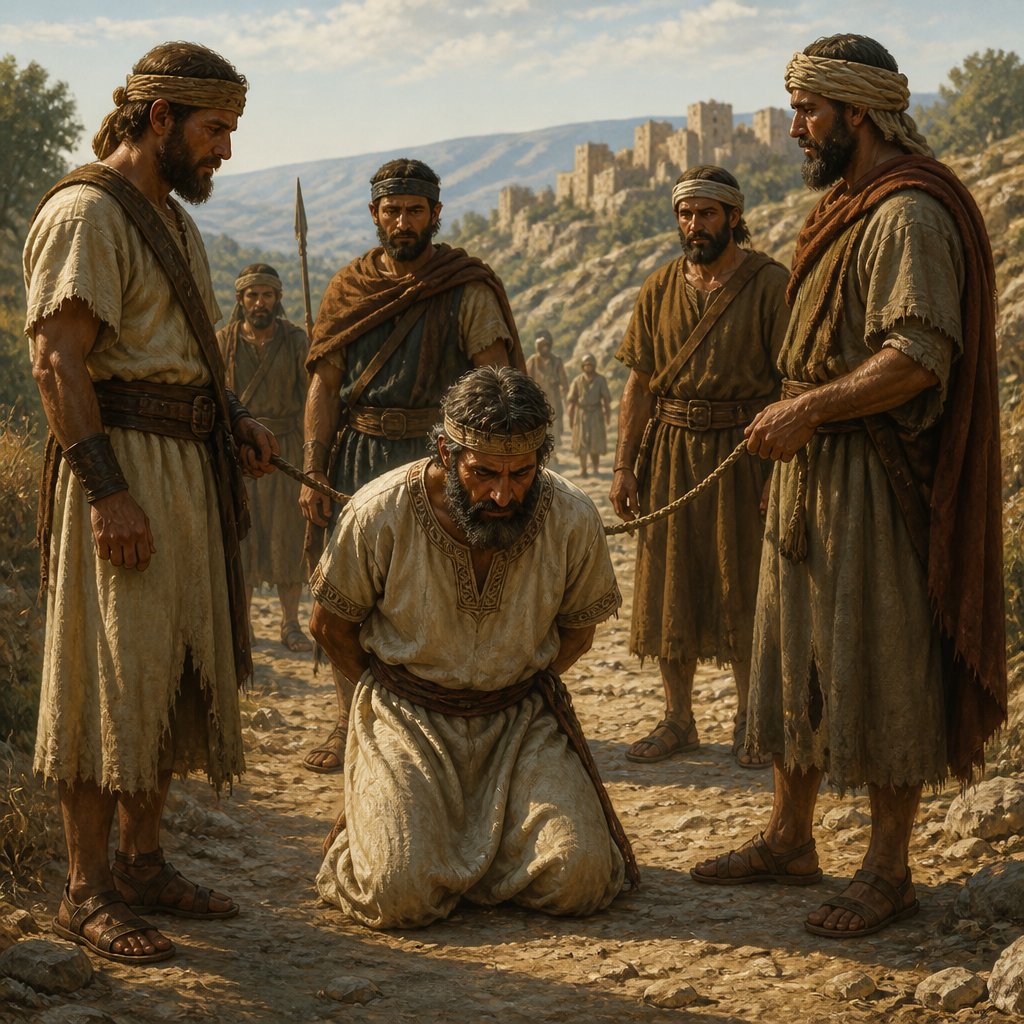
Judges 1:6 in the King James Version reads: "But Adonibezek fled; and they pursued after him, and caught him, and cut off his thumbs and his great toes."
This verse is from the book of Judges in the Old Testament, which describes the period after the Israelites' exodus from Egypt and before the establishment of the monarchy in Israel. The book of Judges is a narrative of the Israelite tribes' struggles to conquer and settle the land of Canaan and the spiritual and moral decline that ensued when they failed to fully drive out the Canaanite inhabitants and their idolatrous practices.
The verse captures a particular moment in this tumultuous period, as it describes the defeat and punishment of Adonibezek, a Canaanite ruler. While this verse may seem violent and brutal, it serves as a stark illustration of the consequences of disobeying God's commands and the brutal nature of warfare in ancient times.
The themes in this verse are abundant and speak to the broader context of the book of Judges. The first theme is the concept of divine retribution. Throughout the book, the Israelites' victories and defeats are often attributed to God's involvement and judgment. In the case of Adonibezek, his punishment is seen as a judgment from God for his own wickedness and the Israelites' rightful victory. This theme highlights the Israelites' understanding of their covenant relationship with God and the consequences of disobedience.
Secondly, the verse speaks to the theme of conquest and settlement. The book of Judges is a narrative of the Israelites' struggles to conquer the land of Canaan, and this verse is a microcosm of that larger story. Adonibezek's defeat represents a small victory in the Israelites' ongoing conquest of the land promised to them by God. However, it also reveals the brutality and violence that accompanied this process, which is a recurring theme throughout the book.
Another theme is justice and vengeance. Adonibezek is not simply defeated in battle, but he is also subjected to a cruel punishment—having his thumbs and toes cut off. This act is seen as retribution for the violence and cruelty he had inflicted on others. It raises questions about the ethical implications of such retaliatory actions and the Israelites' own understanding of justice and morality. It also serves as a cautionary tale about the consequences of unchecked power and the cycle of violence that ensues.
The symbolism in this verse also adds depth to its meaning. The act of cutting off Adonibezek's thumbs and great toes is symbolic of his complete defeat and humiliation. In ancient warfare, the loss of these body parts would have rendered him incapable of fighting or fleeing, symbolizing his powerlessness and subjugation. This act serves as a vivid illustration of the harsh realities of ancient warfare and conquest, but it also serves as a symbolic representation of the Israelites' ultimate victory over their enemies.
In conclusion, Judges 1:6 is a powerful and evocative verse that captures the themes of divine retribution, conquest, justice, and the brutality of war. It offers a window into the tumultuous period of the Israelites' early history and serves as a cautionary tale about the consequences of disobedience and the cycle of violence. While the verse may be difficult to reconcile with modern sensibilities, it nonetheless offers valuable insights into the moral, spiritual, and historical dimensions of the Israelite experience.
Have questions about Judges 1:6?
Dive deeper into this scripture with Bible Chat — an AI-powered tool for exploring God's Word through conversation. Ask questions, get context, and grow in your understanding of the Bible.
Get Our Apps


Judges 1:6 Artwork
"But Adoni-bezek fled; and they pursued after him, and caught him, and cut off his thumbs and his great toes." - Judges 1:6

1 Corinthians 6:2 - "Do ye not know that the saints shall judge the world? and if the world shall be judged by you, are ye unworthy to judge the smallest matters?"

Judges 6:1 - "And the children of Israel did evil in the sight of the LORD: and the LORD delivered them into the hand of Midian seven years."

1 Corinthians 6:3 - "Know ye not that we shall judge angels? how much more things that pertain to this life?"
1 Corinthians 6:4 - "If then ye have judgments of things pertaining to this life, set them to judge who are least esteemed in the church."

Judges 6:6 - "And Israel was greatly impoverished because of the Midianites; and the children of Israel cried unto the LORD."

1 Samuel 8:6 - "¶ But the thing displeased Samuel, when they said, Give us a king to judge us. And Samuel prayed unto the LORD."
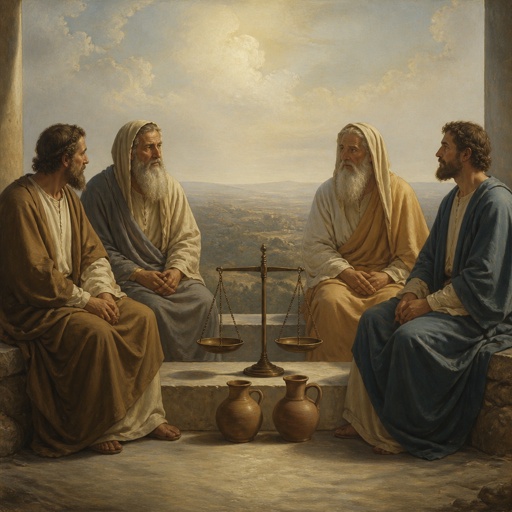
"Do ye not know that the saints shall judge the world? and if the world shall be judged by you, are ye unworthy to judge the smallest matters?" - 1 Corinthians 6:2

1 Peter 4:6 - "For for this cause was the gospel preached also to them that are dead, that they might be judged according to men in the flesh, but live according to God in the spirit."
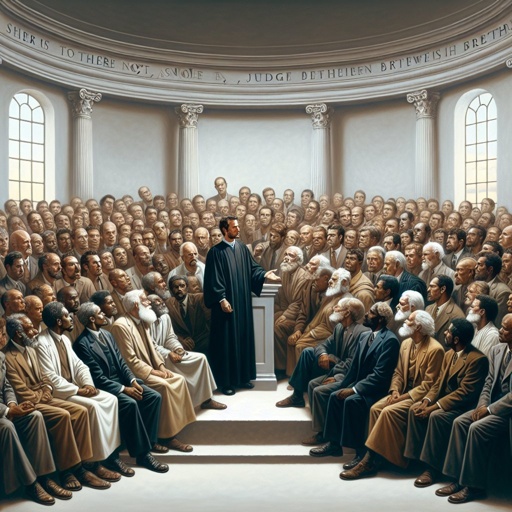
1 Corinthians 6:5 - "I speak to your shame. Is it so, that there is not a wise man among you? no, not one that shall be able to judge between his brethren?"

1 Chronicles 17:6 - "Wheresoever I have walked with all Israel, spake I a word to any of the judges of Israel, whom I commanded to feed my people, saying, Why have ye not built me an house of cedars?"

Judges 3:6 - "And they took their daughters to be their wives, and gave their daughters to their sons, and served their gods."

Luke 6:37 - "Judge not, and ye shall not be judged: condemn not, and ye shall not be condemned: forgive, and ye shall be forgiven:"

Judges 6:36-40 – Gideon’s fleece test for dew.
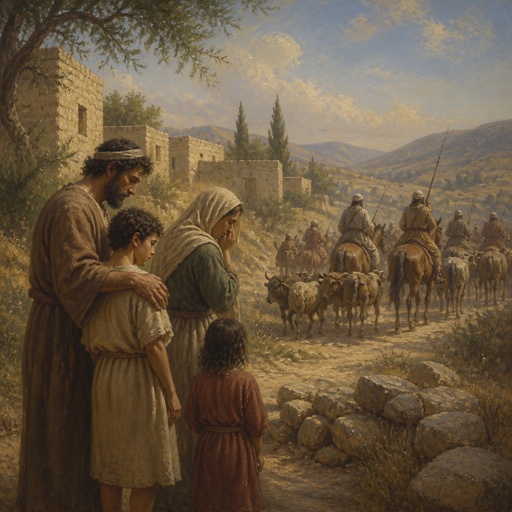
"And the children of Israel did evil in the sight of the LORD: and the LORD delivered them into the hand of Midian seven years." - Judges 6:1

Judges 6:7 - "¶ And it came to pass, when the children of Israel cried unto the LORD because of the Midianites,"

Psalms 141:6 - "When their judges are overthrown in stony places, they shall hear my words; for they are sweet."

2 Chronicles 19:6 - "And said to the judges, Take heed what ye do: for ye judge not for man, but for the LORD, who is with you in the judgment."

1 Samuel 7:6 - "And they gathered together to Mizpeh, and drew water, and poured it out before the LORD, and fasted on that day, and said there, We have sinned against the LORD. And Samuel judged the children of Israel in Mizpeh."

Judges 6:23 - "And the LORD said unto him, Peace be unto thee; fear not: thou shalt not die."

Judges 6:40 - "And God did so that night: for it was dry upon the fleece only, and there was dew on all the ground."

Judges 11:6 - "And they said unto Jephthah, Come, and be our captain, that we may fight with the children of Ammon."

Judges 17:6 - "In those days there was no king in Israel, but every man did that which was right in his own eyes."

Judges 6:34 - "But the Spirit of the LORD came upon Gideon, and he blew a trumpet; and Abiezer was gathered after him."

Matthew 7:1 - "Judge not, that ye be not judged."

Judges 2:31

Judges 4:4
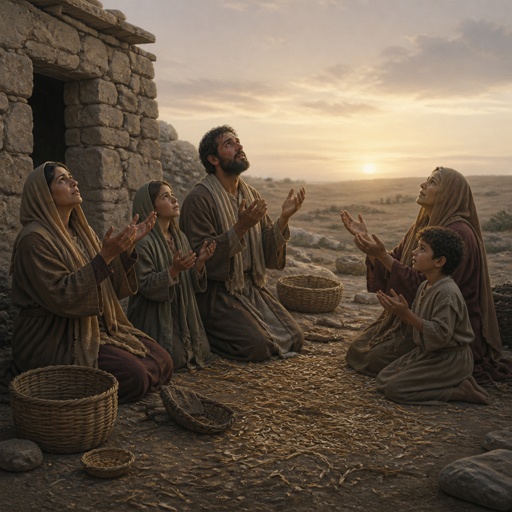
"And Israel was greatly impoverished because of the Midianites; and the children of Israel cried unto the LORD." - Judges 6:6

Judges 6:24 - "Then Gideon built an altar there unto the LORD, and called it Jehovah-shalom: unto this day it is yet in Ophrah of the Abiezrites."

Judges 5:6 - "In the days of Shamgar the son of Anath, in the days of Jael, the highways were unoccupied, and the travellers walked through byways."