What does Judges 1:36 mean?
"And the coast of the Amorites was from the going up to Akrabbim, from the rock, and upward." - Judges 1:36

The verse Judges 1:36 from the King James Version reads, "And the coast of the Amorites was from the going up to Akrabbim, from the rock, and upward." At first glance, this verse may seem simple and perhaps even mundane. However, upon further exploration, one can uncover deeper meanings and themes that are relevant and significant to the contexts of the Bible and the broader themes of human existence.
The book of Judges is a historical text in the Old Testament that describes the period of time following the Israelites' conquest of Canaan. It covers the time between the death of Joshua and the rise of the monarchy under Saul. During this era, the Israelites lived in constant struggle to maintain their territory and remain faithful to their covenant with God. The verse in question is part of a larger narrative in which the Israelites are narrating the territories they were unable to conquer.
One of the key themes in this verse is the idea of boundaries and territories. The Israelites are detailing the specific boundaries of the Amorites' territory, indicating their geographical limitations. This emphasis on boundaries is reflective of the broader theme of land and territory within the Bible. Throughout the Old Testament, the idea of land is closely tied to religious significance and the covenant between God and his people. The land is often seen as a promised inheritance from God, and the Israelites' ability to conquer and maintain their territory is equated with their faithfulness to God.
In addition to the theme of land, the verse also touches upon the idea of conquest and struggle. The fact that the Israelites were unable to fully conquer the Amorites' territory indicates the ongoing battles and conflicts that characterized their existence during this period. This struggle for power and control over the land mirrors the broader human experience of striving for dominance and security. This theme is also relevant to the contemporary world, where conflicts over land and resources continue to be a prevalent issue.
Furthermore, the specific mention of the "going up to Akrabbim, from the rock, and upward" holds symbolic significance. The mention of "the rock" can be interpreted as a reference to a place of safety and stability. In the Bible, the concept of the rock is often associated with God as a source of strength and protection. Therefore, this reference may suggest that the Amorites' territory was well defended and secure, adding to the challenge the Israelites faced in attempting to conquer it.
Additionally, the mention of "upward" can be seen as symbolic of the Israelites' upward journey towards fulfilling their destiny and claiming their promised land. This upward movement implies a sense of progression and advancement, reflecting the ongoing struggle and perseverance required for the Israelites to achieve their goals.
In conclusion, while Judges 1:36 may seem like a straightforward description of geographical boundaries, it carries significant themes and symbolism that reflect broader aspects of the human experience and the Israelites' struggle for power, land, and faithfulness to God. By diving deeper into the context and themes of this verse, readers can gain a more profound understanding of the complexities and challenges faced by the Israelites and draw parallels to their own lives and quests for fulfillment and purpose.
Have questions about Judges 1:36?
Dive deeper into this scripture with Bible Chat — an AI-powered tool for exploring God's Word through conversation. Ask questions, get context, and grow in your understanding of the Bible.
Get Our Apps


Judges 1:36 Artwork

Judges 1:36 - "And the coast of the Amorites was from the going up to Akrabbim, from the rock, and upward."

"And the coast of the Amorites was from the going up to Akrabbim, from the rock, and upward." - Judges 1:36

Judges 6:36-40 – Gideon’s fleece test for dew.

Judges 6:36 - "¶ And Gideon said unto God, If thou wilt save Israel by mine hand, as thou hast said,"

Judges 20:36 - "So the children of Benjamin saw that they were smitten: for the men of Israel gave place to the Benjamites, because they trusted unto the liers in wait which they had set beside Gibeah."

Ezekiel 36:19 - "And I scattered them among the heathen, and they were dispersed through the countries: according to their way and according to their doings I judged them."
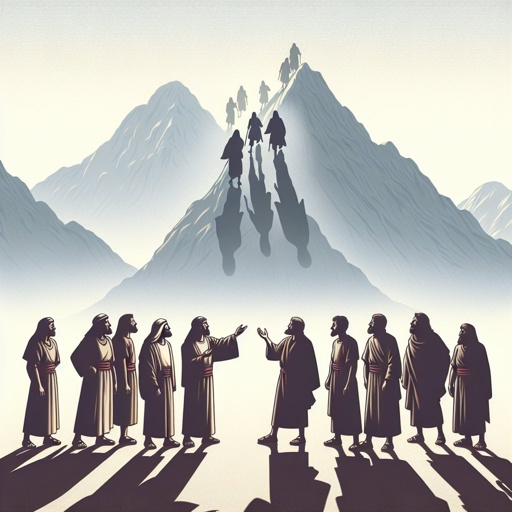
Judges 9:36 - "And when Gaal saw the people, he said to Zebul, Behold, there come people down from the top of the mountains. And Zebul said unto him, Thou seest the shadow of the mountains as if they were men."

Ezekiel 23:36 - "¶ The LORD said moreover unto me; Son of man, wilt thou judge Aholah and Aholibah? yea, declare unto them their abominations;"

Deuteronomy 32:36 - "For the LORD shall judge his people, and repent himself for his servants, when he seeth that their power is gone, and there is none shut up, or left."

Acts2:36

1 Corinthians 15:36

1 Corinthians 14:36

1 Corinthians 14:36

Luke 5:36

"¶ And Gideon said unto God, If thou wilt save Israel by mine hand, as thou hast said," - Judges 6:36

1 Corinthians 14:36-40

1 Corinthians 14:36-37

Romana 11:33-36

Job 36:1 - "Elihu also proceeded, and said,"

Matthew 7:1 - "Judge not, that ye be not judged."

Psalms 36 verse 3-6

Judges 4:4

Judges 2:31

1 Chronicles 11:36 - "Hepher the Mecherathite, Ahijah the Pelonite,"

1 Chronicles 1:36 - "The sons of Eliphaz; Teman, and Omar, Zephi, and Gatam, Kenaz, and Timna, and Amalek."

Genesis 36:1 - "Now these are the generations of Esau, who is Edom."

Judges 3:31

Judges 11:36 - "And she said unto him, My father, if thou hast opened thy mouth unto the LORD, do to me according to that which hath proceeded out of thy mouth; forasmuch as the LORD hath taken vengeance for thee of thine enemies, even of the children of Ammon."

Mark 1:36 - "And Simon and they that were with him followed after him."

Matthew 7:1-2 - "Do not judge, or you too will be judged. For in the same way you judge others, you will be judged, and with the measure you use, it will be measured to you."