What does Judges 13:10 mean?
"And the woman made haste, and ran, and shewed her husband, and said unto him, Behold, the man hath appeared unto me, that came unto me the other day." - Judges 13:10
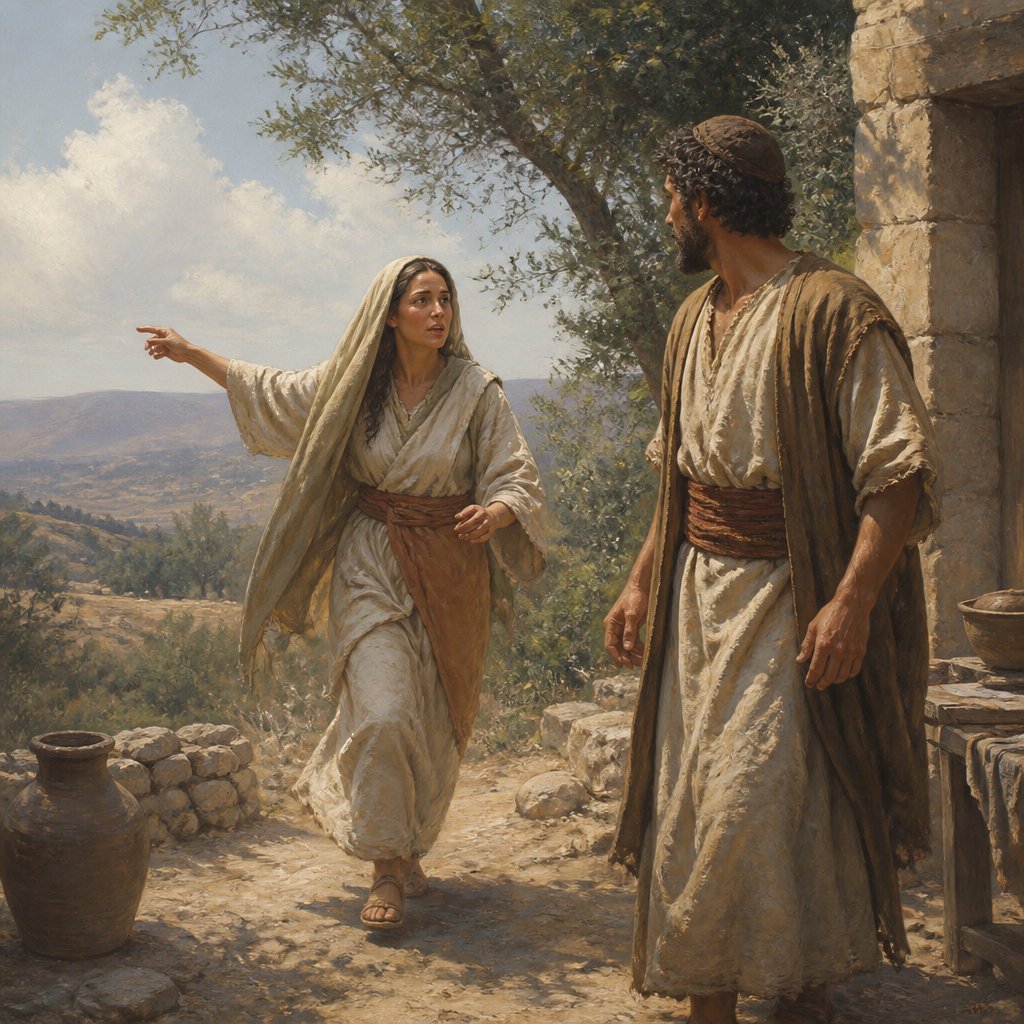
The verse Judges 13:10, from the King James Version (KJV) of the Bible, reads, "And the woman made haste, and ran, and shewed her husband, and said unto him, Behold, the man hath appeared unto me, that came unto me the other day." This verse is part of the story of the birth of Samson, the renowned judge of Israel. It is a pivotal moment in the narrative, as it signals the beginning of a new chapter in the history of Israel.
In this verse, we see the woman, who was previously barren, rushing to her husband to tell him about the visitation she had from the angel of the Lord. The urgency and excitement in her actions as she runs and shares the news with her husband indicate the significance of the message she received.
The context of this verse is important in understanding its significance. The book of Judges takes place during a tumultuous period in Israel's history, as the Israelites go through cycles of sin, oppression, repentance, and deliverance. The story of Samson is set against this backdrop of moral and spiritual decline among the Israelites.
The symbolism of the woman's sudden haste and urgency to share the news with her husband can be interpreted in several ways. Firstly, it reflects the divine intervention that is about to take place in their lives. The miraculous conception of Samson is a sign of hope and promise for the nation of Israel. The woman's haste to share the news with her husband can be seen as a representation of the importance of embracing and acting upon divine messages without delay.
Secondly, the woman's haste also reflects the human response to encountering the divine. When we have a personal encounter with God or receive a message from Him, it often evokes a sense of urgency and excitement in us. This passage serves as a reminder of the transformative power of encountering the divine and the responsibility that comes with receiving such a revelation.
Furthermore, this verse also foreshadows the birth of Samson, who is destined to be a powerful and influential figure in Israel's history. The appearance of the angel to the woman sets in motion a series of events that will ultimately lead to the deliverance of Israel from the Philistines through Samson's leadership.
The themes present in this verse include divine intervention, obedience, and the unfolding of God's plan. The woman's obedience in sharing the news with her husband reflects a willingness to cooperate with God's plan, despite the unexpected and miraculous nature of the message she received. The verse also highlights the faithfulness of God in fulfilling His promises, as the birth of Samson is a testament to His faithfulness to the people of Israel.
In conclusion, Judges 13:10 is a significant verse that captures the pivotal moment when the woman shares the news of the angel's visitation with her husband. It symbolizes the transformative power of encountering the divine, the obedience to God’s plan, and the unfolding of His promise. This verse serves as a reminder of the transformative power of encountering the divine and the responsibility that comes with receiving such a revelation. It also sets the stage for the birth of Samson and the subsequent deliverance of Israel, which are central to the narrative of the book of Judges.
Have questions about Judges 13:10?
Dive deeper into this scripture with Bible Chat — an AI-powered tool for exploring God's Word through conversation. Ask questions, get context, and grow in your understanding of the Bible.
Get Our Apps


Judges 13:10 Artwork

Judges 13:10 - "And the woman made haste, and ran, and shewed her husband, and said unto him, Behold, the man hath appeared unto me, that came unto me the other day."
"And the woman made haste, and ran, and shewed her husband, and said unto him, Behold, the man hath appeared unto me, that came unto me the other day." - Judges 13:10

Judges 10:13 - "Yet ye have forsaken me, and served other gods: wherefore I will deliver you no more."

Hosea 13:10 - "I will be thy king: where is any other that may save thee in all thy cities? and thy judges of whom thou saidst, Give me a king and princes?"
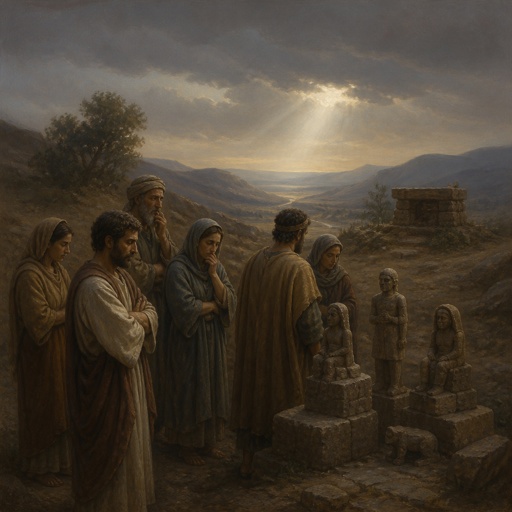
"Yet ye have forsaken me, and served other gods: wherefore I will deliver you no more." - Judges 10:13

Judges 2:13 - "And they forsook the LORD, and served Baal and Ashtaroth."

Judges 10:5 - "And Jair died, and was buried in Camon."

Judges 13:13 - "And the angel of the LORD said unto Manoah, Of all that I said unto the woman let her beware."

Judges 12:13 - "¶ And after him Abdon the son of Hillel, a Pirathonite, judged Israel."

Judges 12:10 - "Then died Ibzan, and was buried at Beth-lehem."

Judges 10:2 - "And he judged Israel twenty and three years, and died, and was buried in Shamir."

Judges 10:3 - "¶ And after him arose Jair, a Gileadite, and judged Israel twenty and two years."

Judges 18:13 - "And they passed thence unto mount Ephraim, and came unto the house of Micah."

Judges 8:13 - "¶ And Gideon the son of Joash returned from battle before the sun was up,"

Judges 13:3 make the Angel of the Lord male

Judges 9:10 - "And the trees said to the fig tree, Come thou, and reign over us."

Judges 13:25 - "And the Spirit of the LORD began to move him at times in the camp of Dan between Zorah and Eshtaol."

Psalms 2:10 - "Be wise now therefore, O ye kings: be instructed, ye judges of the earth."

"And Jair died, and was buried in Camon." - Judges 10:5

Judges 5:10 - "Speak, ye that ride on white asses, ye that sit in judgment, and walk by the way."

Psalms 96:13 - "Before the LORD: for he cometh, for he cometh to judge the earth: he shall judge the world with righteousness, and the people with his truth."

Judges 13:2 - "¶ And there was a certain man of Zorah, of the family of the Danites, whose name was Manoah; and his wife was barren, and bare not."

"And they forsook the LORD, and served Baal and Ashtaroth." - Judges 2:13

Judges 13:24 - "¶ And the woman bare a son, and called his name Samson: and the child grew, and the LORD blessed him."

Judges 7:10 - "But if thou fear to go down, go thou with Phurah thy servant down to the host:"

Judges 10:10 - "¶ And the children of Israel cried unto the LORD, saying, We have sinned against thee, both because we have forsaken our God, and also served Baalim."

Romans 14:13 - "Let us not therefore judge one another any more: but judge this rather, that no man put a stumblingblock or an occasion to fall in his brother's way."

Judges 13:21 - "But the angel of the LORD did no more appear to Manoah and to his wife. Then Manoah knew that he was an angel of the LORD."

"¶ And after him Abdon the son of Hillel, a Pirathonite, judged Israel." - Judges 12:13

"Then died Ibzan, and was buried at Beth-lehem." - Judges 12:10