What does Judges 11:31 mean?
"Then it shall be, that whatsoever cometh forth of the doors of my house to meet me, when I return in peace from the children of Ammon, shall surely be the LORD'S, and I will offer it up for a burnt offering." - Judges 11:31
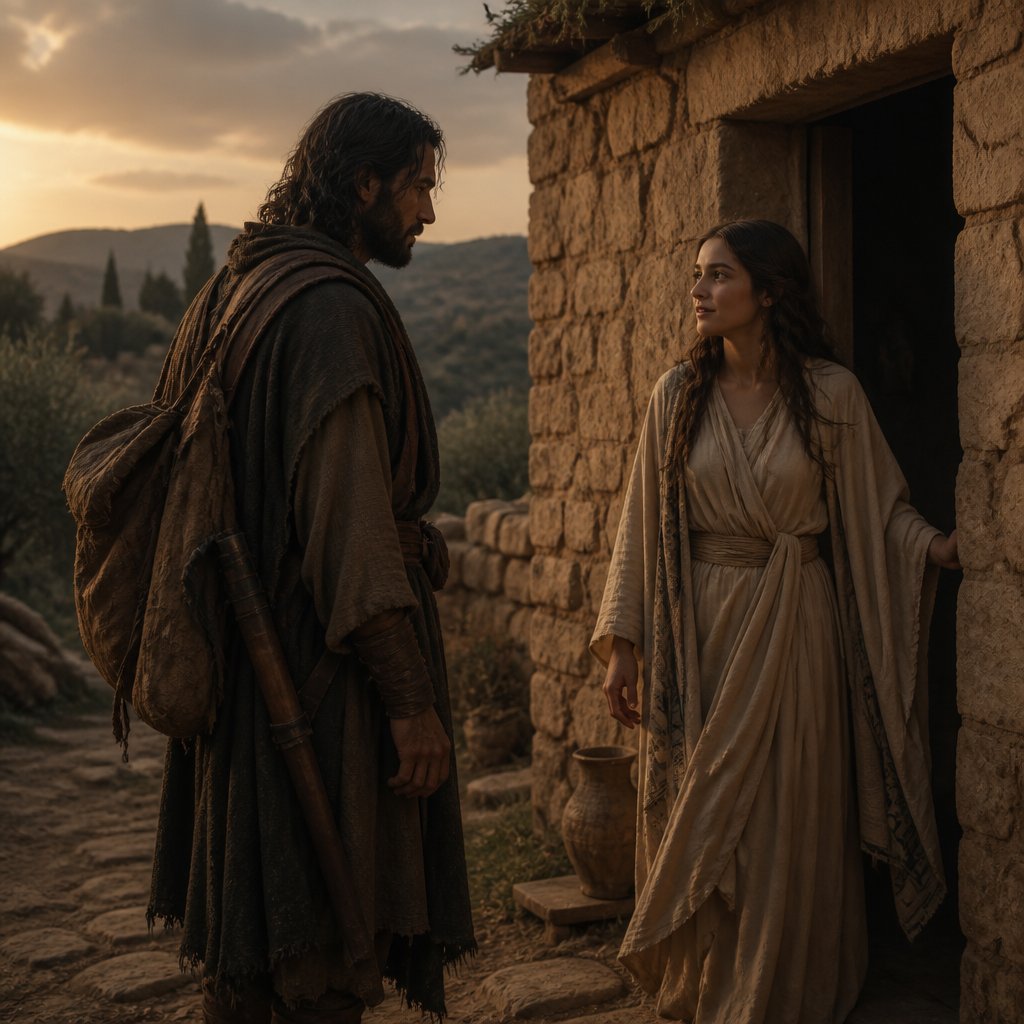
Judges 11:31 in the King James Version of the Bible reads, "Then it shall be, that whatsoever cometh forth of the doors of my house to meet me, when I return in peace from the children of Ammon, shall surely be the Lord's, and I will offer it up for a burnt offering."
This verse is part of the story of Jephthah, a judge of Israel who made a rash vow to God in exchange for victory in battle. The context of this verse is an important part of understanding its meaning and significance. In the book of Judges, the Israelites were in a cycle of disobedience to God, leading to oppression by foreign nations. In this particular instance, the Ammonites were oppressing the Israelites, and Jephthah was called upon to lead the Israelite army against them.
Jephthah, in a moment of desperation, made a vow to God that if He granted him victory over the Ammonites, Jephthah would offer as a burnt offering whatever or whomever came out of his house to meet him upon his return. Unfortunately for Jephthah, it was his only daughter who came out to greet him, and he was forced to fulfill his vow, causing great personal tragedy.
The themes and symbolism present in this verse are deeply unsettling. The most prominent theme is the idea of the danger of making rash vows or promises. Jephthah's vow was made out of desperation and without much thought, and it led to a terrible consequence. This theme cautions against making impulsive decisions, especially ones that involve commitments to God or other serious matters.
This verse also brings up the theme of the relationship between faith and obedience. Jephthah's vow was made out of a desire to please God and secure His help in battle, but the fulfillment of the vow ultimately led to a tragic act that was not in line with God's will. This raises important questions about the nature of faith and obedience and how they should be expressed in a way that aligns with God's character and desires.
The symbolism in this verse is also significant. The burnt offering that Jephthah vowed to make represents a sacrifice to God, a common practice in ancient Israel. However, the offering of Jephthah's daughter as a burnt offering was not in line with God's commands and was a deeply disturbing act. It serves as a powerful symbol of the tragic consequences of misguided devotion and the dangers of misinterpreting God's will.
The story of Jephthah and his ill-fated vow is a cautionary tale that raises important ethical and theological questions. It serves as a reminder of the need for careful discernment and wisdom in making commitments to God and the consequences of acting on impulse without considering the implications. It also underscores the importance of understanding and aligning with God's character and will in all matters of faith and obedience.
In conclusion, Judges 11:31 is a verse that is deeply significant and thought-provoking. Its themes of rash vows, faith and obedience, and the symbolism of sacrifice all contribute to its powerful and cautionary message. It serves as a reminder of the complex and often challenging nature of the relationship between humanity and the divine and the need for careful discernment and obedience in matters of faith.
Have questions about Judges 11:31?
Dive deeper into this scripture with Bible Chat — an AI-powered tool for exploring God's Word through conversation. Ask questions, get context, and grow in your understanding of the Bible.
Get Our Apps


Judges 11:31 Artwork

Judges 11:31 - "Then it shall be, that whatsoever cometh forth of the doors of my house to meet me, when I return in peace from the children of Ammon, shall surely be the LORD'S, and I will offer it up for a burnt offering."
"Then it shall be, that whatsoever cometh forth of the doors of my house to meet me, when I return in peace from the children of Ammon, shall surely be the LORD'S, and I will offer it up for a burnt offering." - Judges 11:31

Job 31:11 - "For this is an heinous crime; yea, it is an iniquity to be punished by the judges."

1 Corinthians 11:31 - "For if we would judge ourselves, we should not be judged."

"For this is an heinous crime; yea, it is an iniquity to be punished by the judges." - Job 31:11

"For if we would judge ourselves, we should not be judged." - 1 Corinthians 11:31

Judges 3:31

Judges 2:31

Deuteronomy 32:31 - "For their rock is not as our Rock, even our enemies themselves being judges."

Judges 8:31 - "And his concubine that was in Shechem, she also bare him a son, whose name he called Abimelech."

Judges 18:31 - "And they set them up Micah's graven image, which he made, all the time that the house of God was in Shiloh."

Judges 12:11 - "¶ And after him Elon, a Zebulonite, judged Israel; and he judged Israel ten years."

Proverbs 31:9 - "Open thy mouth, judge righteously, and plead the cause of the poor and needy."

Judges 3:31 - "¶ And after him was Shamgar the son of Anath, which slew of the Philistines six hundred men with an ox goad: and he also delivered Israel."

Job 31:28 - "This also were an iniquity to be punished by the judge: for I should have denied the God that is above."

1 Kings 11:30-31

1 Kings 11:30-31

1 Kings 11:30-31

Ecclesiates 3:1

Psalms 148:11 - "Kings of the earth, and all people; princes, and all judges of the earth:"

Judges 11:14 - "And Jephthah sent messengers again unto the king of the children of Ammon:"

Judges 2:11 - "¶ And the children of Israel did evil in the sight of the LORD, and served Baalim:"

Judges 9:31 - "And he sent messengers unto Abimelech privily, saying, Behold, Gaal the son of Ebed and his brethren be come to Shechem; and, behold, they fortify the city against thee."

Judges 1:31 - "¶ Neither did Asher drive out the inhabitants of Accho, nor the inhabitants of Zidon, nor of Ahlab, nor of Achzib, nor of Helbah, nor of Aphik, nor of Rehob:"

Lamentations 3:1-18

"For their rock is not as our Rock, even our enemies themselves being judges." - Deuteronomy 32:31

Judges 3:11 - "And the land had rest forty years. And Othniel the son of Kenaz died."

Judges 14:11 - "And it came to pass, when they saw him, that they brought thirty companions to be with him."

Judges 16:31 - "Then his brethren and all the house of his father came down, and took him, and brought him up, and buried him between Zorah and Eshtaol in the buryingplace of Manoah his father. And he judged Israel twenty years."

1 John 3:1-3