What does Jude 1:13 mean?
"Raging waves of the sea, foaming out their own shame; wandering stars, to whom is reserved the blackness of darkness for ever." - Jude 1:13
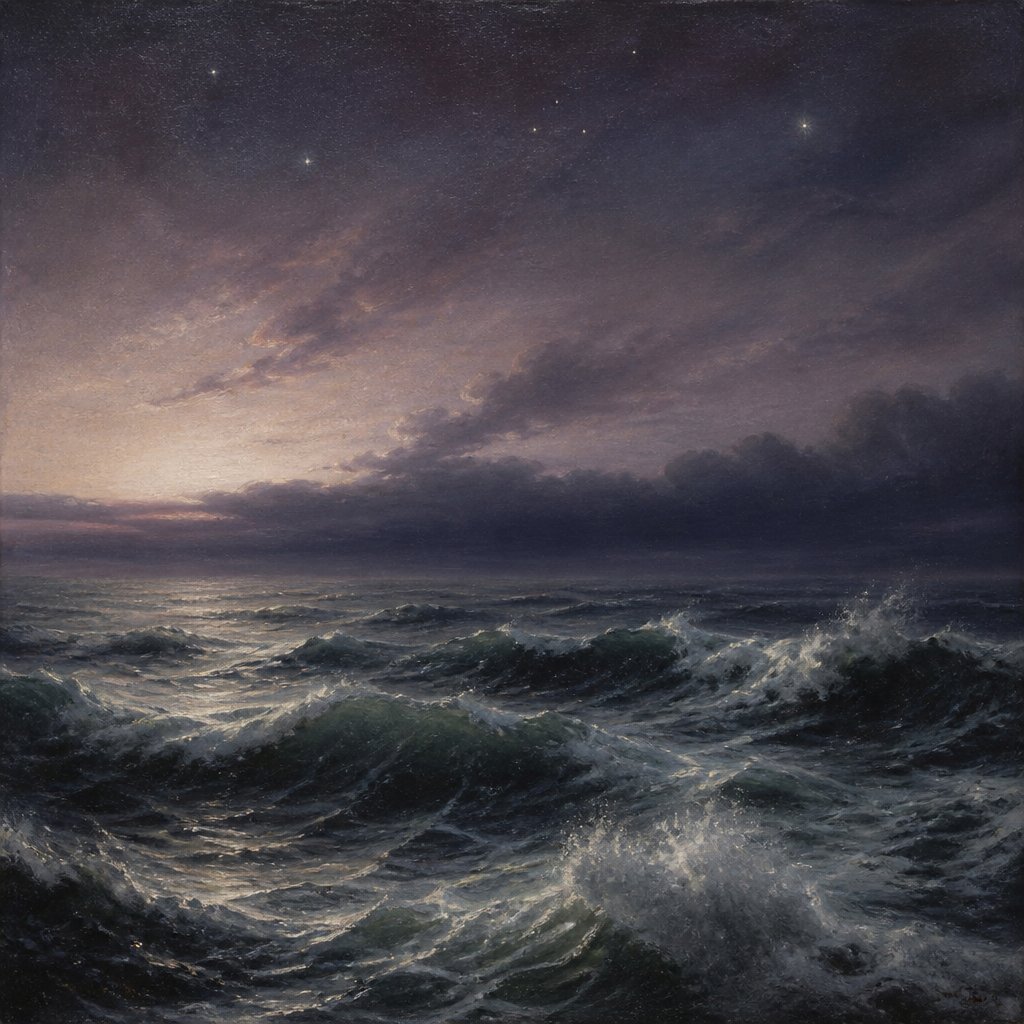
Jude 1:13 in the King James Version stands in the middle of Jude’s urgent warning about corrupt, ungodly teachers who had slipped in among believers and were bending grace into permission for sin. The verse reads, “Raging waves of the sea, foaming out their own shame; wandering stars, to whom is reserved the blackness of darkness for ever.” Jude is not offering a calm description but a moral portrait, using two vivid pictures from the natural world to reveal what these people are like, what they produce, and where their path ends.
The first image, “raging waves of the sea, foaming out their own shame,” presents restlessness, violence, and disorder. Waves in a storm do not build; they batter. They do not cleanse; they churn up what lies beneath. Jude’s point is not simply that these men are loud or emotional, but that their inner corruption cannot remain hidden. As agitated water throws up mire and debris, so their lives and teachings, when stirred by passion and pride, cast up what Jude calls “their own shame.” The “foaming” suggests something unavoidable and public: shame rising to the surface in the very momentum of their activity. It is an image of sin that is not merely private but self-exposing, sin that advertises itself as it rages. In Jude’s context, these are people who “defile the flesh” and “despise dominion,” and the metaphor conveys the same idea: ungoverned appetite and rebellious impulse do not stay contained; they spill out. The sea is also often associated in Scripture with instability and tumult. By likening them to storm-driven waves, Jude implies they lack spiritual steadiness, and that their influence brings disturbance rather than peace to the community of faith.
The second image intensifies the warning: “wandering stars, to whom is reserved the blackness of darkness for ever.” In the ancient world, true stars were markers for navigation; they were fixed points by which travelers could keep their course. A “wandering star” calls to mind a heavenly light that does not hold its place and therefore cannot safely guide anyone. Whether one thinks of meteors that flare briefly and vanish or of errant lights that mislead a traveler, Jude’s symbolism is clear: these teachers present themselves as lights, but they do not remain in the path of truth, and those who follow them are not led home but led astray. There is also an implied contrast between appearance and reality. A star suggests brilliance; “wandering” suggests unreliability; and Jude’s final phrase reveals the end of their trajectory: not light, but “the blackness of darkness for ever.” That expression is not merely poetic gloom; it is Jude’s solemn language for divine judgment, a fate corresponding to their rejection of God’s order. They have chosen spiritual darkness, and Jude declares that darkness is what is “reserved” for them—an appointed, certain outcome, not a random misfortune.
Taken together, the two metaphors trace a movement from what these people produce now to what awaits them finally. The raging sea depicts present moral chaos and the shame that their conduct continually throws up; the wandering stars depict spiritual deception and the inevitability of final separation from the light. Jude is showing that false teaching is not merely an intellectual error but a moral and spiritual disorder that reveals itself in character, corrupts others, and ends in judgment. The verse therefore serves a pastoral purpose as well as a prophetic one: it teaches believers to discern by fruit and trajectory. When Jude calls them waves and wandering stars, he is saying, in essence, that their influence is both turbulent and misleading—powerful enough to unsettle, bright enough to attract, but ultimately producing shame and ending in darkness.
The significance of Jude 1:13 is that it compresses Jude’s entire concern into two symbols that are easy to recognize and hard to forget. It warns that ungodliness is not neutral, that rebellion against God’s truth does not lead to freedom but to exposure and ruin, and that those who pose as guides while departing from the truth do not merely lose their way—they become a danger to others, and they head toward “the blackness of darkness for ever.”
Have questions about Jude 1:13?
Dive deeper into this scripture with Bible Chat — an AI-powered tool for exploring God's Word through conversation. Ask questions, get context, and grow in your understanding of the Bible.
Get Our Apps


Jude 1:13 Artwork

Jude 1:13 - "Raging waves of the sea, foaming out their own shame; wandering stars, to whom is reserved the blackness of darkness for ever."

"Raging waves of the sea, foaming out their own shame; wandering stars, to whom is reserved the blackness of darkness for ever." - Jude 1:13
"Raging waves of the sea, foaming out their own shame; wandering stars, to whom is reserved the blackness of darkness for ever." - Jude 1:13

Jude 1:1 - "Jude, the servant of Jesus Christ, and brother of James, to them that are sanctified by God the Father, and preserved in Jesus Christ, and called:"

Jude 1:9

Jude in his logon

Jude 1:22 - "And of some have compassion, making a difference:"

"Jude, the servant of Jesus Christ, and brother of James, to them that are sanctified by God the Father, and preserved in Jesus Christ, and called:" - Jude 1:1

Jude 1:19 - "These be they who separate themselves, sensual, having not the Spirit."

Jude 1:2 - "Mercy unto you, and peace, and love, be multiplied."

Jude 1:8 - "Likewise also these filthy dreamers defile the flesh, despise dominion, and speak evil of dignities."

"And of some have compassion, making a difference:" - Jude 1:22

Jude 1:20 - "But ye, beloved, building up yourselves on your most holy faith, praying in the Holy Ghost,"

Jude 1:23 - "And others save with fear, pulling them out of the fire; hating even the garment spotted by the flesh."

Jude 1:21 - "Keep yourselves in the love of God, looking for the mercy of our Lord Jesus Christ unto eternal life."

Jude 1:17 - "But, beloved, remember ye the words which were spoken before of the apostles of our Lord Jesus Christ;"

Jude 1:25 - "To the only wise God our Saviour, be glory and majesty, dominion and power, both now and ever. Amen."
"These be they who separate themselves, sensual, having not the Spirit." - Jude 1:19

"Mercy unto you, and peace, and love, be multiplied." - Jude 1:2

Jude 1:14 - "And Enoch also, the seventh from Adam, prophesied of these, saying, Behold, the Lord cometh with ten thousands of his saints,"

Jude 1:18 - "How that they told you there should be mockers in the last time, who should walk after their own ungodly lusts."

Jude 1:10 - "But these speak evil of those things which they know not: but what they know naturally, as brute beasts, in those things they corrupt themselves."

Jude 1:11 - "Woe unto them! for they have gone in the way of Cain, and ran greedily after the error of Balaam for reward, and perished in the gainsaying of Core."

Jude 1:24 - "Now unto him that is able to keep you from falling, and to present you faultless before the presence of his glory with exceeding joy,"

Jude 1:16 - "These are murmurers, complainers, walking after their own lusts; and their mouth speaketh great swelling words, having men's persons in admiration because of advantage."

Jude 1:6 - "And the angels which kept not their first estate, but left their own habitation, he hath reserved in everlasting chains under darkness unto the judgment of the great day."

"But ye, beloved, building up yourselves on your most holy faith, praying in the Holy Ghost," - Jude 1:20

Jude 1:9 - "Yet Michael the archangel, when contending with the devil he disputed about the body of Moses, durst not bring against him a railing accusation, but said, The Lord rebuke thee."

Jude 1:5 - "I will therefore put you in remembrance, though ye once knew this, how that the Lord, having saved the people out of the land of Egypt, afterward destroyed them that believed not."

Jude 1:22-23 - "Be merciful to those who doubt; save others by snatching them from the fire; to others show mercy, mixed with fear—hating even the clothing stained by corrupted flesh."