What does Joshua 15:8 mean?
"And the border went up by the valley of the son of Hinnom unto the south side of the Jebusite; the same is Jerusalem: and the border went up to the top of the mountain that lieth before the valley of Hinnom westward, which is at the end of the valley of the giants northward:" - Joshua 15:8
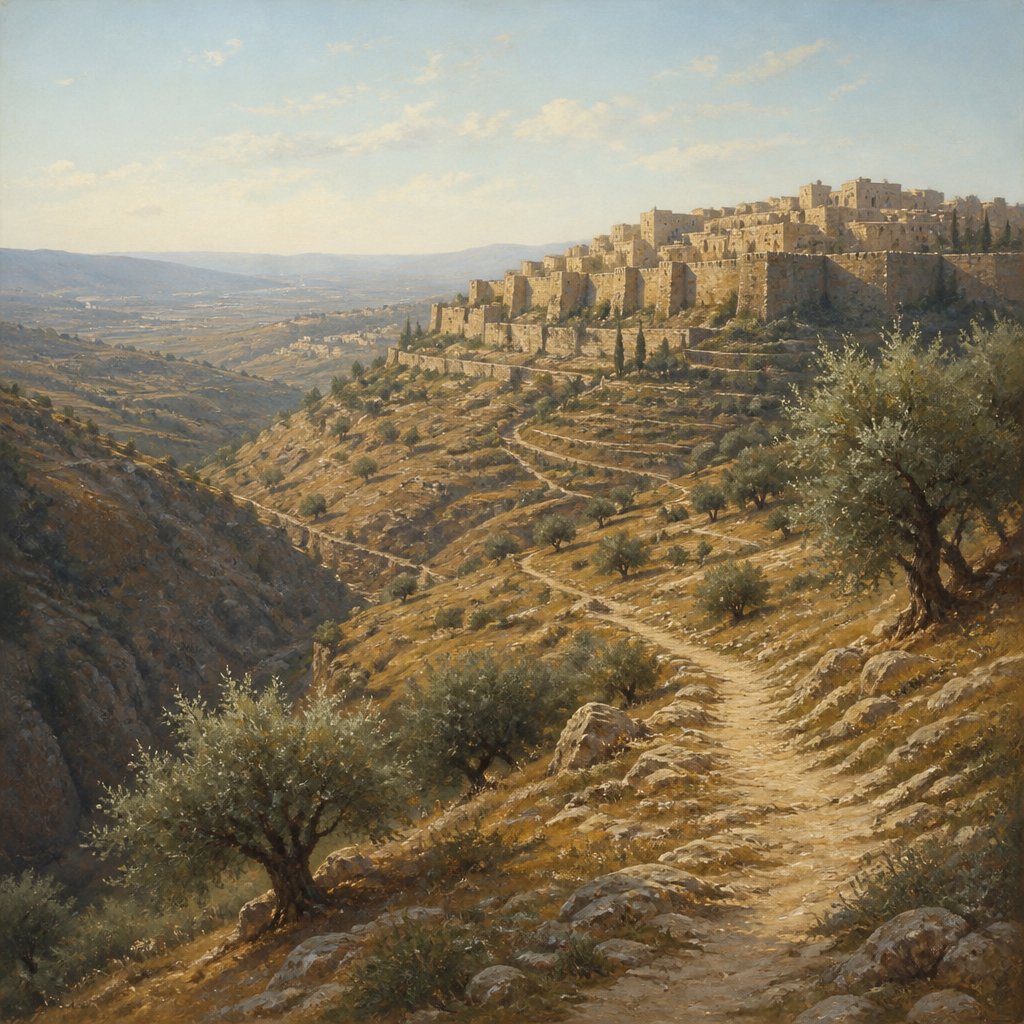
Joshua 15:8 states, "And the border went up by the valley of the son of Hinnom unto the south side of the Jebusite; the same is Jerusalem: and the border went up to the top of the mountain that lieth before the valley of Hinnom westward, which is at the end of the valley of the giants northward."
This verse comes from the book of Joshua in the Old Testament. In this particular passage, the land of Canaan is being divided among the tribes of Israel. The territory described here falls within the allotment for the tribe of Judah. As the Israelites sought to take possession of the Promised Land, it was essential for them to understand the boundaries of their territory. This would help to prevent disputes and establish a clear understanding of each tribe's land.
One significant theme in this verse is the idea of boundaries and territory. Throughout the Bible, land is a prominent symbol of inheritance, promise, and identity. The specific delineation of borders in this verse emphasizes the order and structure that God intended for the Israelites' possession of the land. In a broader sense, it also conveys the importance of respecting boundaries and understanding one's place within the larger community.
Another theme that can be drawn from this verse is the fulfillment of God's promises. The division of the land among the tribes of Israel was a tangible fulfillment of the covenant God had made with His people. As he had promised to Abraham and his descendants, the Israelites were now taking possession of the land that had been given to them. This reinforces the idea of God's faithfulness and the importance of honoring His covenant.
The context of this verse is also significant. Jerusalem, mentioned in this passage, holds great importance in both biblical and historical terms. It was a city that held religious, political, and cultural significance for the Israelites. The fact that it is specifically mentioned in the division of the land highlights its centrality in the lives of the people. Additionally, the reference to the valley of the giants and the valley of the son of Hinnom evokes a sense of the historical and geographical context in which these events were taking place.
Symbolism is also present in this verse. The idea of borders and boundaries can be understood on a metaphorical level, representing the need for moral and spiritual boundaries in the lives of believers. The delineation of territory can be seen as a reflection of the need for a clear understanding of one's identity and purpose in the world.
In conclusion, Joshua 15:8 is a verse that holds significance within the broader context of the book of Joshua and the biblical narrative as a whole. It conveys themes of boundaries, the fulfillment of God's promises, the importance of the city of Jerusalem, and the symbolism of land as an inheritance and marker of identity. By examining this verse in depth, one can gain a deeper understanding of the theological and historical factors at play in the division of the Promised Land.
Have questions about Joshua 15:8?
Dive deeper into this scripture with Bible Chat — an AI-powered tool for exploring God's Word through conversation. Ask questions, get context, and grow in your understanding of the Bible.
Get Our Apps


Joshua 15:8 Artwork

Joshua 15:8 - "And the border went up by the valley of the son of Hinnom unto the south side of the Jebusite; the same is Jerusalem: and the border went up to the top of the mountain that lieth before the valley of Hinnom westward, which is at the end of the valley of the giants northward:"
"And the border went up by the valley of the son of Hinnom unto the south side of the Jebusite; the same is Jerusalem: and the border went up to the top of the mountain that lieth before the valley of Hinnom westward, which is at the end of the valley of the giants northward:" - Joshua 15:8

Joshua 8:15 - "And Joshua and all Israel made as if they were beaten before them, and fled by the way of the wilderness."

"And Joshua and all Israel made as if they were beaten before them, and fled by the way of the wilderness." - Joshua 8:15

Joshua 4:15 - "And the LORD spake unto Joshua, saying,"

Joshua 10:15 - "¶ And Joshua returned, and all Israel with him, unto the camp to Gilgal."

Joshua 8:23 - "And the king of Ai they took alive, and brought him to Joshua."

Joshua 24:15

Joshua 24:15

Joshua 24:15

Joshua 9:8 - "And they said unto Joshua, We are thy servants. And Joshua said unto them, Who are ye? and from whence come ye?"

Joshua 8:30 - "¶ Then Joshua built an altar unto the LORD God of Israel in mount Ebal,"

"And the LORD spake unto Joshua, saying," - Joshua 4:15

Joshua 8:28 - "And Joshua burnt Ai, and made it an heap for ever, even a desolation unto this day."

Joshua 15:29 - "Baalah, and Iim, and Azem,"

Joshua 15:42 - "Libnah, and Ether, and Ashan,"

Joshua 15:50 - "And Anab, and Eshtemoh, and Anim,"

Joshua 15:30 - "And Eltolad, and Chesil, and Hormah,"

Joshua 15:40 - "And Cabbon, and Lahmam, and Kithlish,"

Joshua 15:23 - "And Kedesh, and Hazor, and Ithnan,"

Joshua 15:22 - "And Kinah, and Dimonah, and Adadah,"

Joshua 11:15 - "¶ As the LORD commanded Moses his servant, so did Moses command Joshua, and so did Joshua; he left nothing undone of all that the LORD commanded Moses."

Joshua 5:15 - "And the captain of the LORD'S host said unto Joshua, Loose thy shoe from off thy foot; for the place whereon thou standest is holy. And Joshua did so."

Joshua 1:8

Joshua 15:39 - "Lachish, and Bozkath, and Eglon,"

Joshua 15:31 - "And Ziklag, and Madmannah, and Sansannah,"

Joshua 15:43 - "And Jiphtah, and Ashnah, and Nezib,"

Joshua 15:26 - "Amam, and Shema, and Moladah,"

Joshua 15:38 - "And Dilean, and Mizpeh, and Joktheel,"

Joshua 15:24 - "Ziph, and Telem, and Bealoth,"