What does Joshua 13:7 mean?
"Now therefore divide this land for an inheritance unto the nine tribes, and the half tribe of Manasseh," - Joshua 13:7
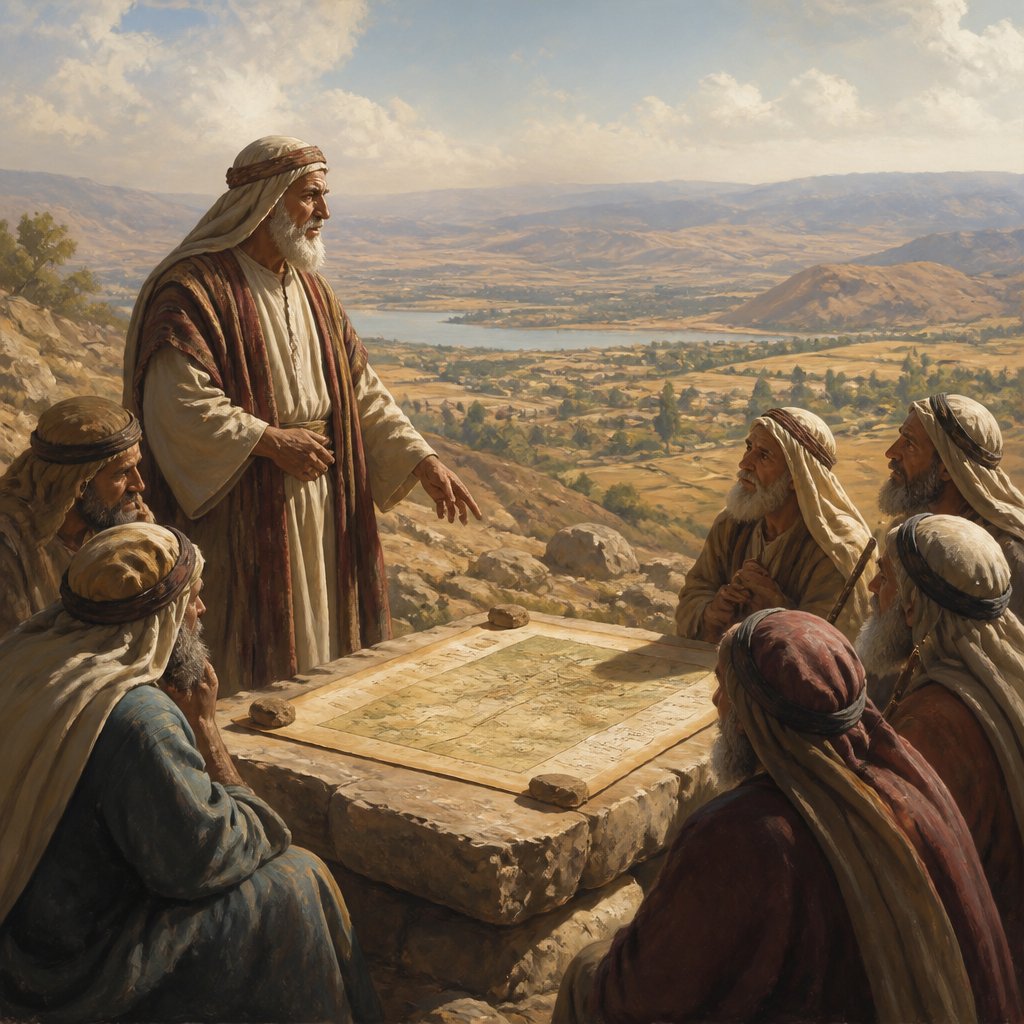
Joshua 13:7 (KJV) says, "Now therefore divide this land for an inheritance unto the nine tribes, and the half tribe of Manasseh." This verse comes from the Old Testament, specifically from the book of Joshua. The context of this verse is within the larger narrative of the Israelites' conquest of the Promised Land under the leadership of Joshua. After the death of Moses, Joshua was appointed as the leader of the Israelites, and God instructed him to lead the people into Canaan and conquer the land that God had promised to their ancestors.
In the preceding chapters of Joshua, the Israelites have already made significant progress in taking over the land of Canaan, which was divided among the twelve tribes of Israel. However, there was still more land to be possessed. In Joshua 13:7, we see the Lord instructing Joshua to divide the remaining territory of Canaan among the nine and a half tribes that had not yet received their inheritance.
This verse holds several important themes, the first of which is the fulfillment of God's promises. The division of the land for inheritance was a tangible demonstration of God's faithfulness in fulfilling His promise to the Israelites. This promise was made to their ancestor Abraham in Genesis 12:7, where God said, "To your offspring I will give this land." Therefore, the distribution of the land among the tribes was a vital part of fulfilling God's covenant with His people, illustrating that He is faithful and true to His promises.
Another theme present in this verse is the idea of stewardship and responsibility. The allocation of the land for inheritance was not simply a matter of possession and ownership, but it was also about the tribes taking on the responsibility of stewarding the land and its resources. Each tribe was to use their portion of the land wisely, cultivating it and caring for it, as God's representatives in the land. This serves as a reminder for believers today that God entrusts us with resources and blessings, and we are called to steward them well.
Furthermore, the division of the land also symbolizes unity and community among the tribes of Israel. The tribes were to live together in their allocated territories, working together for the common good and ensuring the well-being of all their people. This cooperative spirit is an important aspect of the biblical worldview, emphasizing the importance of unity and fellowship within the body of believers.
The verse also points to the importance of God's sovereignty and His role as the ultimate provider. It is God who ultimately determines the boundaries and the allocation of the land, and the tribes were called to trust in His wisdom and provision. This is a vital lesson for all believers, reminding us to rely on God's providence and to seek His guidance in all aspects of our lives.
In conclusion, Joshua 13:7 holds great significance within the larger narrative of the Israelites' conquest of the Promised Land. It emphasizes themes of God's faithfulness in fulfilling His promises, the responsibility of stewardship, the importance of unity and community, and the sovereignty of God as the ultimate provider. This verse serves as a reminder for believers to trust in God's faithfulness, to steward His blessings well, and to live in unity and fellowship with one another.
Have questions about Joshua 13:7?
Dive deeper into this scripture with Bible Chat — an AI-powered tool for exploring God's Word through conversation. Ask questions, get context, and grow in your understanding of the Bible.
Get Our Apps


Joshua 13:7 Artwork

Joshua 13:7 - "Now therefore divide this land for an inheritance unto the nine tribes, and the half tribe of Manasseh,"
"Now therefore divide this land for an inheritance unto the nine tribes, and the half tribe of Manasseh," - Joshua 13:7

Joshua 14:13 - "And Joshua blessed him, and gave unto Caleb the son of Jephunneh Hebron for an inheritance."

Joshua 5:13

Joshua 13:18 - "And Jahazah, and Kedemoth, and Mephaath,"

Joshua 11:13 - "But as for the cities that stood still in their strength, Israel burned none of them, save Hazor only; that did Joshua burn."

Joshua 7:16 - "¶ So Joshua rose up early in the morning, and brought Israel by their tribes; and the tribe of Judah was taken:"

Joshua 7:22 - "¶ So Joshua sent messengers, and they ran unto the tent; and, behold, it was hid in his tent, and the silver under it."

Joshua 7:10 - "¶ And the LORD said unto Joshua, Get thee up; wherefore liest thou thus upon thy face?"

Joshua 10:7 - "So Joshua ascended from Gilgal, he, and all the people of war with him, and all the mighty men of valour."

Joshua 1:7-9

Joshua 5:13 (KJVA) 13 And it came to pass, when Joshua was by Jericho, that he lifted up his eyes and looked, and, behold, there stood a man over against him with his sword drawn in his hand: and Joshua went unto him, and said unto him, Art thou for us, or for our adversaries?

Joshua 11:7 - "So Joshua came, and all the people of war with him, against them by the waters of Merom suddenly; and they fell upon them."

Joshua 7:13 - "Up, sanctify the people, and say, Sanctify yourselves against to morrow: for thus saith the LORD God of Israel, There is an accursed thing in the midst of thee, O Israel: thou canst not stand before thine enemies, until ye take away the accursed thing from among you."

Joshua 8:13 - "And when they had set the people, even all the host that was on the north of the city, and their liers in wait on the west of the city, Joshua went that night into the midst of the valley."

Joshua 13:13 - "Nevertheless the children of Israel expelled not the Geshurites, nor the Maachathites: but the Geshurites and the Maachathites dwell among the Israelites until this day."

Joshua 13:20 - "And Beth-peor, and Ashdoth-pisgah, and Beth-jeshimoth,"

Joshua 12:13 - "The king of Debir, one; the king of Geder, one;"

Joshua 13:19 - "And Kirjathaim, and Sibmah, and Zareth-shahar in the mount of the valley,"

Joshua 5:7 - "And their children, whom he raised up in their stead, them Joshua circumcised: for they were uncircumcised, because they had not circumcised them by the way."

Exodus 17:13 - "And Joshua discomfited Amalek and his people with the edge of the sword."

Joshua 13:28 - "This is the inheritance of the children of Gad after their families, the cities, and their villages."

Joshua 7:20 - "And Achan answered Joshua, and said, Indeed I have sinned against the LORD God of Israel, and thus and thus have I done:"

Joshua 7:7 - "And Joshua said, Alas, O Lord GOD, wherefore hast thou at all brought this people over Jordan, to deliver us into the hand of the Amorites, to destroy us? would to God we had been content, and dwelt on the other side Jordan!"

Joshua 13:1 - "Now Joshua was old and stricken in years; and the LORD said unto him, Thou art old and stricken in years, and there remaineth yet very much land to be possessed."

Joshua 7:23 - "And they took them out of the midst of the tent, and brought them unto Joshua, and unto all the children of Israel, and laid them out before the LORD."

"And Jahazah, and Kedemoth, and Mephaath," - Joshua 13:18

Joshua 13:2 - "This is the land that yet remaineth: all the borders of the Philistines, and all Geshuri,"

Joshua 3:7 - "¶ And the LORD said unto Joshua, This day will I begin to magnify thee in the sight of all Israel, that they may know that, as I was with Moses, so I will be with thee."

Joshua 15:13 - "¶ And unto Caleb the son of Jephunneh he gave a part among the children of Judah, according to the commandment of the LORD to Joshua, even the city of Arba the father of Anak, which city is Hebron."