What does Joshua 11:13 mean?
"But as for the cities that stood still in their strength, Israel burned none of them, save Hazor only; that did Joshua burn." - Joshua 11:13
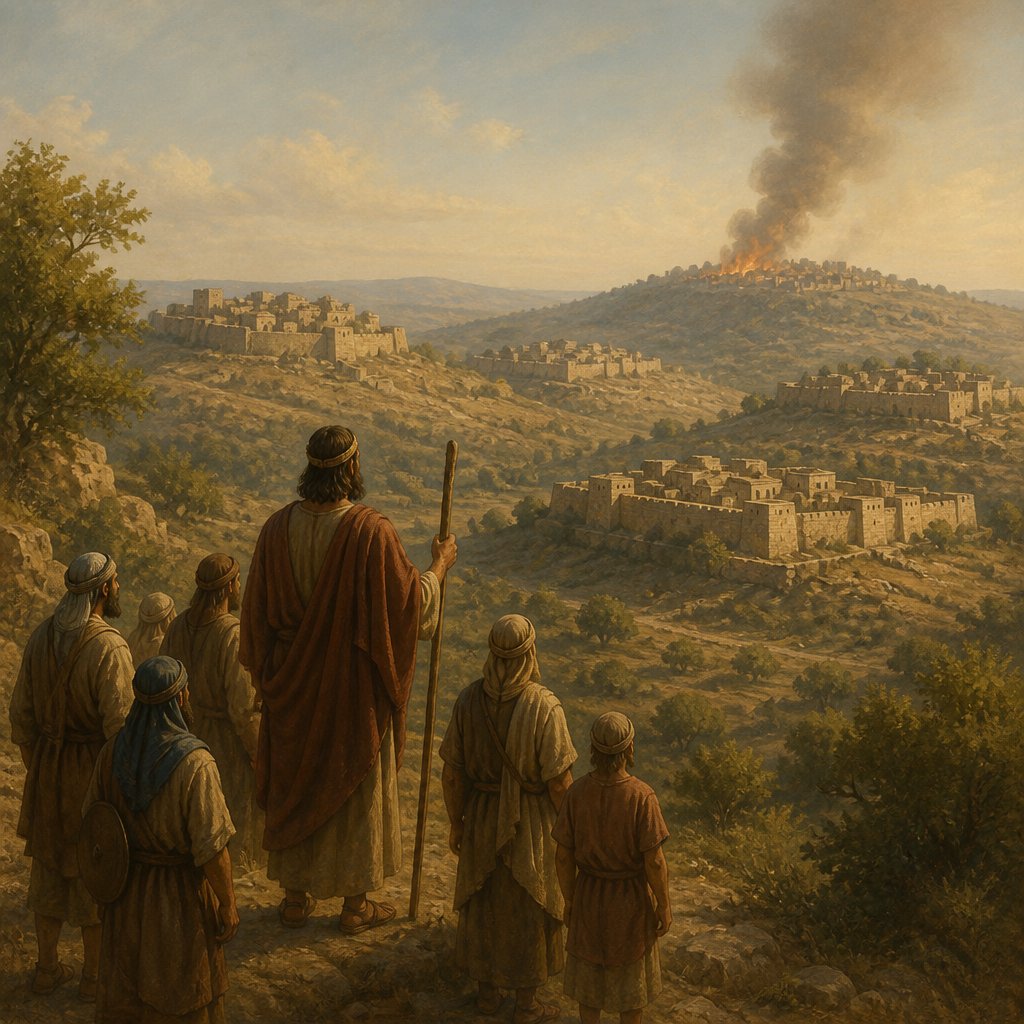
In the book of Joshua, chapter 11, verse 13 of the King James Version of the Bible, it is written: "But as for the cities that stood still in their strength, Israel burned none of them, save Hazor only; that did Joshua burn." This verse is part of the larger narrative in the Old Testament that describes the conquest of the Promised Land by the Israelites under the leadership of Joshua.
To fully understand the meaning of this verse, it is important to consider the historical and cultural context in which it was written. The Israelites had been wandering in the wilderness for 40 years following their exodus from Egypt, and now they were finally entering the land that had been promised to them by God. The conquest of the Promised Land was a crucial event in Israelite history, marking the fulfillment of God's covenant with Abraham and the establishment of the Israelite nation in the land of Canaan.
The verse itself refers to the destruction of the city of Hazor by the Israelites under the command of Joshua. The fact that Hazor was the only city burned by the Israelites is significant and speaks to several important themes within the larger biblical narrative. One of the key themes in this verse is the idea of divine judgment and the fulfillment of God's promises. Throughout the book of Joshua, there is a clear emphasis on the Israelites' obedience to God and their reliance on His power to bring about victory in battle. The destruction of Hazor is presented as a fulfillment of God's judgement upon the city and a demonstration of His faithfulness to His people.
Another important theme in this verse is that of mercy and restraint. While the Israelites were commanded to conquer the land and drive out its inhabitants, there are instances, such as the one described in this verse, where they show mercy and restraint. Despite the temptation to engage in wholesale destruction, the Israelites chose to spare certain cities that "stood still in their strength," demonstrating a sense of compassion and discernment in their approach to conquest.
Furthermore, the verse also highlights the strategic military tactics employed by Joshua and the Israelites. By sparing certain cities, they may have been able to establish alliances or use these cities as bases for future military campaigns. This tactical decision shows the wisdom and prudence of the Israelite leaders and their ability to think strategically in the midst of warfare.
In addition to its historical and thematic significance, this verse also holds symbolic value within the larger biblical narrative. The city of Hazor is mentioned in various other passages in the Old Testament, often in the context of God's judgment and the destruction of wickedness. The burning of Hazor serves as a powerful symbol of God's justice and His sovereignty over the nations. It also serves as a warning to other cities and peoples who stood in opposition to God's chosen people.
Overall, Joshua 11:13 is a verse that is rich in historical, thematic, and symbolic significance. It speaks to the larger themes of divine judgment, mercy, strategic warfare, and the fulfillment of God's promises. As part of the narrative of the conquest of the Promised Land, this verse holds a central place in the larger story of Israel's journey to establish themselves in the land that God had promised to them.
Have questions about Joshua 11:13?
Dive deeper into this scripture with Bible Chat — an AI-powered tool for exploring God's Word through conversation. Ask questions, get context, and grow in your understanding of the Bible.
Get Our Apps


Joshua 11:13 Artwork

Joshua 11:13 - "But as for the cities that stood still in their strength, Israel burned none of them, save Hazor only; that did Joshua burn."
"But as for the cities that stood still in their strength, Israel burned none of them, save Hazor only; that did Joshua burn." - Joshua 11:13

Joshua 13:11 - "And Gilead, and the border of the Geshurites and Maachathites, and all mount Hermon, and all Bashan unto Salcah;"
"And Gilead, and the border of the Geshurites and Maachathites, and all mount Hermon, and all Bashan unto Salcah;" - Joshua 13:11

Joshua 11:18 - "Joshua made war a long time with all those kings."

Joshua 14:13 - "And Joshua blessed him, and gave unto Caleb the son of Jephunneh Hebron for an inheritance."

Joshua 5:13

Joshua 11:9 - "And Joshua did unto them as the LORD bade him: he houghed their horses, and burnt their chariots with fire."

Joshua 13:18 - "And Jahazah, and Kedemoth, and Mephaath,"

Joshua 11:15 - "¶ As the LORD commanded Moses his servant, so did Moses command Joshua, and so did Joshua; he left nothing undone of all that the LORD commanded Moses."
Psalm 1:1-3
Pain 1:1-3

Joshua 11:23 - "So Joshua took the whole land, according to all that the LORD said unto Moses; and Joshua gave it for an inheritance unto Israel according to their divisions by their tribes. And the land rested from war."

Joshua 11:7 - "So Joshua came, and all the people of war with him, against them by the waters of Merom suddenly; and they fell upon them."

Joshua 11:10 - "¶ And Joshua at that time turned back, and took Hazor, and smote the king thereof with the sword: for Hazor beforetime was the head of all those kingdoms."

Joshua 5:13 (KJVA) 13 And it came to pass, when Joshua was by Jericho, that he lifted up his eyes and looked, and, behold, there stood a man over against him with his sword drawn in his hand: and Joshua went unto him, and said unto him, Art thou for us, or for our adversaries?

Joshua 8:13 - "And when they had set the people, even all the host that was on the north of the city, and their liers in wait on the west of the city, Joshua went that night into the midst of the valley."

Joshua 13:13 - "Nevertheless the children of Israel expelled not the Geshurites, nor the Maachathites: but the Geshurites and the Maachathites dwell among the Israelites until this day."

Joshua 13:20 - "And Beth-peor, and Ashdoth-pisgah, and Beth-jeshimoth,"

Joshua 12:13 - "The king of Debir, one; the king of Geder, one;"

Joshua 13:19 - "And Kirjathaim, and Sibmah, and Zareth-shahar in the mount of the valley,"

Joshua 11:16 - "So Joshua took all that land, the hills, and all the south country, and all the land of Goshen, and the valley, and the plain, and the mountain of Israel, and the valley of the same;"

Joshua 11:21 - "¶ And at that time came Joshua, and cut off the Anakims from the mountains, from Hebron, from Debir, from Anab, and from all the mountains of Judah, and from all the mountains of Israel: Joshua destroyed them utterly with their cities."

Joshua 12:11 - "The king of Jarmuth, one; the king of Lachish, one;"

Exodus 17:13 - "And Joshua discomfited Amalek and his people with the edge of the sword."

"Joshua made war a long time with all those kings." - Joshua 11:18

Joshua 13:28 - "This is the inheritance of the children of Gad after their families, the cities, and their villages."

Joshua 13:1 - "Now Joshua was old and stricken in years; and the LORD said unto him, Thou art old and stricken in years, and there remaineth yet very much land to be possessed."

"And Jahazah, and Kedemoth, and Mephaath," - Joshua 13:18

Joshua 13:2 - "This is the land that yet remaineth: all the borders of the Philistines, and all Geshuri,"