What does Jonah 1:13 mean?
"Nevertheless the men rowed hard to bring it to the land; but they could not: for the sea wrought, and was tempestuous against them." - Jonah 1:13
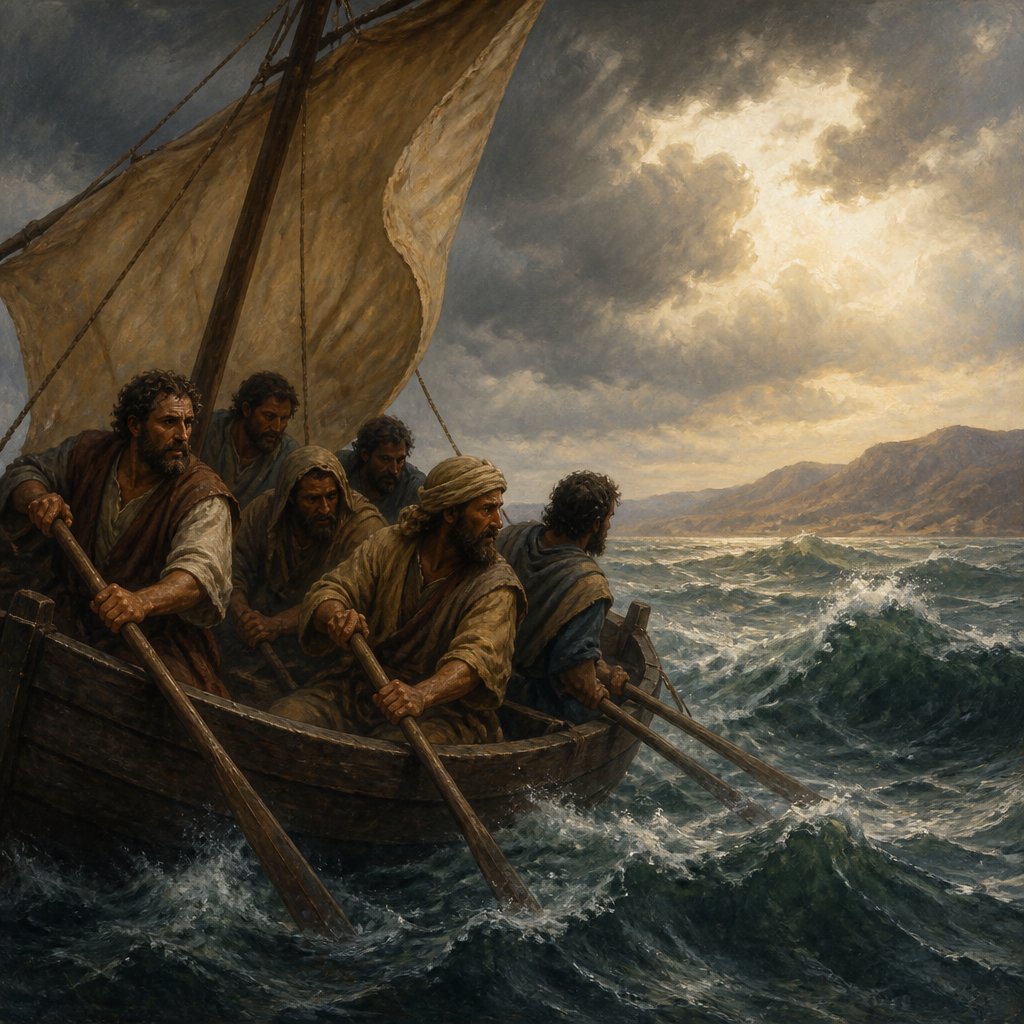
The Book of Jonah in the Bible is a short but powerful narrative that illustrates the mercy and forgiveness of God, as well as the consequences of disobedience. The verse Jonah 1:13 from the King James Version (KJV) reads: "Nevertheless the men rowed hard to bring it to the land; but they could not: for the sea wrought, and was tempestuous against them."
In this verse, we find the sailors on the ship with Jonah, who has confessed to them that he is running away from the Lord. Despite their efforts to save themselves, the sea becomes increasingly stormy and unmanageable, putting their lives in jeopardy. This verse is significant in understanding the themes of obedience, repentance, and the power of God's will.
The theme of obedience is central to this account, as Jonah's disobedience to God's command leads to dire consequences not only for himself, but for those around him as well. Jonah was explicitly told by God to go to the city of Nineveh and preach against its wickedness, but instead made the conscious decision to flee in the opposite direction. This act of rebellion sets off a chain of events that endangers the lives of innocent sailors, highlighting the impact our disobedience can have on others.
Additionally, the concept of repentance is also evident in this verse. Despite Jonah's initial refusal to obey God, his confession to the sailors about his wrongdoing serves as a moment of acknowledgment and potential repentance. The sailors themselves also demonstrate a willingness to do whatever it takes to save themselves from the storm, even though they were not the ones who had directly disobeyed God. Their efforts to row the ship to safety symbolize a desire for redemption and a plea for mercy in the midst of a crisis.
The power of God's will is another compelling theme present in this verse. The tempestuous sea and the escalating storm serve as a physical manifestation of God's power and sovereignty. Despite the sailors' valiant efforts to control the situation, the forces of nature were ultimately beyond their control, highlighting the supremacy of God's will over human actions and intentions.
The context of this verse within the larger story of Jonah is crucial for a deeper understanding of its significance. The Book of Jonah serves as a poignant illustration of God's compassion and mercy, as well as the importance of obedience and repentance. Despite Jonah's disobedience, God does not abandon him. Instead, he orchestrates a series of events that ultimately lead to Jonah's obedience and the salvation of the people of Nineveh.
Symbolically, the stormy sea can be interpreted as a metaphor for the turmoil and chaos that result from disobedience and sin. It represents the consequences of straying from God's will and the struggle to regain control in the face of adversity. The sailors' futile attempts to tame the sea reflect humanity's limited power in the face of divine intervention, underscoring the need for humility and submission to God's authority.
In conclusion, Jonah 1:13 from the King James Version of the Bible encapsulates important themes of obedience, repentance, and the power of God's will. It serves as a reminder of the far-reaching repercussions of disobedience, as well as the potential for redemption and mercy through acknowledging our mistakes and seeking reconciliation. The symbolism of the stormy sea further reinforces the concept of God's sovereignty and the need for humble submission to his divine will.
Have questions about Jonah 1:13?
Dive deeper into this scripture with Bible Chat — an AI-powered tool for exploring God's Word through conversation. Ask questions, get context, and grow in your understanding of the Bible.
Get Our Apps


Jonah 1:13 Artwork

Jonah 1:13 - "Nevertheless the men rowed hard to bring it to the land; but they could not: for the sea wrought, and was tempestuous against them."
"Nevertheless the men rowed hard to bring it to the land; but they could not: for the sea wrought, and was tempestuous against them." - Jonah 1:13

Jonah 1:1 - "Now the word of the LORD came unto Jonah the son of Amittai, saying,"

Jonah 1:17 – "But the Lord provided a great fish to swallow Jonah, and Jonah was inside the fish three days and three nights."

Jonah 4:1 - "But it displeased Jonah exceedingly, and he was very angry."

JONAH 4, NINEVAH REPENTING, JONAH BITTER

Jonah 1:17 - "¶ Now the LORD had prepared a great fish to swallow up Jonah. And Jonah was in the belly of the fish three days and three nights."

Jonah 3:1 - "And the word of the LORD came unto Jonah the second time, saying,"

Jonah 2:1 - "Then Jonah prayed unto the LORD his God out of the fish's belly,"

"But it displeased Jonah exceedingly, and he was very angry." - Jonah 4:1

Jonah 1:15 - "So they took up Jonah, and cast him forth into the sea: and the sea ceased from her raging."

"Now the word of the LORD came unto Jonah the son of Amittai, saying," - Jonah 1:1

"Now the LORD had prepared a great fish to swallow up Jonah. And Jonah was in the belly of the fish three days and three nights." - Jonah 1:17

"Now the LORD had prepared a great fish to swallow up Jonah. And Jonah was in the belly of the fish three days and three nights." - Jonah 1:17

"And the word of the LORD came unto Jonah the second time, saying," - Jonah 3:1

"Then Jonah prayed unto the LORD his God out of the fish's belly," - Jonah 2:1

"¶ Now the LORD had prepared a great fish to swallow up Jonah. And Jonah was in the belly of the fish three days and three nights." - Jonah 1:17

Jonah 1:4-5 ancient sail ship appropriate for time of Jonah, in the mids of a great tempest, dark waters, big waves, strong winds

Jonah 1:7 - "And they said every one to his fellow, Come, and let us cast lots, that we may know for whose cause this evil is upon us. So they cast lots, and the lot fell upon Jonah."

Jonah 1:5 - "Then the mariners were afraid, and cried every man unto his god, and cast forth the wares that were in the ship into the sea, to lighten it of them. But Jonah was gone down into the sides of the ship; and he lay, and was fast asleep."

"So they took up Jonah, and cast him forth into the sea: and the sea ceased from her raging." - Jonah 1:15

Jonah 1:3 - "But Jonah rose up to flee unto Tarshish from the presence of the LORD, and went down to Joppa; and he found a ship going to Tarshish: so he paid the fare thereof, and went down into it, to go with them unto Tarshish from the presence of the LORD."

Jonah 1:16 - "Then the men feared the LORD exceedingly, and offered a sacrifice unto the LORD, and made vows."

Jonah 1:2 - "Arise, go to Nineveh, that great city, and cry against it; for their wickedness is come up before me."

Jonah 1:4 - "¶ But the LORD sent out a great wind into the sea, and there was a mighty tempest in the sea, so that the ship was like to be broken."

"¶ Then said they unto him, What shall we do unto thee, that the sea may be calm unto us? for the sea wrought, and was tempestuous." - Jonah 1:11

Jonah 1:11 - "¶ Then said they unto him, What shall we do unto thee, that the sea may be calm unto us? for the sea wrought, and was tempestuous."

Jonah 1:9 - "And he said unto them, I am an Hebrew; and I fear the LORD, the God of heaven, which hath made the sea and the dry land."

"Then the men feared the LORD exceedingly, and offered a sacrifice unto the LORD, and made vows." - Jonah 1:16

Jonah 1:10 - "Then were the men exceedingly afraid, and said unto him, Why hast thou done this? For the men knew that he fled from the presence of the LORD, because he had told them."