What does John 9:6-7 mean?
"6 When he had thus spoken, he spat on the ground, and made clay of the spittle, and he anointed the eyes of the blind man with the clay, 7 And said unto him, Go, wash in the pool of Siloam, (which is by interpretation, Sent.) He went his way therefore, and washed, and came seeing." - John 9:6-7
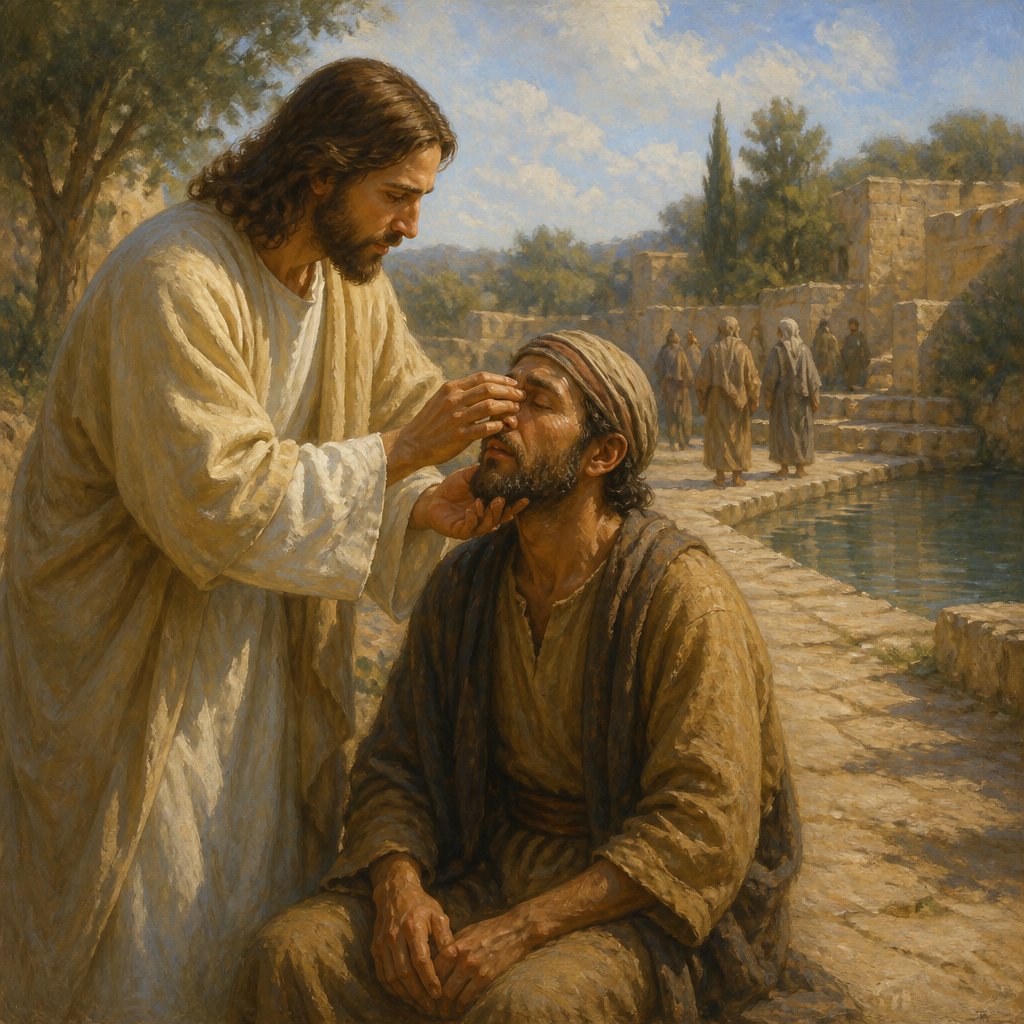
John 9:6-7 (KJV) says, "When he had thus spoken, he spat on the ground, and made clay of the spittle, and he anointed the eyes of the blind man with the clay, And said unto him, Go, wash in the pool of Siloam, (which is by interpretation, Sent.) He went his way therefore, and washed, and came seeing."
This passage recounts a miraculous event in which Jesus heals a man who was blind from birth. The account is not only significant for its demonstration of Jesus's power and compassion, but it also holds deeper spiritual meaning and symbolism.
The act of Jesus spitting on the ground and making clay of the spittle is an unusual and seemingly unconventional method of healing. However, in the context of the culture and beliefs of the time, this act carries profound significance. In ancient Jewish culture, saliva was believed to have medicinal properties and was used in various healing practices. By using his own saliva to make clay and then anointing the blind man's eyes with it, Jesus is showing his ability to transform the ordinary into the extraordinary and to bring about healing and restoration through unexpected means.
The act of anointing the blind man's eyes with the clay also symbolizes Jesus's role as the divine healer and the source of spiritual enlightenment. The use of clay as a medium for healing harkens back to the creation story in Genesis, where God forms man from the dust of the earth. In this act, Jesus is not only physically healing the blind man, but also symbolically re-creating and renewing him, restoring his sight and bringing him into a new understanding of the world.
The mention of the pool of Siloam adds another layer of symbolism to the passage. The name "Siloam" means "sent," and it is significant that Jesus sends the blind man to wash in this particular pool. The act of washing in the pool of Siloam represents a symbolic purification and cleansing, a ritual that signifies the blind man's transition from darkness to light, from spiritual blindness to spiritual insight. The pool of Siloam is also mentioned elsewhere in the Bible as a place of healing and restoration, linking Jesus's act of healing to a rich tradition of spiritual renewal and redemption.
The ultimate result of Jesus's actions is the miraculous restoration of the blind man's sight. This physical healing serves as a powerful demonstration of Jesus's divinity and his ability to bring about transformation and renewal in the lives of those who encounter him. The blind man's newfound ability to see symbolizes not only a physical miracle, but also a spiritual awakening and a new understanding of truth and reality.
The broader themes of this passage include the power of faith, the transformative nature of Jesus's ministry, and the fulfillment of prophetic promises. Throughout the book of John, there is a consistent emphasis on the concept of spiritual blindness and the need for divine illumination. The healing of the blind man serves as a powerful metaphor for the spiritual enlightenment that Jesus brings to those who believe in him.
Overall, John 9:6-7 is a rich and multi-layered passage that holds deep spiritual and symbolic significance. It invites readers to consider the transformative power of Jesus's ministry, the themes of healing and renewal, and the profound impact of encountering the divine presence. Through this passage, readers are encouraged to reflect on their own spiritual blindness and to seek out the healing and enlightenment that Jesus offers.
Have questions about John 9:6-7?
Dive deeper into this scripture with Bible Chat — an AI-powered tool for exploring God's Word through conversation. Ask questions, get context, and grow in your understanding of the Bible.
Get Our Apps


John 9:6-7 Artwork

John 9:6-7 - "After saying this, he spit on the ground, made some mud with the saliva, and put it on the man’s eyes. "Go," he told him, "wash in the Pool of Siloam" (this word means "Sent"). So the man went and washed, and came home seeing."
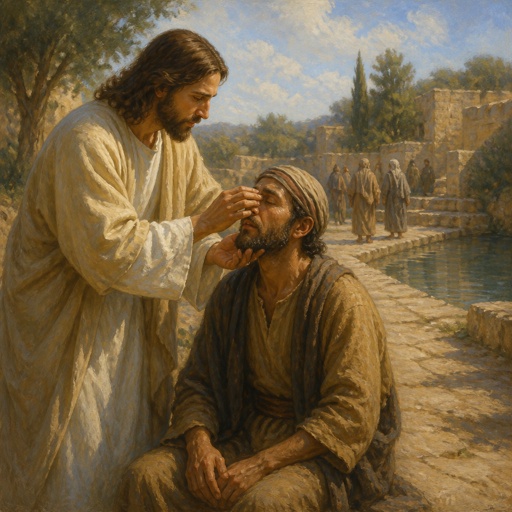
"After saying this, he spit on the ground, made some mud with the saliva, and put it on the man’s eyes. "Go," he told him, "wash in the Pool of Siloam" (this word means "Sent"). So the man went and washed, and came home seeing." - John 9:6-7

Corinthians 9:6-7

John 6:8-9

Corinthians 9:6-7 for Christmas card with little kids.

John 4:6-7
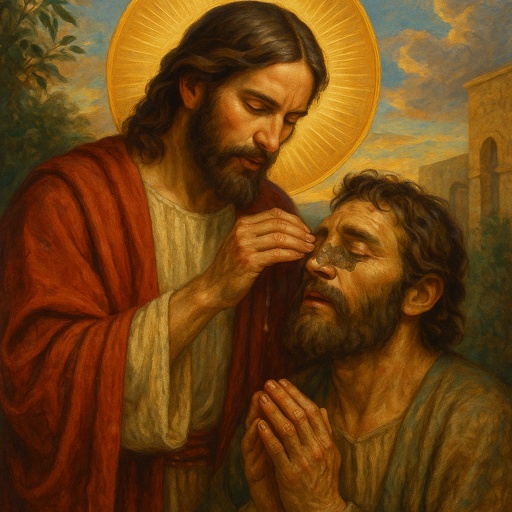
"When he had thus spoken, he spat on the ground, and made clay of the spittle, and he anointed the eyes of the blind man with the clay," - John 9:6

John 9:6 - "When he had thus spoken, he spat on the ground, and made clay of the spittle, and he anointed the eyes of the blind man with the clay,"

John 7:9 - "When he had said these words unto them, he abode still in Galilee."

John 7:6 - "Then Jesus said unto them, My time is not yet come: but your time is alway ready."

John 6:9 - "There is a lad here, which hath five barley loaves, and two small fishes: but what are they among so many?"

Luke 9:7 - "¶ Now Herod the tetrarch heard of all that was done by him: and he was perplexed, because that it was said of some, that John was risen from the dead;"

John 6:7 - "Philip answered him, Two hundred pennyworth of bread is not sufficient for them, that every one of them may take a little."

John 9:7 - "And said unto him, Go, wash in the pool of Siloam, (which is by interpretation, Sent.) He went his way therefore, and washed, and came seeing."

A heartfelt Christmas card scene inspired by Corinthians 9:6-7, drawn by a 7 year old kid with color pencil, crayons and watercolour.

A heartfelt Christmas card scene inspired by Corinthians 9:6-7, drawn by a 7 year old kid with color pencil, crayons and watercolour.
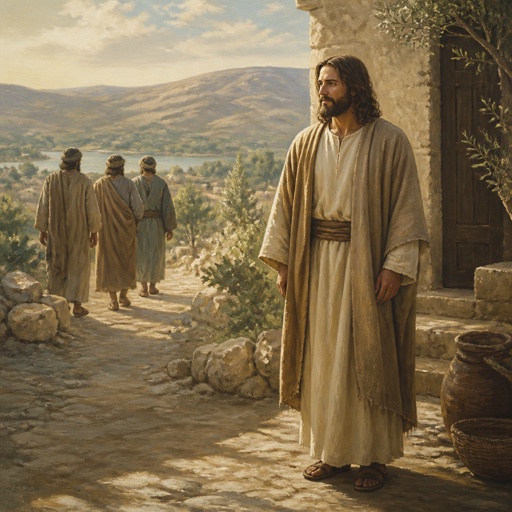
"When he had said these words unto them, he abode still in Galilee." - John 7:9
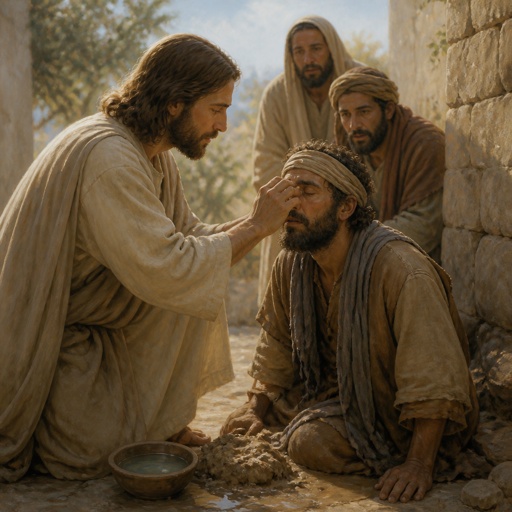
"When he had thus spoken, he spat on the ground, and made clay of the spittle, and he anointed the eyes of the blind man with the clay," - John 9:6
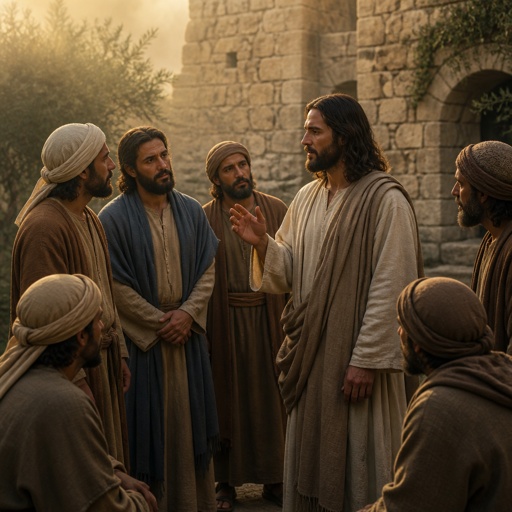
"Then Jesus said unto them, My time is not yet come: but your time is alway ready." - John 7:6

John 1:6 - "¶ There was a man sent from God, whose name was John."

John 6:63

John 6:63
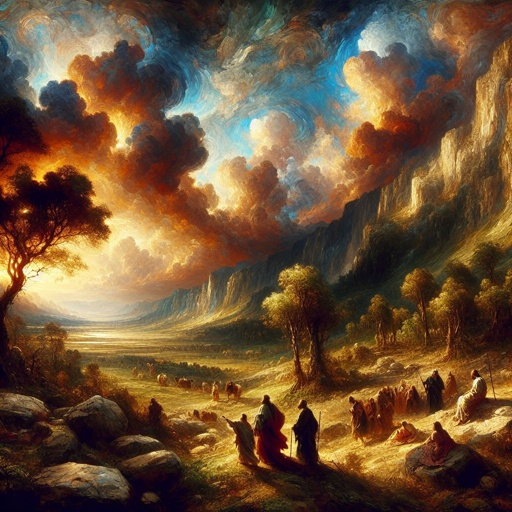
John 7:38

John 15:7

John 7:38

2 Corinthians 9:6-7 - "But this I say, He which soweth sparingly shall reap also sparingly; and he which soweth bountifully shall reap also bountifully. Every man according as he purposeth in his heart, so let him give; not grudgingly, or of necessity: for God loveth a cheerful giver."

John 6:63

John 6:63

John 15:7

John 7:38