What does John 8:7 mean?
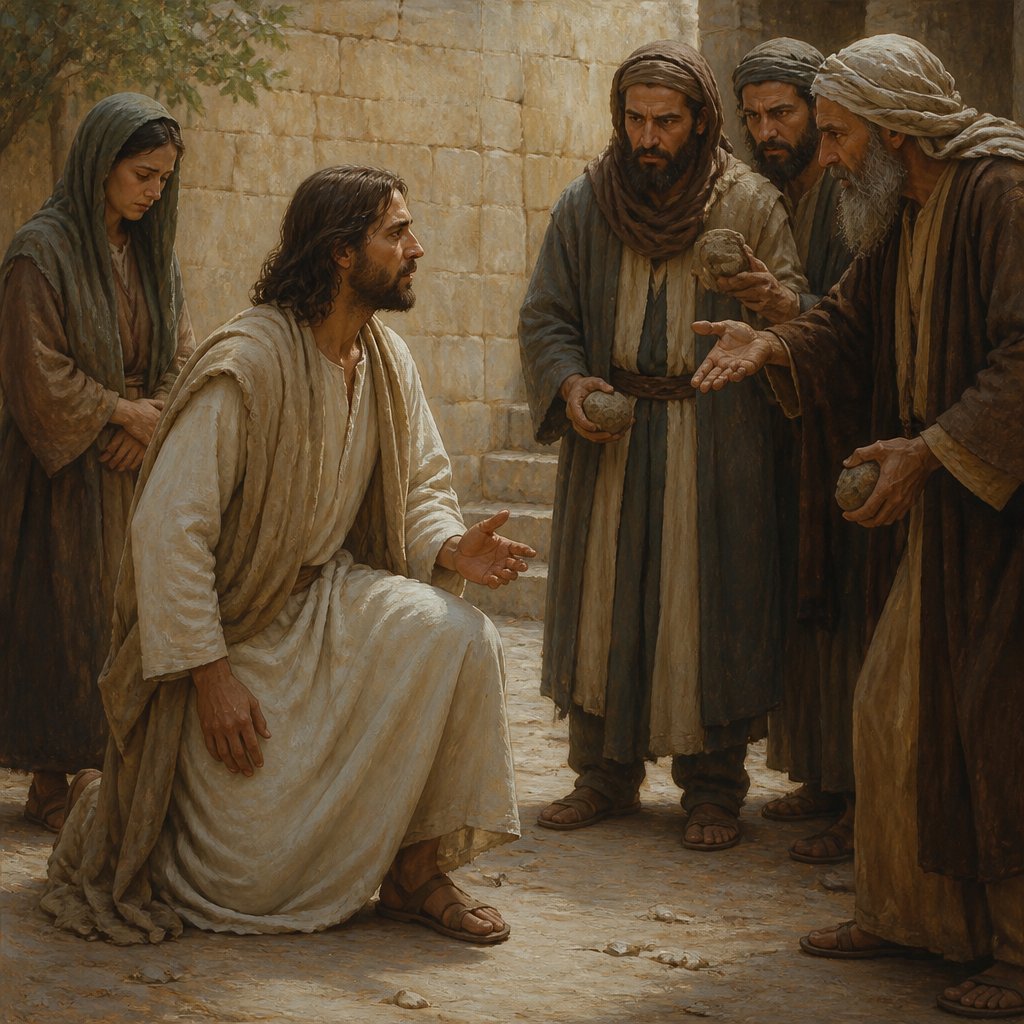
"So when they continued asking him, he lifted up himself, and said unto them, He that is without sin among you, let him first cast a stone at her." - John 8:7
John 8:7
"So when they continued asking him, he lifted up himself, and said unto them, He that is without sin among you, let him first cast a stone at her."
In this well-known verse from the gospel of John, Jesus is addressing a group of scribes and Pharisees who have brought a woman caught in adultery before him, seeking to test him and find a reason to accuse him. They have asked him whether the woman should be stoned, as the law of Moses commands. Jesus’ response is both profoundly wise and deeply revealing of his character.
The context of this verse is essential to understanding its full meaning. The scribes and Pharisees were trying to trap Jesus by forcing him to either condone the stoning of the woman, in which case he would seem to be harsh and unmerciful, or to forbid the stoning, thereby breaking the law of Moses and appearing to disregard it. However, Jesus’ response turns the tables on them, exposing their own hypocrisy and lack of understanding of the true nature of the law.
The theme of judgment and mercy is central to this verse. Jesus is reminding the scribes and Pharisees that none of them is without sin, and therefore none of them has the right to pass judgment on the woman. By challenging the one who is without sin to cast the first stone, Jesus is not only highlighting the hypocrisy of the accusers but also emphasizing the need for humility and mercy in the application of the law. Instead of condemning the woman, Jesus offers her forgiveness and a fresh start, demonstrating the transformative power of grace and love.
Symbolism also plays a significant role in this verse. The act of casting stones represents not only the physical act of punishment but also the broader idea of judgment and condemnation. Jesus’ words challenge the scribes and Pharisees to examine their own hearts and recognize their own need for forgiveness and grace. The image of casting stones is also evocative of the larger biblical theme of the cornerstone, which refers to Jesus himself as the foundation of faith and the source of salvation. In this context, Jesus’ words serve as a reminder that he alone has the authority to judge and condemn, and that true justice is found in his mercy and love.
This verse also highlights the overarching message of the gospel of John, which is the proclamation of Jesus as the light of the world and the embodiment of God’s love and truth. Throughout the gospel, Jesus consistently challenges the religious leaders of his day, exposing their legalistic attitudes and pointing them back to the heart of the law, which is love for God and love for one’s neighbor. In this way, John 8:7 serves as a microcosm of the gospel message as a whole, reminding us of the transformative power of grace and the boundless mercy of God.
In conclusion, John 8:7 is a powerful and poignant reminder of the need for humility and mercy in our interactions with others. It challenges us to examine our own hearts and recognize our own need for forgiveness, while also pointing us to the source of true justice and grace in Jesus Christ. As we seek to live out the principles of the gospel, may we be continually reminded of the profound wisdom and love encapsulated in these words of Jesus.
Have questions about John 8:7?
Dive deeper into this scripture with Bible Chat — an AI-powered tool for exploring God's Word through conversation. Ask questions, get context, and grow in your understanding of the Bible.
Get Our Apps


John 8:7 Artwork

John 8:7 - "So when they continued asking him, he lifted up himself, and said unto them, He that is without sin among you, let him first cast a stone at her."
"So when they continued asking him, he lifted up himself, and said unto them, He that is without sin among you, let him first cast a stone at her." - John 8:7

John 7:8 - "Go ye up unto this feast: I go not up yet unto this feast; for my time is not yet full come."

"Beloved, let us love one another, for love is from God, and whoever loves has been born of God and knows God. Anyone who does not love does not know God, because God is love." - 1 John 4:7-8

John 8

John 8:44

John 8:44

John 8:44
John 7:38

John 15:7

John 7:38

John 8:8 - "And again he stooped down, and wrote on the ground."

1 John 4:7-8 - "Beloved, let us love one another, for love is from God, and whoever loves has been born of God and knows God. Anyone who does not love does not know God, because God is love."

John 15:7-8 - "If ye abide in me, and my words abide in you, ye shall ask what ye will, and it shall be done unto you. Herein is my Father glorified, that ye bear much fruit; so shall ye be my disciples."

John 15:7

John 7:38

John 7:38

John 7:17-18

John 7:37-39

John 7:17-18

John 7:37-39

John 8:12

John 7:17-18

John 7:17-18

John 8:12

John 8:12

John 8:12

John 7:38

John 7:38

John 7:38