What does John 8:19 mean?
"Then said they unto him, Where is thy Father? Jesus answered, Ye neither know me, nor my Father: if ye had known me, ye should have known my Father also." - John 8:19
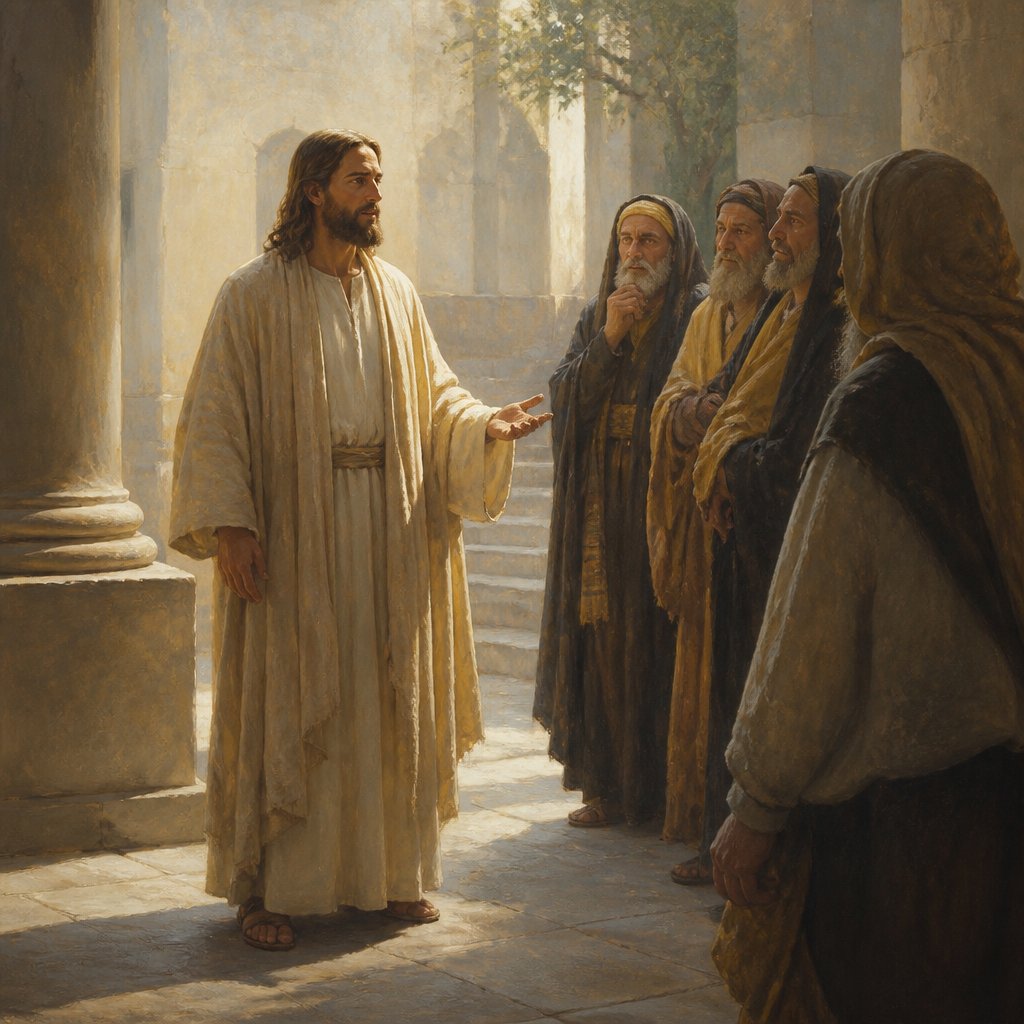
John 8:19 (KJV) - "Then said they unto him, Where is thy Father? Jesus answered, Ye neither know me, nor my Father: if ye had known me, ye should have known my Father also."
In the Gospel of John, we encounter Jesus in a discussion with the Pharisees who are questioning his authority and identity. In this particular verse, the Pharisees ask Jesus about the whereabouts of his Father. They are likely referring to Joseph, Jesus' earthly father, but Jesus responds by directing their focus to a higher, spiritual understanding.
The theme of knowing and understanding plays a central role in this verse. Jesus is emphasizing the crucial connection between knowing him and knowing the Father. He is asserting that those who have a true understanding of him will also have a true understanding of God the Father. This declaration by Jesus highlights the intimate relationship between himself and the Father, a concept that is central to Christian theology.
The context of this verse is essential for a comprehensive understanding of its meaning. Throughout the Gospel of John, Jesus consistently points to his divine nature and his unique relationship with the Father. This verse is part of a larger narrative in which Jesus is confronted by those who are questioning his identity and authority. The stakes are high, as these questioning and challenges ultimately lead to Jesus' crucifixion. In this context, Jesus' response carries even more weight as he is essentially asserting his identity as the Son of God and the only way to truly know and understand the Father.
Symbolism also plays a significant role in this verse. The question about the whereabouts of Jesus' Father serves as a metaphor for the deeper spiritual truth Jesus is trying to convey. By redirecting the focus from his earthly father to the Father in heaven, Jesus is challenging the limited and earthly mindset of the Pharisees. He is urging them to look beyond the physical and embrace the spiritual reality of his divine nature and relationship with the Father.
Furthermore, this verse sheds light on the exclusivity of the Christian faith. Jesus' statement that knowing him is tantamount to knowing the Father reinforces the belief that faith in Jesus is the only path to salvation and a true understanding of God. This exclusivity is a recurring theme in the Gospel of John and is a foundational tenet of Christianity.
In summary, John 8:19 from the King James Version of the Bible presents a profound declaration by Jesus about the essential connection between knowing him and knowing the Father. This verse is rich in theological implications, emphasizing the exclusive nature of the Christian faith and the intimate relationship between Jesus and God. It is a powerful reminder of the significance of truly knowing and understanding Jesus as the Son of God.
Have questions about John 8:19?
Dive deeper into this scripture with Bible Chat — an AI-powered tool for exploring God's Word through conversation. Ask questions, get context, and grow in your understanding of the Bible.
Get Our Apps


John 8:19 Artwork

John 8:19 - "Then said they unto him, Where is thy Father? Jesus answered, Ye neither know me, nor my Father: if ye had known me, ye should have known my Father also."
"Then said they unto him, Where is thy Father? Jesus answered, Ye neither know me, nor my Father: if ye had known me, ye should have known my Father also." - John 8:19

John 19:8 - "¶ When Pilate therefore heard that saying, he was the more afraid;"

"¶ When Pilate therefore heard that saying, he was the more afraid;" - John 19:8

John 19:38

John 19:1

John 19:19 - "¶ And Pilate wrote a title, and put it on the cross. And the writing was, JESUS OF NAZARETH THE KING OF THE JEWS."

John 17.6-19

John 19:1-3

John 19:25-27

John 8

John 8:44

John 8:44

John 8:44

John 8:8 - "And again he stooped down, and wrote on the ground."

John 1:19 - "¶ And this is the record of John, when the Jews sent priests and Levites from Jerusalem to ask him, Who art thou?"

John 19:25-27

John 19:26-27

John 21:15-19

John 8:12

John 10:19 - "¶ There was a division therefore again among the Jews for these sayings."

John 8:12

John 8:12

John 8:12

John 19:1 - "Then Pilate therefore took Jesus, and scourged him."

John 19:25-27 with emphasis on Mary
John 3:5-8

John 6:8-9

John 15:1-8

John 3:5-8