What does John 6:47 mean?
"Verily, verily, I say unto you, He that believeth on me hath everlasting life." - John 6:47
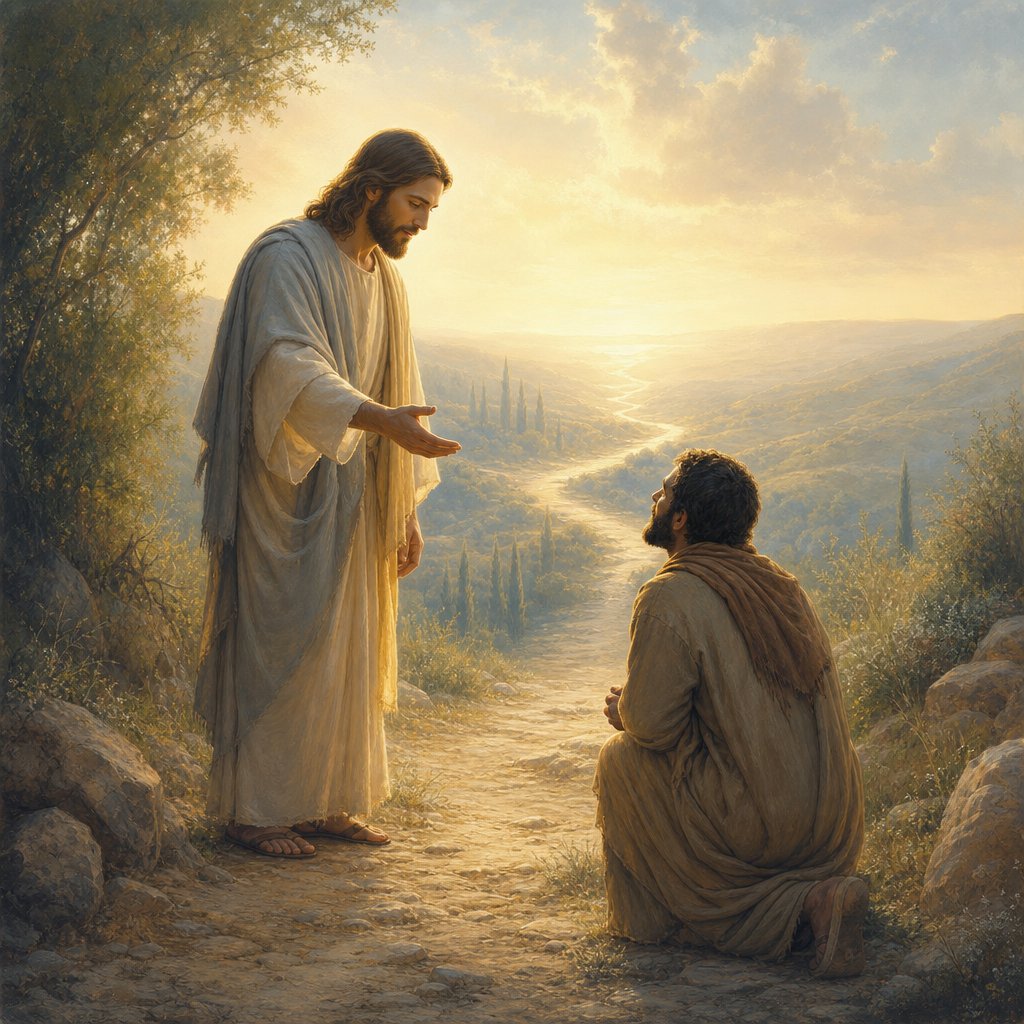
“Verily, verily, I say unto you, He that believeth on me hath everlasting life.” (John 6:47, KJV)
In the plain force of its words, John 6:47 is a promise spoken by the Lord Jesus Christ, delivered with the doubled solemnity, “Verily, verily,” which in John’s Gospel signals a saying of special weight and certainty. Christ is not offering a guess, a wish, or a mere religious counsel, but declaring what is true and settled: the one who “believeth on” Him “hath” everlasting life. The verse does not speak in the future tense alone, as though eternal life were only a distant reward; it speaks in the present, “hath,” to show that this life is possessed now by the believer, though it will be manifested in fullness hereafter. The core meaning is that everlasting life is granted through faith in Christ Himself, not through works, ancestry, religious status, or the mere witnessing of miracles.
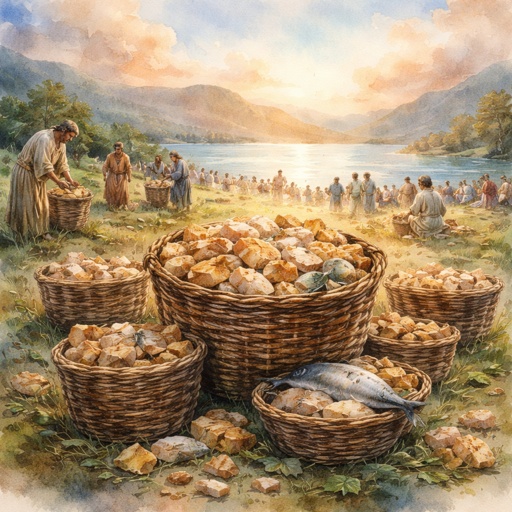
The immediate context of John 6 gives the statement its sharpest edge. Jesus has fed the five thousand with loaves and fishes, and the crowd follows Him, moved by the sign and by the satisfaction of their hunger. Christ then exposes their misplaced pursuit: they seek Him because they “did eat of the loaves, and were filled” (John 6:26, KJV). This sets the stage for the discourse in which He turns their appetite for physical bread into a call to seek the true bread of God. The people speak of Moses and manna, longing for a continual provision like Israel had in the wilderness, but Jesus redirects them from a gift to the Giver, from a temporary provision to an eternal one. In that setting, John 6:47 functions like a clear door set in the middle of a long argument: it distills the point of the whole conversation. The question is not finally about bread, but about belief; not about the stomach, but about the soul; not about Moses, but about Christ.
Within the chapter, Jesus speaks of “the bread of life” (John 6:35, KJV) and then says things that sound startlingly physical: “Except ye eat the flesh of the Son of man, and drink his blood, ye have no life in you” (John 6:53, KJV). John 6:47 helps interpret those later sayings by showing that Christ is pressing toward the spiritual reality of faith, not inviting a carnal misunderstanding. To “believe on” Christ is the essential act by which one receives what He gives; and in the language of the chapter, receiving Him by faith is pictured as eating bread. Bread is taken in, trusted, relied upon, and made one with the life of the one who eats; so Christ, as the true bread, is received inwardly by faith, not merely admired outwardly. The symbolism is not meant to reduce salvation to metaphor, but to make its necessity vivid: as bread is necessary to sustain the body, so Christ is necessary to sustain and give life to the soul. When John 6:47 says, “He that believeth on me hath everlasting life,” it supplies the key that unlocks the meaning of the “eating” language: faith is the mode of receiving, and life is the result bestowed.
The themes gathered into this single sentence are central to John’s Gospel. First is the person of Christ as the object of faith. Jesus does not say, “He that believeth hath everlasting life,” as though faith were a vague spiritual optimism. He says, “He that believeth on me.” The life promised is inseparable from the One who promises it. This matches the larger testimony of John, where Christ is presented as the life-giver: “In him was life” (John 1:4, KJV), and later, “I am the resurrection, and the life” (John 11:25, KJV). Faith, in this verse, is not mere agreement with facts; it is personal reliance upon Christ, a coming to Him, a resting on Him, a receiving of Him, as earlier in the chapter: “He that cometh to me shall never hunger; and he that believeth on me shall never thirst” (John 6:35, KJV). “Believeth on” carries the sense of leaning the weight of one’s hope upon Him.
Second is the certainty and immediacy of the gift. “Hath everlasting life” is a strong possession statement. It does not depict life as uncertain until death, nor as dependent on maintaining a shifting balance of merit. Rather, it describes a present reality grounded in Christ’s authority and truthfulness. That present possession does not deny the future; it anchors it. Everlasting life in John is not only endless duration but a kind of life that belongs to the age of God’s kingdom, a life that death cannot cancel and that begins even now in communion with Christ. This is why, within the same discourse, Jesus can say, “I will raise him up at the last day” (John 6:40, KJV) while also declaring present life. The believer has life now and will be raised then; the present gift guarantees the future consummation.
Third is the contrast between perishing provision and abiding provision. The crowd’s first concern is bread that spoils; Jesus urges them, “Labour not for the meat which perisheth, but for that meat which endureth unto everlasting life” (John 6:27, KJV). John 6:47 names plainly what that enduring “meat” gives: everlasting life. The verse stands as a rebuke to the instinct to turn God into a means of earthly satisfaction. It teaches that the highest mercy is not that our bellies are filled for a day, but that our souls are given life that cannot die.
There is also an important covenantal and wilderness backdrop. The people point to manna, but manna, though miraculous, could not confer immortality; those who ate it still died. Jesus draws the comparison later: “Your fathers did eat manna in the wilderness, and are dead” (John 6:49, KJV). The significance of John 6:47 is heightened against that truth: here is a bread, here is a gift, that does not end in death. The symbolism of manna—daily dependence, heaven-sent provision, grace given to an undeserving people—finds its fulfillment in Christ, who is not merely a supplier of gifts but Himself the gift. Believing “on me” is therefore a new-exodus kind of trust: not simply walking behind Moses, but receiving the Son whom the Father hath sent.
The verse also carries the theme of divine testimony and authority. “Verily, verily, I say unto you” frames the promise as a sworn word from the mouth of the faithful witness. In John’s Gospel, Jesus speaks what He has seen and heard of the Father; His words are life-giving. Thus the verse is not simply a doctrinal formula; it is the King’s proclamation of amnesty and life. Its certainty rests on His person. The reader is meant to feel that the matter is not left to human speculation: Christ Himself asserts it.
Finally, the verse exposes the simplicity of the way of salvation and the offense that simplicity can cause. In the same chapter, some hear Christ’s teaching and are stumbled; “From that time many of his disciples went back, and walked no more with him” (John 6:66, KJV). The stumbling often lies in this: people want tangible signs, impressive works, or a spirituality that flatters human strength, but Christ calls for belief on Him. John 6:47 is therefore both invitation and dividing line. It opens the door wide—“He that believeth”—and at the same time shuts out every other ground of boasting, because the condition is not achievement but trust.
So the significance of John 6:47 is that it sets before the hearer, with the utmost certainty, the heart of Christ’s message in that discourse: the true hunger of man is answered not by perishing bread but by the Son of God, received by faith; and the result of that faith is not merely improved life, but everlasting life possessed now and secured forever by the word of Christ.
Have questions about John 6:47?
Dive deeper into this scripture with Bible Chat — an AI-powered tool for exploring God's Word through conversation. Ask questions, get context, and grow in your understanding of the Bible.
Get Our Apps


John 6:47 Artwork

John 6:47 - "Verily, verily, I say unto you, He that believeth on me hath everlasting life."

"Verily, verily, I say unto you, He that believeth on me hath everlasting life." - John 6:47

"Verily, verily, I say unto you, He that believeth on me hath everlasting life." - John 6:47

John 7:47 - "Then answered them the Pharisees, Are ye also deceived?"

John 5:47 - "But if ye believe not his writings, how shall ye believe my words?"

John 1:47 - "Jesus saw Nathanael coming to him, and saith of him, Behold an Israelite indeed, in whom is no guile!"

John 8:47 - "He that is of God heareth God's words: ye therefore hear them not, because ye are not of God."

John 11:47 - "¶ Then gathered the chief priests and the Pharisees a council, and said, What do we? for this man doeth many miracles."

"Then answered them the Pharisees, Are ye also deceived?" - John 7:47

Mark 6:47 - "And when even was come, the ship was in the midst of the sea, and he alone on the land."

John 12:47 - "And if any man hear my words, and believe not, I judge him not: for I came not to judge the world, but to save the world."

1 Chronicles 6:47 - "The son of Mahli, the son of Mushi, the son of Merari, the son of Levi."

Psalms 47:6 - "Sing praises to God, sing praises: sing praises unto our King, sing praises."

Luke 6:47 - "Whosoever cometh to me, and heareth my sayings, and doeth them, I will shew you to whom he is like:"

"But if ye believe not his writings, how shall ye believe my words?" - John 5:47

Jeremiah 47:6 - "O thou sword of the LORD, how long will it be ere thou be quiet? put up thyself into thy scabbard, rest, and be still."

Ezekiel 47:6 - "¶ And he said unto me, Son of man, hast thou seen this? Then he brought me, and caused me to return to the brink of the river."

John 4:47 - "When he heard that Jesus was come out of Judaea into Galilee, he went unto him, and besought him that he would come down, and heal his son: for he was at the point of death."

"And when even was come, the ship was in the midst of the sea, and he alone on the land." - Mark 6:47

"The son of Mahli, the son of Mushi, the son of Merari, the son of Levi." - 1 Chronicles 6:47

"Jesus saw Nathanael coming to him, and saith of him, Behold an Israelite indeed, in whom is no guile!" - John 1:47

"He that is of God heareth God's words: ye therefore hear them not, because ye are not of God." - John 8:47
John 1:6 - "¶ There was a man sent from God, whose name was John."

John 6:63

John 6:63

Jesus said, ‘I tell you most solemnly, everybody who believes has eternal life.’ (Jn 6:47)

John 6:63

John 6:63

"¶ Then gathered the chief priests and the Pharisees a council, and said, What do we? for this man doeth many miracles." - John 11:47
John 6:12