What does John 5:12 mean?
"Then asked they him, What man is that which said unto thee, Take up thy bed, and walk?" - John 5:12

The verse John 5:12 from the King James Version (KJV) of the Bible reads: "Then asked they him, What man is that which said unto thee, Take up thy bed, and walk?"
This verse is part of a larger passage in the Gospel of John which tells of a miraculous healing performed by Jesus. In this particular story, Jesus encounters a man who has been paralyzed for 38 years. Seeing the man lying by the pool of Bethesda, Jesus asks him if he would like to be made well. The man responds by explaining that he has no one to help him into the pool when the water is stirred, and as a result, he has never been able to make it in time to be healed. Jesus then tells the man to rise, take up his mat, and walk. The man is immediately made well and follows Jesus' command.
The verse in question, John 5:12, is part of the aftermath of this miraculous healing. The Jewish religious leaders, upon witnessing the man walking with his mat, question him about who told him to do so. They are puzzled and troubled by the man's ability to walk, as it goes against their understanding of the Sabbath laws and traditions. They are also likely trying to ascertain the identity of the person responsible for the healing. This verse reflects the skepticism and disbelief of the religious leaders, as well as their desire to locate and confront Jesus for his seemingly blasphemous actions.
This passage from the Gospel of John is rich in themes and symbolism. Firstly, it highlights the power and authority of Jesus as a healer and miracle-worker. The fact that the man is immediately made well at Jesus' word demonstrates his divine capabilities. This healing, like many others in the Gospels, serves as a sign of Jesus' identity as the Son of God and Messiah.
The passage also addresses the theme of faith and belief. The man by the pool initially expresses his despair at his inability to be healed, but he responds to Jesus' command with faith and obedience, leading to his miraculous healing. In contrast, the religious leaders exhibit a lack of faith and understanding, choosing to question and doubt rather than embrace the possibility of divine intervention. This serves as a cautionary tale about the dangers of spiritual blindness and rigid legalism.
Another key theme in this passage is the Sabbath. The religious leaders' questioning of the healed man's actions and their effort to locate the person responsible for the healing illustrate their strict adherence to Sabbath laws and their disapproval of any actions that could be seen as work on the Sabbath. Jesus' healing on the Sabbath challenges their narrow interpretation of the Sabbath and emphasizes his authority over the traditional religious laws.
Symbolically, the man's paralysis can be seen as representative of spiritual paralysis and hopelessness. Jesus' healing of the man reflects the spiritual healing and renewal that he offers to all who believe in him. The man's response to Jesus' command can be seen as a metaphor for the transformative power of faith and obedience.
In conclusion, the verse John 5:12 from the King James Version of the Bible is part of a powerful and multi-layered passage from the Gospel of John. It addresses themes of faith, belief, and the Sabbath, while also serving as a testament to Jesus' divine authority and power. The story of the miraculous healing of the paralyzed man offers hope and encouragement to all who are in need of spiritual healing and renewal, and it challenges readers to examine their own faith and understanding of Jesus' identity and teachings.
Have questions about John 5:12?
Dive deeper into this scripture with Bible Chat — an AI-powered tool for exploring God's Word through conversation. Ask questions, get context, and grow in your understanding of the Bible.
Get Our Apps


John 5:12 Artwork

1 John 5:12 - "He that hath the Son hath life; and he that hath not the Son of God hath not life."

John 5:12 - "Then asked they him, What man is that which said unto thee, Take up thy bed, and walk?"

"He that hath the Son hath life; and he that hath not the Son of God hath not life." - 1 John 5:12

"Then asked they him, What man is that which said unto thee, Take up thy bed, and walk?" - John 5:12

John 12:5 - "Why was not this ointment sold for three hundred pence, and given to the poor?"

"Why was not this ointment sold for three hundred pence, and given to the poor?" - John 12:5
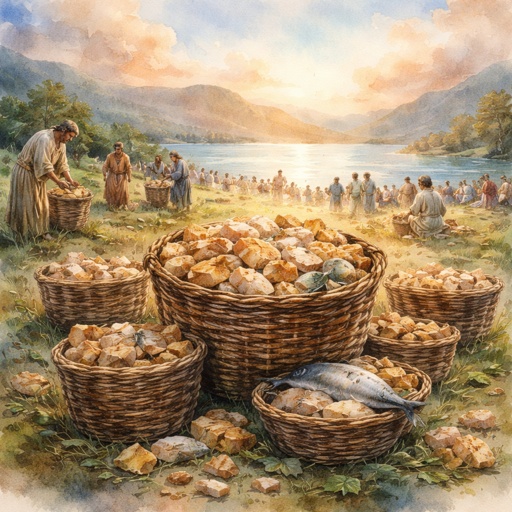
John 6:12

John 8:12

John 12:25

John 8:12

John 8:12
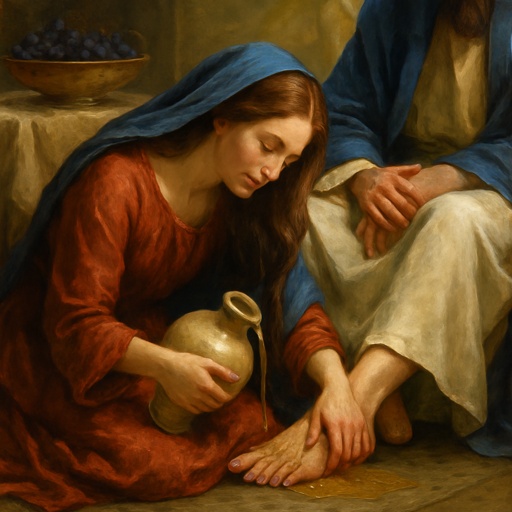
John 12:3

John 8:12

John 15:5

John 15:5

John 5:2

John 5:33 - "Ye sent unto John, and he bare witness unto the truth."

John 5:5 - "And a certain man was there, which had an infirmity thirty and eight years."

John 20:11-12

John 5:28

John 5:28

John 5:28

1 John 5:5 - "Who is he that overcometh the world, but he that believeth that Jesus is the Son of God?"

John 12:12 - "¶ On the next day much people that were come to the feast, when they heard that Jesus was coming to Jerusalem,"

John 1:1-5

John 3:5-8

John 1:1-5

John 3:5-8

1 John 5:18

John 3:5-8