What does John 4:51 mean?
"And as he was now going down, his servants met him, and told him, saying, Thy son liveth." - John 4:51

John 4:51 in the King James Version (KJV) reads, "And as he was now going down, his servants met him, and told him, saying, Thy son liveth." This verse is a part of a larger narrative found in the Gospel of John, and it holds significant meaning within the context of the overall story and themes present in the book.
The surrounding verses tell the story of a royal official who approaches Jesus in Cana, seeking help for his dying son. This official is distressed and desperate, as he is unable to personally bring his son to Jesus and is seeking a miraculous healing from the renowned healer. In response to the official's plea, Jesus tells him, "Go thy way; thy son liveth." The official believes Jesus' words and returns home to find that his son has indeed been healed.
At its core, this verse is a demonstration of the power and authority of Jesus, and it speaks to the theme of faith and belief in the face of adversity. The royal official's desperate request for help reflects the universal human experience of suffering and seeking relief in moments of need. When Jesus tells him that his son lives, it requires a great amount of faith for the official to believe, given that he is not physically present with his son to witness the healing. However, he chooses to trust in Jesus' words and returns home to find that his son has been miraculously healed.
In this way, the verse serves as a testament to the power of faith and belief in the miraculous works of Jesus. It serves as a reminder that, even in times of distress and uncertainty, placing our trust in Jesus can bring about the transformation and healing we desperately seek. This theme of faith and belief is a recurring motif throughout the Gospel of John, as the author seeks to convey the profound impact of Jesus' teachings and actions on those who encounter him.
Furthermore, the verse also holds symbolic significance within the larger narrative of the Gospel of John. It serves as a foreshadowing of Jesus' ultimate mission to bring about spiritual healing and eternal life for all who believe in him. The healing of the official's son can be seen as a metaphor for the broader message of salvation and the promise of new life that Jesus brings to all who follow him.
Additionally, the setting of the story in Cana, the location of Jesus' first miracle of turning water into wine, adds another layer of symbolism to the verse. Cana becomes a symbol of Jesus' transformative power, where the ordinary is turned into the extraordinary, and where faith in Jesus brings about miraculous outcomes.
Overall, John 4:51 is a powerful and impactful verse that conveys important themes of faith, belief, and the transformative power of Jesus' words and actions. It serves as a poignant reminder of the hope and healing that can be found through trusting in Jesus, and it offers a profound message of encouragement and reassurance for all who encounter it.
Have questions about John 4:51?
Dive deeper into this scripture with Bible Chat — an AI-powered tool for exploring God's Word through conversation. Ask questions, get context, and grow in your understanding of the Bible.
Get Our Apps


John 4:51 Artwork

John 4:51 - "And as he was now going down, his servants met him, and told him, saying, Thy son liveth."

"And as he was now going down, his servants met him, and told him, saying, Thy son liveth." - John 4:51

John 11:51 - "And this spake he not of himself: but being high priest that year, he prophesied that Jesus should die for that nation;"

John 7:51 - "Doth our law judge any man, before it hear him, and know what he doeth?"

Luke 8:51 - "And when he came into the house, he suffered no man to go in, save Peter, and James, and John, and the father and the mother of the maiden."

John 8:51 - "Verily, verily, I say unto you, If a man keep my saying, he shall never see death."

Jeremiah 51:4 - "Thus the slain shall fall in the land of the Chaldeans, and they that are thrust through in her streets."

John 1:51 - "And he saith unto him, Verily, verily, I say unto you, Hereafter ye shall see heaven open, and the angels of God ascending and descending upon the Son of man."

John 6:51 - "I am the living bread which came down from heaven: if any man eat of this bread, he shall live for ever: and the bread that I will give is my flesh, which I will give for the life of the world."

"And this spake he not of himself: but being high priest that year, he prophesied that Jesus should die for that nation;" - John 11:51

"Doth our law judge any man, before it hear him, and know what he doeth?" - John 7:51

Psalms 51:4 - "Against thee, thee only, have I sinned, and done this evil in thy sight: that thou mightest be justified when thou speakest, and be clear when thou judgest."

"Thus the slain shall fall in the land of the Chaldeans, and they that are thrust through in her streets." - Jeremiah 51:4

John 4:4 - "And he must needs go through Samaria."

"Verily, verily, I say unto you, If a man keep my saying, he shall never see death." - John 8:51

John 4:16

John 3:4

John 4:16

John 4:16

John 4:16

John 4:16

Isaiah 51:4 - "¶ Hearken unto me, my people; and give ear unto me, O my nation: for a law shall proceed from me, and I will make my judgment to rest for a light of the people."
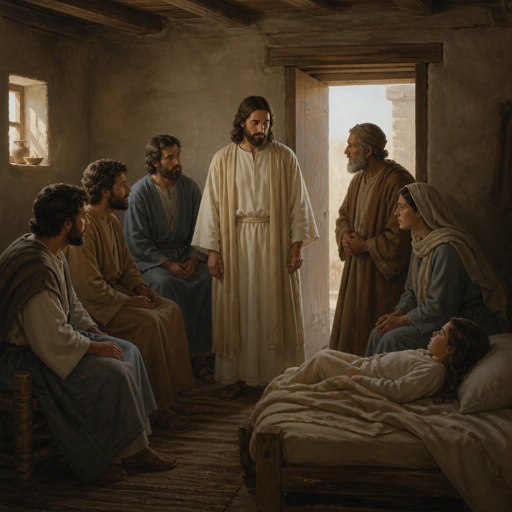
"And when he came into the house, he suffered no man to go in, save Peter, and James, and John, and the father and the mother of the maiden." - Luke 8:51

Jesus said, ‘The bread that I shall give is my flesh for the life of the world.’ (Jn 6:51)

John 4:16

John 4:16

John 4:16

John 3:4

John 4:16

John 4:16