What does John 4:46-54 mean?
"Once more he visited Cana in Galilee, where he had turned the water into wine. And there was a certain royal official, whose son was sick at Capernaum. When he heard that Jesus was come out of Judaea into Galilee, he went unto him, and besought him that he would come down, and heal his son: for he was at the point of death. Then said Jesus unto him, Except ye see signs and wonders, ye will not believe. The nobleman saith unto him, Sir, come down ere my child die. Jesus saith unto him, Go thy way; thy son liveth. And the man believed the word that Jesus had spoken unto him, and he went his way. And as he was now going down, his servants met him, and told him, saying, Thy son liveth. Then enquired he of them the hour when he began to amend. And they said unto him, Yesterday at the seventh hour the fever left him. So the father knew that it was at the same hour, in the which Jesus said unto him, Thy son liveth: and himself believed, and his whole house. This is again the second miracle that Jesus did, when he was come out of Judaea into Galilee." - John 4:46-54
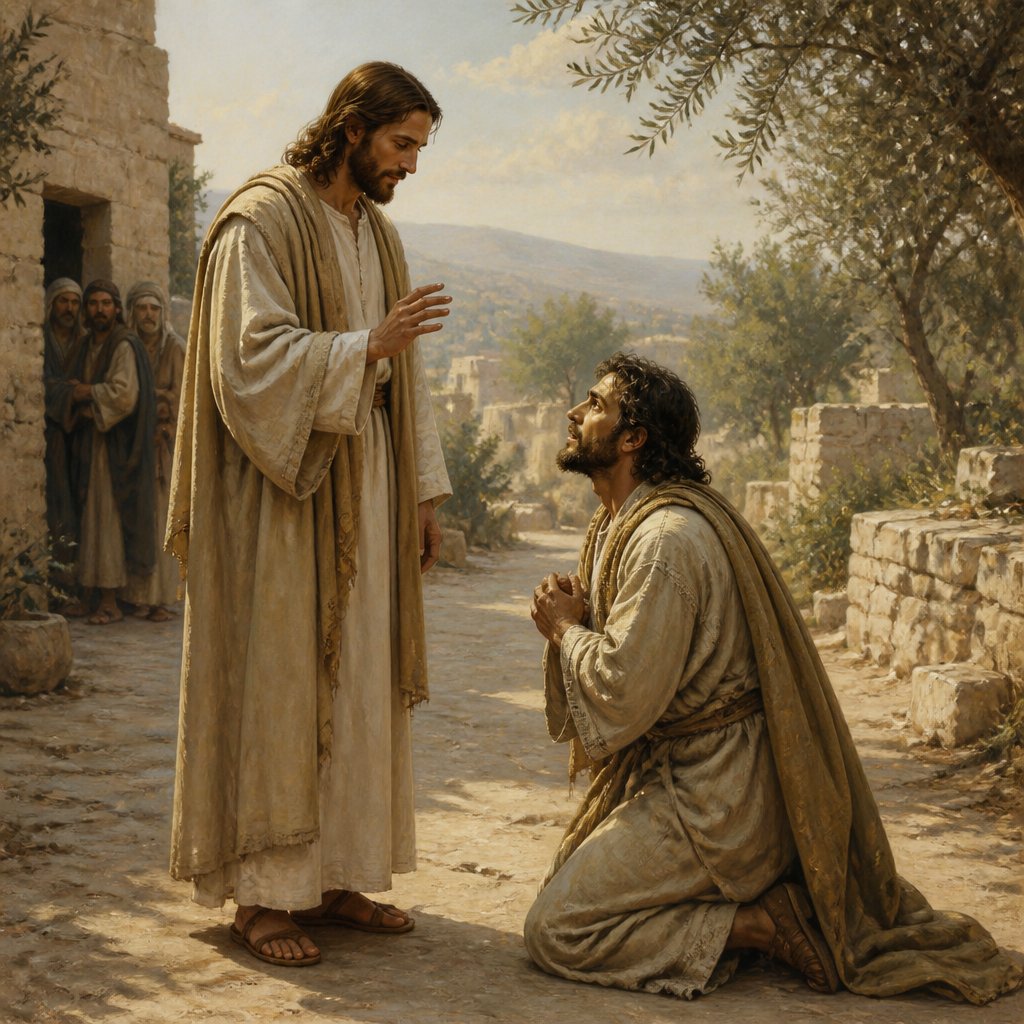
The passage from the Gospel of John, chapter 4, verses 46-54 in the King James Version of the Bible tells the story of a royal official who approached Jesus to ask for healing for his son. This passage is rich in symbolism and themes of faith, trust, and the power of Jesus' miracles.
The context of this passage is important to understand its significance. In the surrounding verses, Jesus has just spoken with a Samaritan woman at the well, defying social and cultural norms by engaging with a woman who was considered an outcast. This demonstrates Jesus' willingness to reach out to all people, regardless of their background or social status. It sets the stage for the encounter with the royal official, who also defies social expectations by seeking help from Jesus, a man who was not of the same social standing as himself.
The theme of faith is central to this passage. The royal official demonstrates great faith by seeking out Jesus and asking for his help. Despite being a man of power and influence, he humbles himself before Jesus and acknowledges his own inability to heal his son. This act of faith is rewarded, as Jesus agrees to heal the official's son.
The passage also highlights the power of Jesus' miracles. When the official asks for Jesus to come and heal his son, Jesus responds by telling him, "Go thy way; thy son liveth." This demonstrates Jesus' authority and ability to heal from a distance, without even seeing the person in need of healing. The official's faith is tested here, as he must choose to believe Jesus' words without any visible evidence. This speaks to the theme of trust in God's power and timing, even when we cannot see immediate results.
The symbolism in this passage is also significant. The official's son represents all of humanity in need of healing and restoration. By seeking out Jesus, the official demonstrates that he recognizes his own inability to save his son and must turn to a higher power for help. This is a powerful symbol of the human condition, as we all experience our own brokenness and need for healing.
Overall, this passage from the Gospel of John is a powerful testament to the themes of faith, trust, and the power of Jesus' miracles. It challenges us to examine our own faith and trust in God's ability to heal and restore, even when we cannot see immediate results. It also reminds us that Jesus reaches out to all people, regardless of their social status or background, and offers hope and healing to those who seek him. This passage continues to inspire and encourage Christians to this day, reminding us of the enduring power of Jesus' ministry and the transformative nature of faith.
Have questions about John 4:46-54?
Dive deeper into this scripture with Bible Chat — an AI-powered tool for exploring God's Word through conversation. Ask questions, get context, and grow in your understanding of the Bible.
Get Our Apps


John 4:46-54 Artwork
"Once more he visited Cana in Galilee, where he had turned the water into wine. And there was a certain royal official whose son lay sick at Capernaum. When this man heard that Jesus had arrived in Galilee from Judea, he went to him and begged him to come and heal his son, who was close to death. “Unless you people see signs and wonders,” Jesus told him, “you will never believe.” The royal official said, “Sir, come down before my child dies.” “Go,” Jesus replied, “your son will live.” The man took Jesus at his word and departed. While he was still on the way, his servants met him with the news that his boy was living. When he inquired as to the time when his son got better, they said to him, “Yesterday, at one in the afternoon, the fever left him.” Then the father realized that this was the exact time at which Jesus had said to him, “Your son will live.” So he and his whole household believed. This was the second sign Jesus performed after coming from Judea to Galilee." - John 4:46-54

John 4:46-54 - "Once more he visited Cana in Galilee, where he had turned the water into wine. And there was a certain royal official whose son lay sick at Capernaum. When this man heard that Jesus had arrived in Galilee from Judea, he went to him and begged him to come and heal his son, who was close to death. “Unless you people see signs and wonders,” Jesus told him, “you will never believe.” The royal official said, “Sir, come down before my child dies.” “Go,” Jesus replied, “your son will live.” The man took Jesus at his word and departed. While he was still on the way, his servants met him with the news that his boy was living. When he inquired as to the time when his son got better, they said to him, “Yesterday, at one in the afternoon, the fever left him.” Then the father realized that this was the exact time at which Jesus had said to him, “Your son will live.” So he and his whole household believed. This was the second sign Jesus performed after coming from Judea to Galilee."

John 4:54 - "This is again the second miracle that Jesus did, when he was come out of Judaea into Galilee."
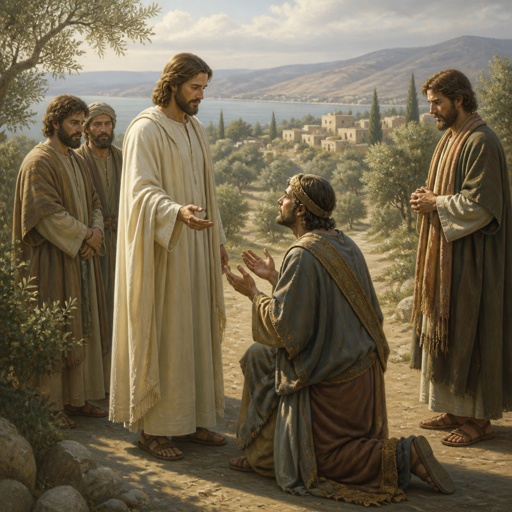
"This is again the second miracle that Jesus did, when he was come out of Judaea into Galilee." - John 4:54

John 4:46 - "So Jesus came again into Cana of Galilee, where he made the water wine. And there was a certain nobleman, whose son was sick at Capernaum."

John 4:6-7

Psalms 54:4 - "Behold, God is mine helper: the Lord is with them that uphold my soul."
John 8:54 - "Jesus answered, If I honour myself, my honour is nothing: it is my Father that honoureth me; of whom ye say, that he is your God:"

John 6:54 - "Whoso eateth my flesh, and drinketh my blood, hath eternal life; and I will raise him up at the last day."

John 11:54 - "Jesus therefore walked no more openly among the Jews; but went thence unto a country near to the wilderness, into a city called Ephraim, and there continued with his disciples."

John 7:46 - "The officers answered, Never man spake like this man."

Luke 9:54 - "And when his disciples James and John saw this, they said, Lord, wilt thou that we command fire to come down from heaven, and consume them, even as Elias did?"

John 11:46 - "But some of them went their ways to the Pharisees, and told them what things Jesus had done."

John 5:46 - "For had ye believed Moses, ye would have believed me: for he wrote of me."

John 12:46 - "I am come a light into the world, that whosoever believeth on me should not abide in darkness."

John 6:46 - "Not that any man hath seen the Father, save he which is of God, he hath seen the Father."
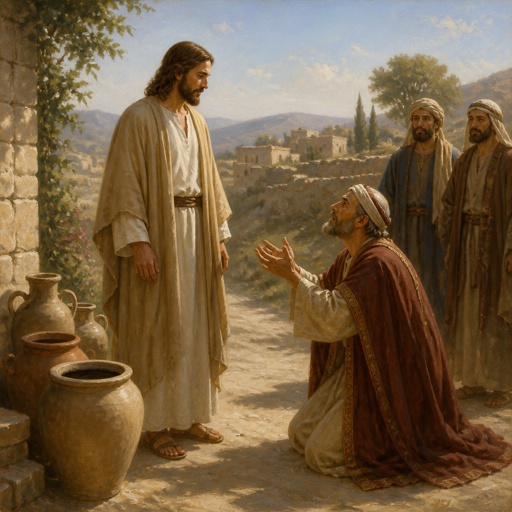
"So Jesus came again into Cana of Galilee, where he made the water wine. And there was a certain nobleman, whose son was sick at Capernaum." - John 4:46

John 8:46 - "Which of you convinceth me of sin? And if I say the truth, why do ye not believe me?"

Luke 5:4-6 – "When he had finished speaking, he said to Simon, 'Put out into deep water, and let down the nets for a catch.'"
"The officers answered, Never man spake like this man." - John 7:46

John 1:46 - "And Nathanael said unto him, Can there any good thing come out of Nazareth? Philip saith unto him, Come and see."

John 4:6 - "Now Jacob's well was there. Jesus therefore, being wearied with his journey, sat thus on the well: and it was about the sixth hour."
"Behold, God is mine helper: the Lord is with them that uphold my soul." - Psalms 54:4

Isaiah 54


Isaiah 54:4 - "Fear not; for thou shalt not be ashamed: neither be thou confounded; for thou shalt not be put to shame: for thou shalt forget the shame of thy youth, and shalt not remember the reproach of thy widowhood any more."

Isaiah 54:17

Genesis 24-54

Isaiah 54:17

Psalms 46:4 - "There is a river, the streams whereof shall make glad the city of God, the holy place of the tabernacles of the most High."