What does John 4:18 mean?
"For thou hast had five husbands; and he whom thou now hast is not thy husband: in that saidst thou truly." - John 4:18
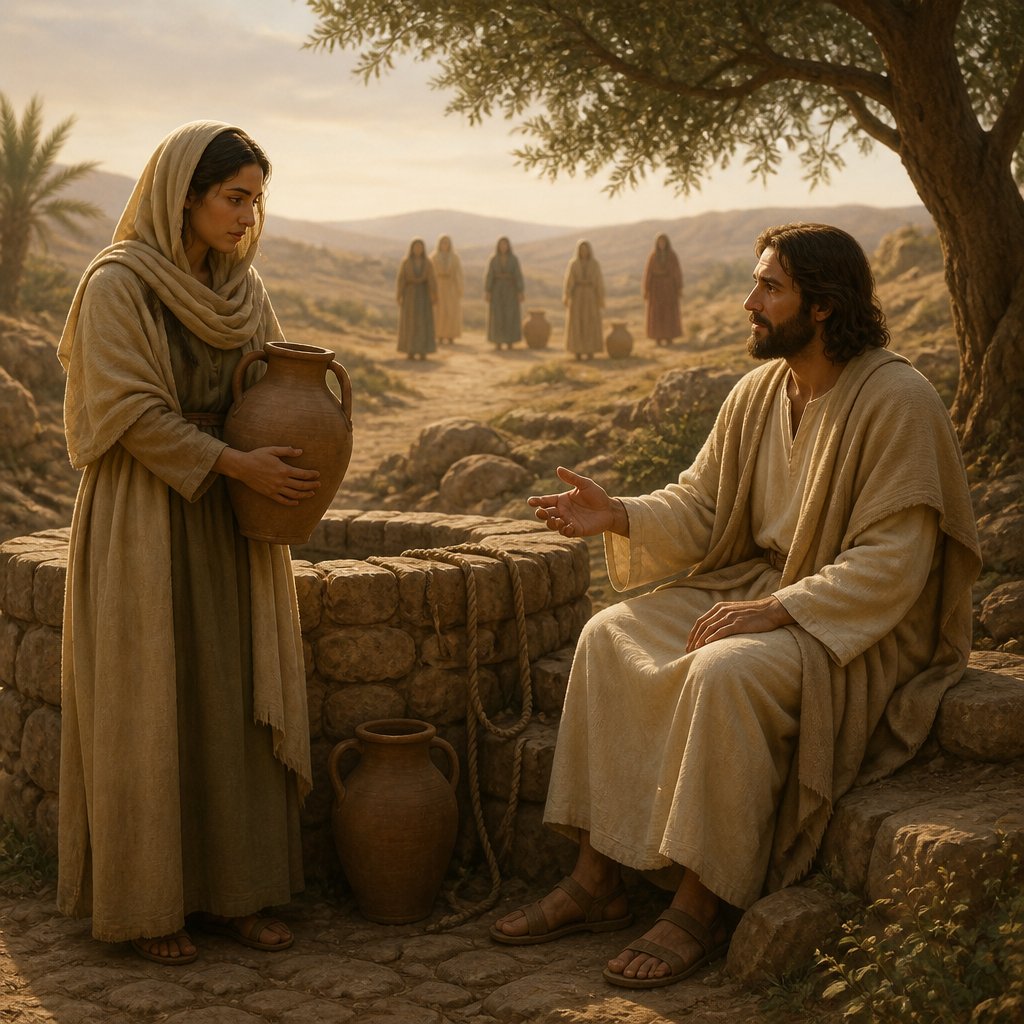
The Bible verse John 4:18 from the King James Version (KJV) states, "For thou hast had five husbands; and he whom thou now hast is not thy husband: in that saidst thou truly." This verse is part of the conversation between Jesus and the Samaritan woman at the well, which takes place in the fourth chapter of the Gospel of John. In this verse, Jesus is addressing the woman's past and present relationships, revealing knowledge about her life that he could only know through divine insight.
This verse is part of a larger story that illustrates the limitless nature of God's grace and love. In this encounter, Jesus breaks through cultural and religious barriers to reach out to a Samaritan, a woman, and a sinner. The Samaritans were a group of people with whom the Jews had a long-standing animosity, and Jewish men were not supposed to talk to women in public. Moreover, the woman's reputation as a sinner was a reason for the social distancing from her. However, Jesus shows that these social and cultural boundaries are irrelevant when it comes to sharing the good news of God's love.
In this verse, Jesus addresses the woman's personal history, pointing out that she has had five husbands and is currently living with a man who is not her husband. This could be interpreted in a literal sense, meaning that the woman had been married five times and was currently in an unmarried relationship. However, it is also possible that Jesus is using this information to illuminate the woman's spiritual condition. In either case, Jesus' knowledge about her life demonstrates his divine insight and authority.
The woman's five husbands could symbolize the woman's search for fulfillment in earthly relationships, none of which were able to satisfy her deepest longings. While the exact nature of her relationships is not revealed, it is clear that the woman has been seeking something that she has not found. The fact that she is living with a man who is not her husband could represent her continuing search for satisfaction outside of the bounds of lawful marriage.
This verse also speaks to the theme of sin and forgiveness. By revealing the woman's past and current relationships, Jesus highlights the woman's sinfulness. However, he does not condemn her or turn her away. Instead, he offers her living water - a metaphor for the Holy Spirit and eternal life. This encounter demonstrates that Jesus came to save sinners, not to condemn them. It also underscores the idea that no one is beyond the reach of God's love and forgiveness, regardless of their past.
Another theme present in this verse is the transformative power of encountering Jesus. The woman's encounter with Jesus at the well leads to a dramatic change in her life. She becomes a witness to Jesus, spreading the news of his arrival in her town and bringing many others to believe in him. This transformation highlights the idea that meeting Jesus has the power to change lives and lead people to faith.
This verse also highlights the omniscience of God. Jesus' knowledge of the woman's personal history and current situation demonstrates that he is not bound by the limitations of human understanding. He sees and knows all things, which is a reassuring truth for believers. It also serves as a reminder that God knows and understands our deepest struggles and desires, offering grace and love in the midst of our brokenness.
In conclusion, John 4:18 from the King James Version of the Bible offers a powerful message of grace, forgiveness, and transformation. It illustrates that no one is beyond the reach of God's love and that encountering Jesus has the power to change lives. The verse also speaks to the omniscience of God, reminding believers that God knows and understands them intimately. Ultimately, this passage serves as an invitation to all who are searching for fulfillment and meaning in life to come and drink of the living water that only Jesus can provide.
Have questions about John 4:18?
Dive deeper into this scripture with Bible Chat — an AI-powered tool for exploring God's Word through conversation. Ask questions, get context, and grow in your understanding of the Bible.
Get Our Apps


John 4:18 Artwork

1 John 4:18

1 John 4:18

John 4:18 - "For thou hast had five husbands; and he whom thou now hast is not thy husband: in that saidst thou truly."

1 John 4:18 - "There is no fear in love; but perfect love casteth out fear: because fear hath torment. He that feareth is not made perfect in love."

"There is no fear in love; but perfect love casteth out fear: because fear hath torment. He that feareth is not made perfect in love." - 1 John 4:18

1 John 4:18-19 - "There is no fear in love; but perfect love casteth out fear: because fear hath torment. He that feareth is not made perfect in love. We love him, because he first loved us."
"For thou hast had five husbands; and he whom thou now hast is not thy husband: in that saidst thou truly." - John 4:18

"There is no fear in love; but perfect love casteth out fear: because fear hath torment. He that feareth is not made perfect in love." - 1 John 4:18

"There is no fear in love; but perfect love casteth out fear: because fear hath torment. He that feareth is not made perfect in love." - 1 John 4:18

"There is no fear in love; but perfect love casteth out fear: because fear hath torment. He that feareth is not made perfect in love. We love him, because he first loved us." - 1 John 4:18-19

John 18:4 - "Jesus therefore, knowing all things that should come upon him, went forth, and said unto them, Whom seek ye?"

John 7:17-18

John 7:17-18

John 7:17-18

John 7:17-18

John 18:25

john 18:36

1 John 5:18

John 4:4 - "And he must needs go through Samaria."

John 18:27 - "Peter then denied again: and immediately the cock crew."

John 6:18 - "And the sea arose by reason of a great wind that blew."

Mark 2:18 - "And the disciples of John and of the Pharisees used to fast: and they come and say unto him, Why do the disciples of John and of the Pharisees fast, but thy disciples fast not?"
Luke 7:18 - "And the disciples of John shewed him of all these things."

John 18:18 - "And the servants and officers stood there, who had made a fire of coals; for it was cold: and they warmed themselves: and Peter stood with them, and warmed himself."

John 4:16

John 3:4

John 4:16

John 4:16

John 4:16

John 4:16