What does John 4:10 mean?
"Jesus answered and said unto her, If thou knewest the gift of God, and who it is that saith to thee, Give me to drink; thou wouldest have asked of him, and he would have given thee living water." - John 4:10
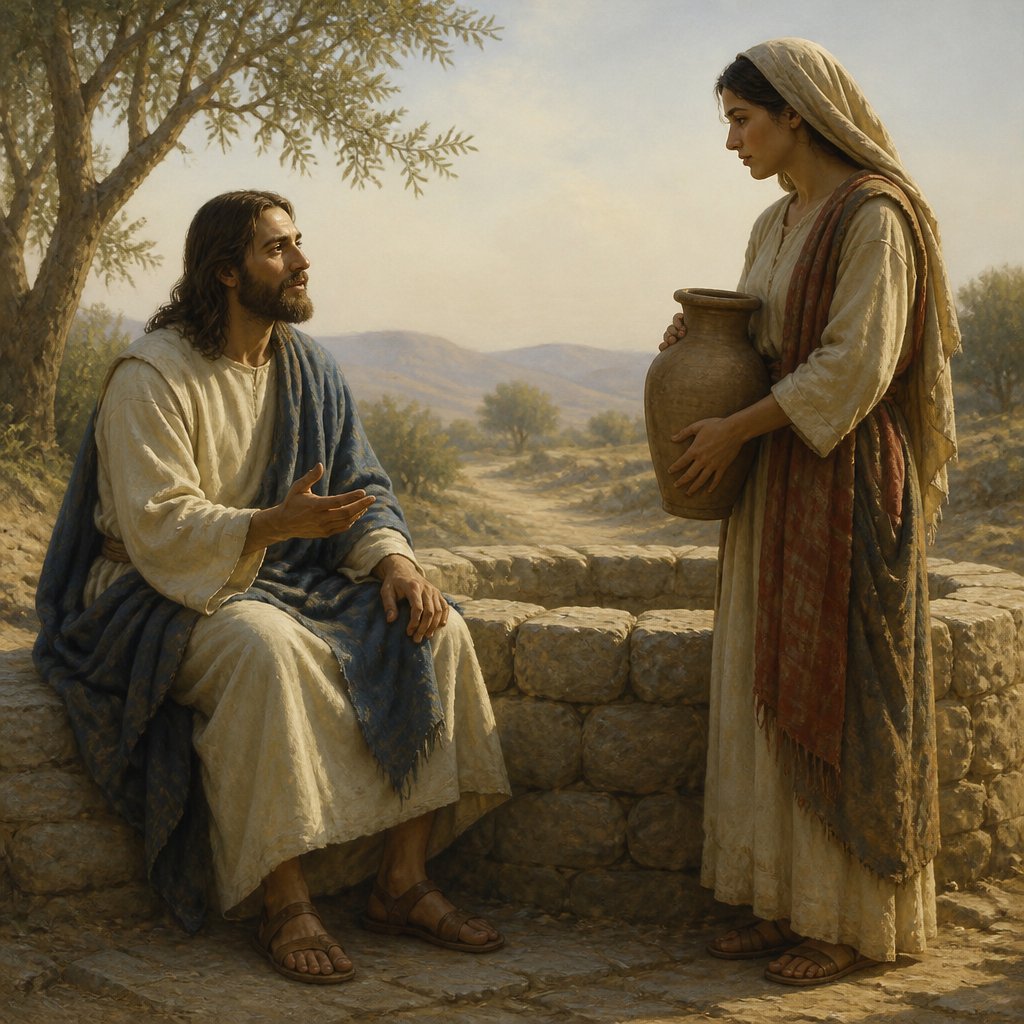
The verse John 4:10 from the King James Version of the Bible states, "Jesus answered and said unto her, If thou knewest the gift of God, and who it is that saith to thee, Give me to drink; thou wouldest have asked of him, and he would have given thee living water." This verse is an integral part of a larger conversation between Jesus and a Samaritan woman at the well. In this verse, Jesus is offering the woman the gift of living water, which has deep spiritual significance.
The context of this verse is important in understanding its full meaning. The interaction between Jesus and the Samaritan woman takes place at a well in the region of Samaria. In Jewish culture, Samaritans were considered to be outsiders and were often looked down upon by Jews. The fact that Jesus, a Jewish man, is speaking to a Samaritan woman is significant in itself and speaks to the inclusive nature of his ministry. This context sets the stage for the profound message Jesus is about to deliver to the woman.
In this verse, Jesus uses the metaphor of "living water" to convey a deeper spiritual truth to the woman. Water is a fundamental element necessary for physical life, but Jesus is speaking of a different kind of water – one that brings spiritual life. The gift of God that Jesus offers is not something that can be obtained through physical means, but rather it is a gift of grace and spiritual fulfillment.
The theme of grace and salvation is central to the meaning of this verse. Jesus is offering the woman an opportunity for spiritual transformation and new life through belief in him. The living water he speaks of is a symbol of the Holy Spirit, who brings refreshment, renewal, and eternal life to all who believe in Jesus. This theme of spiritual rebirth and renewal is a central aspect of Jesus' ministry and is exemplified in this verse.
Another important aspect of this verse is the idea of recognition and understanding. Jesus tells the woman that if she knew the gift of God and who he was, she would have asked him for the living water he offers. This speaks to the importance of recognizing the divine nature of Jesus and understanding the gift of salvation that he brings. It also emphasizes the need for believers to actively seek after and pursue the things of God.
The symbolism in this verse is rich and profound. The concept of living water symbolizes the eternal life and spiritual fulfillment that Jesus offers to those who believe in him. The idea of water also conveys a sense of purity, cleansing, and renewal, which are all facets of the spiritual transformation that comes through faith in Christ.
In conclusion, the verse John 4:10 from the King James Version of the Bible holds significant meaning in the larger context of Jesus' ministry and teachings. It conveys themes of grace, salvation, recognition, and spiritual fulfillment, all of which are fundamental to the Christian faith. The symbolism of living water serves as a powerful metaphor for the eternal life and spiritual renewal that believers can experience through faith in Jesus. This verse serves as a reminder of the transformative power of Christ and the invitation for all to partake in the gift of living water.
Have questions about John 4:10?
Dive deeper into this scripture with Bible Chat — an AI-powered tool for exploring God's Word through conversation. Ask questions, get context, and grow in your understanding of the Bible.
Get Our Apps


John 4:10 Artwork

1 John 4:10 - "Herein is love, not that we loved God, but that he loved us, and sent his Son to be the propitiation for our sins."

John 4:10 - "Jesus answered and said unto her, If thou knewest the gift of God, and who it is that saith to thee, Give me to drink; thou wouldest have asked of him, and he would have given thee living water."
"Herein is love, not that we loved God, but that he loved us, and sent his Son to be the propitiation for our sins." - 1 John 4:10
"Jesus answered and said unto her, If thou knewest the gift of God, and who it is that saith to thee, Give me to drink; thou wouldest have asked of him, and he would have given thee living water." - John 4:10

John 10:4 - "And when he putteth forth his own sheep, he goeth before them, and the sheep follow him: for they know his voice."

John 10:10

John 10:10

John 10:10

John 10:10

John 10:10

John 10:10

John 10:10

Matthew 10:2-4…Matthew 10:2-4 New International Version 2 These are the names of the twelve apostles: first, Simon (who is called Peter) and his brother Andrew; James son of Zebedee, and his brother John; 3 Philip and Bartholomew; Thomas and Matthew the tax collector; James son of Alphaeus, and Thaddaeus; 4 Simon the Zealot and Judas Iscariot, who betrayed him.

Matthew 10:2-4…Matthew 10:2-4 New International Version 2 These are the names of the twelve apostles: first, Simon (who is called Peter) and his brother Andrew; James son of Zebedee, and his brother John; 3 Philip and Bartholomew; Thomas and Matthew the tax collector; James son of Alphaeus, and Thaddaeus; 4 Simon the Zealot and Judas Iscariot, who betrayed him.

John 10:41 - "And many resorted unto him, and said, John did no miracle: but all things that John spake of this man were true."

John 10:30

John 10:30

John 10:9

John 10:9

John 10:9

John 4:4 - "And he must needs go through Samaria."

John 10:40 - "And went away again beyond Jordan into the place where John at first baptized; and there he abode."

John 4:16

John 3:4

John 4:16

John 4:16

John 4:16

John 4:16

John 10:42 - "And many believed on him there."

John 15:9-10