What does John 2:19 mean?
"Jesus answered and said unto them, Destroy this temple, and in three days I will raise it up." - John 2:19
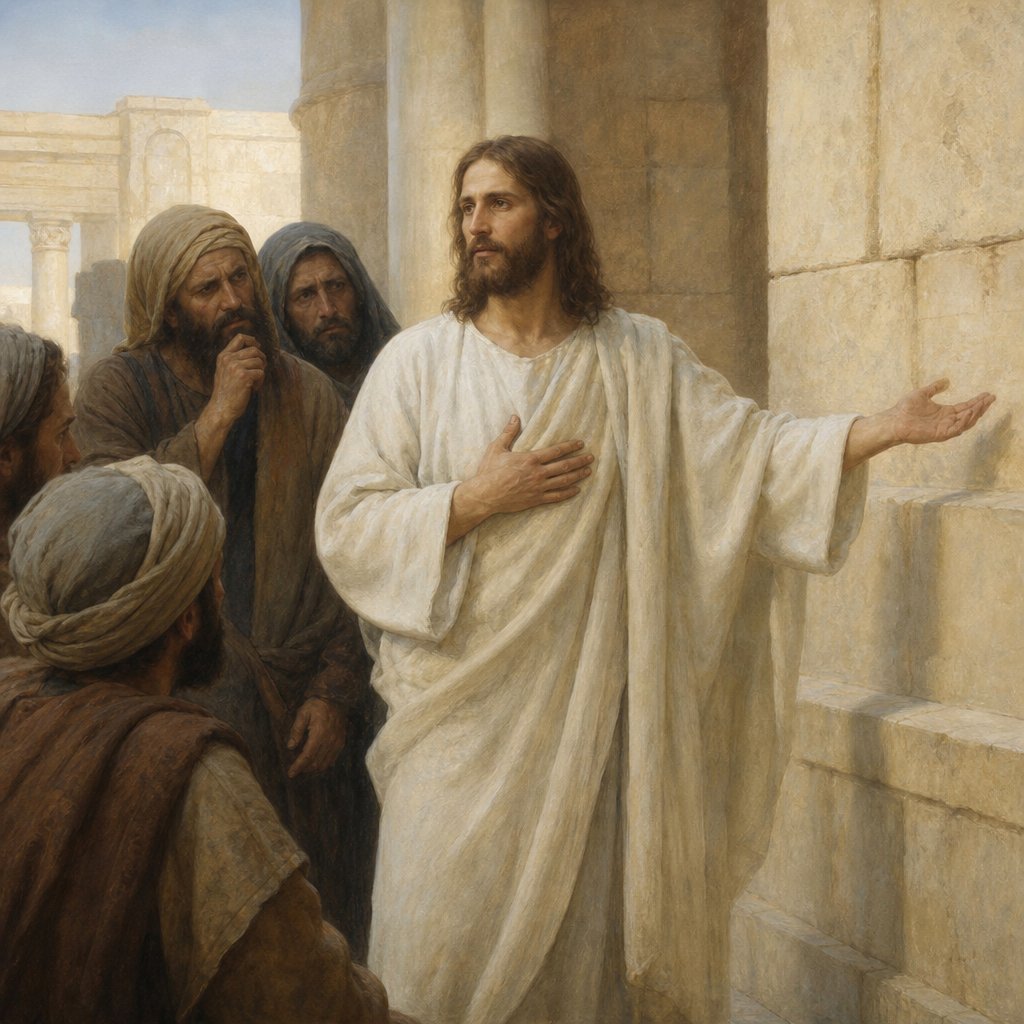
John 2:19 in the King James Version reads, “Jesus answered and said unto them, Destroy this temple, and in three days I will raise it up.”
In its immediate setting this saying comes at the moment of sharpest tension in the chapter. Jesus has gone up to Jerusalem and, finding the temple courts turned into a marketplace, he drives out the moneychangers and those who sold animals, insisting that his Father’s house must not be made “an house of merchandise.” The cleansing is not merely a protest against dishonest trade; it is a prophetic act that challenges the religious establishment’s stewardship of the place where Israel gathered to worship. Because such an act implied authority, “the Jews” respond by demanding credentials: “What sign shewest thou unto us, seeing that thou doest these things?” John 2:19 is Jesus’ answer to that demand for a sign. He does not offer a spectacle on their terms. He speaks a word that is both judgment and promise, and it is phrased as a riddle that only later becomes clear.
The central meaning turns on what Jesus intends by “this temple.” The hearers naturally take him to mean the stone building in Jerusalem, the pride of the nation and the center of sacrificial worship. That is why they answer in John 2:20, “Forty and six years was this temple in building, and wilt thou rear it up in three days?” They measure Jesus’ words by masonry and construction time. Yet the Gospel immediately provides the interpretive key in John 2:21: “But he spake of the temple of his body.” In other words, the “temple” Jesus speaks of is not chiefly the structure but himself. He identifies his own body as the true dwelling-place of God’s presence. The saying therefore shifts the focus from a building made with hands to the person of Christ, suggesting that the reality to which the temple pointed is now present in him.
The command-like phrase “Destroy this temple” is part of the irony and prophetic edge of the verse. Jesus is not issuing permission for violence against holy things; rather, he is exposing what their opposition will bring about. In the flow of the Gospel story, those who challenge him will indeed bring about the destruction of his body by delivering him to death. The words function like a prophecy spoken in the hearing of those who will fulfill it, even though they do not understand. At the same time, the way Jesus frames it places responsibility back onto his challengers: the sign they demand will be given through their own rejection of him, and through God’s reversal of that rejection.
The promise, “in three days I will raise it up,” points directly to the resurrection. The “three days” are not a vague expression of “soon,” but a deliberate reference to the period between his death and rising again, a timeline that becomes a hallmark of apostolic preaching. The verb “raise it up” carries the sense of rebuilding and restoring, but in a new and decisive way: what will be destroyed will not remain destroyed. Jesus speaks with personal authority—“I will raise it up”—which, within John’s larger portrayal of Christ, underscores that the resurrection is not only something that happens to Jesus but something he exercises authority over. The same Gospel later includes Jesus’ words about his life, “I lay it down of myself… I have power to lay it down, and I have power to take it again” (John 10:18, KJV). John 2:19 anticipates that theme.
The symbolism of “temple” is rich because the temple was the heart of Israel’s worship: sacrifice for sin, priestly mediation, sacred space, and the manifestation of God’s name among his people. By calling his body “this temple,” Jesus presents himself as the locus of divine presence and the meeting point between God and man. The temple system spoke, in shadows and ceremonies, of cleansing, atonement, access, and communion. John’s narrative places this saying immediately after the cleansing of the temple, which deepens the symbolism: Jesus is not only purifying a corrupted court; he is signaling that a greater purification and a greater access to God will be established through his own death and resurrection. The cleansing scene, then, is both a confrontation with misuse of sacred things and a signpost toward the transition from temple-centered worship to worship centered in Christ.
There is also a theme of misunderstanding that is characteristic of John’s Gospel. Jesus often speaks on a spiritual plane while his hearers interpret him on an earthly plane. Nicodemus will stumble over the new birth, the Samaritan woman will puzzle over living water, and here the leaders cannot see beyond stone walls and construction years. John highlights that the meaning of Jesus’ words is not fully grasped even by his own disciples until later. John 2:22 says, “When therefore he was risen from the dead, his disciples remembered that he had said this unto them; and they believed the scripture, and the word which Jesus had said.” The resurrection does not merely prove a claim; it unlocks understanding, causing prior words and actions to fall into place. Faith, in John’s telling, often follows remembrance and illumination after the event.
In significance, John 2:19 stands as an early announcement of the passion and resurrection, woven into a dispute about authority and worship. It reveals that Jesus’ ultimate “sign” will be himself crucified and risen, that the true temple is not ultimately a building but the incarnate Son, and that the opposition which seeks to discredit him will paradoxically become the stage upon which God vindicates him. The verse therefore gathers together themes of judgment and renewal, of true worship and corrupted religion, of death and triumphant restoration, and of the replacement of shadow by substance. Within the Gospel’s opening movement, it declares that what Israel sought in the temple—God’s presence among his people—will be found definitively in Christ, and that the doorway into that presence will be opened through the raising up of “the temple of his body” in three days.
Have questions about John 2:19?
Dive deeper into this scripture with Bible Chat — an AI-powered tool for exploring God's Word through conversation. Ask questions, get context, and grow in your understanding of the Bible.
Get Our Apps


John 2:19 Artwork

John 2:19 - "Jesus answered and said unto them, Destroy this temple, and in three days I will raise it up."

1 John 2:19 - "They went out from us, but they were not of us; for if they had been of us, they would no doubt have continued with us: but they went out, that they might be made manifest that they were not all of us."

John 2:19-21 - "Jesus answered them, "Destroy this temple, and I will raise it again in three days." They replied, "It has taken forty-six years to build this temple, and you are going to raise it in three days?" But the temple he had spoken of was his body."

John 2:19-22 - "Jesus answered them, “Destroy this temple, and I will raise it again in three days.” They replied, “It has taken forty-six years to build this temple, and you are going to raise it in three days?” But the temple he had spoken of was his body. After he was raised from the dead, his disciples recalled what he had said. Then they believed the scripture and the words that Jesus had spoken."
"Jesus answered and said unto them, Destroy this temple, and in three days I will raise it up." - John 2:19
"They went out from us, but they were not of us; for if they had been of us, they would no doubt have continued with us: but they went out, that they might be made manifest that they were not all of us." - 1 John 2:19
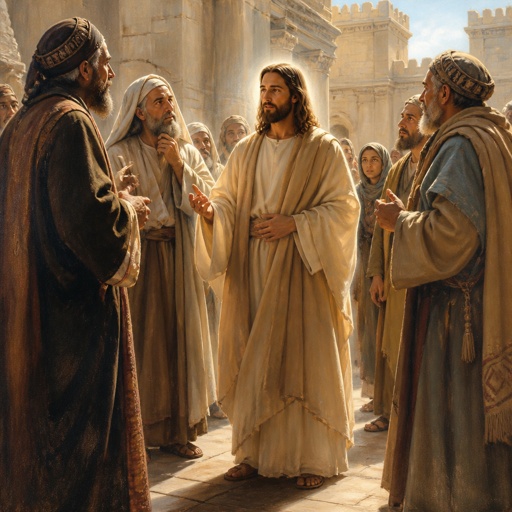
"Jesus answered them, "Destroy this temple, and I will raise it again in three days." They replied, "It has taken forty-six years to build this temple, and you are going to raise it in three days?" But the temple he had spoken of was his body." - John 2:19-21
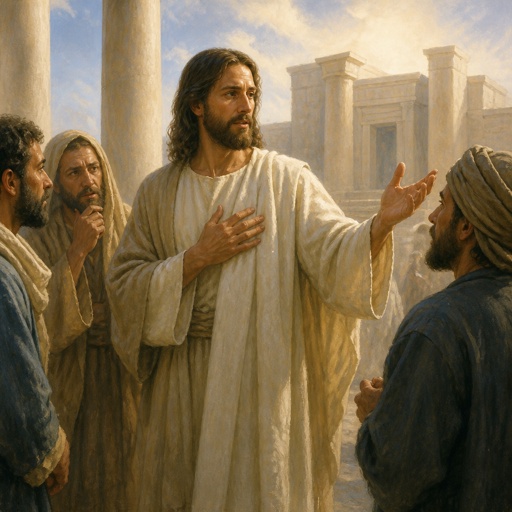
"Jesus answered them, “Destroy this temple, and I will raise it again in three days.” They replied, “It has taken forty-six years to build this temple, and you are going to raise it in three days?” But the temple he had spoken of was his body. After he was raised from the dead, his disciples recalled what he had said. Then they believed the scripture and the words that Jesus had spoken." - John 2:19-22

John 19:2 - "And the soldiers platted a crown of thorns, and put it on his head, and they put on him a purple robe,"

John 19:38

John 19:1

John 19:19 - "¶ And Pilate wrote a title, and put it on the cross. And the writing was, JESUS OF NAZARETH THE KING OF THE JEWS."

John 17.6-19

John 19:1-3

John 19:25-27
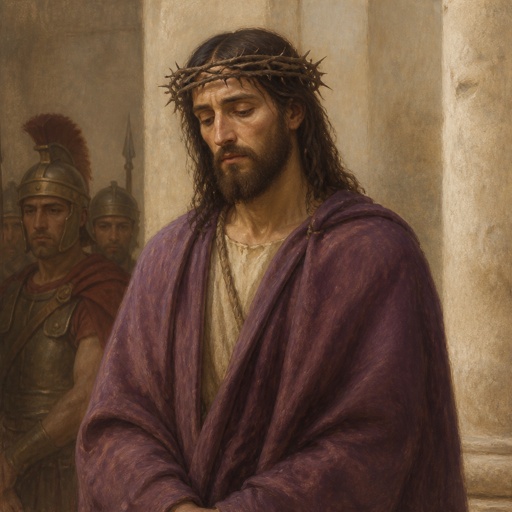
"And the soldiers platted a crown of thorns, and put it on his head, and they put on him a purple robe," - John 19:2

John 1:19 - "¶ And this is the record of John, when the Jews sent priests and Levites from Jerusalem to ask him, Who art thou?"

John 19:25-27

John 19:26-27

John 21:15-19

John 10:19 - "¶ There was a division therefore again among the Jews for these sayings."

John 19:1 - "Then Pilate therefore took Jesus, and scourged him."

John 19:25-27 with emphasis on Mary

John 19:3 - "And said, Hail, King of the Jews! and they smote him with their hands."

1 John 4:19 - "We love him, because he first loved us."

1 John 5:19 - "And we know that we are of God, and the whole world lieth in wickedness."

John 17:19 - "And for their sakes I sanctify myself, that they also might be sanctified through the truth."

John 19:22 - "Pilate answered, What I have written I have written."

John 18:19 - "¶ The high priest then asked Jesus of his disciples, and of his doctrine."

John 19:8 - "¶ When Pilate therefore heard that saying, he was the more afraid;"