What does John 2:11 mean?
"This beginning of miracles did Jesus in Cana of Galilee, and manifested forth his glory; and his disciples believed on him." - John 2:11
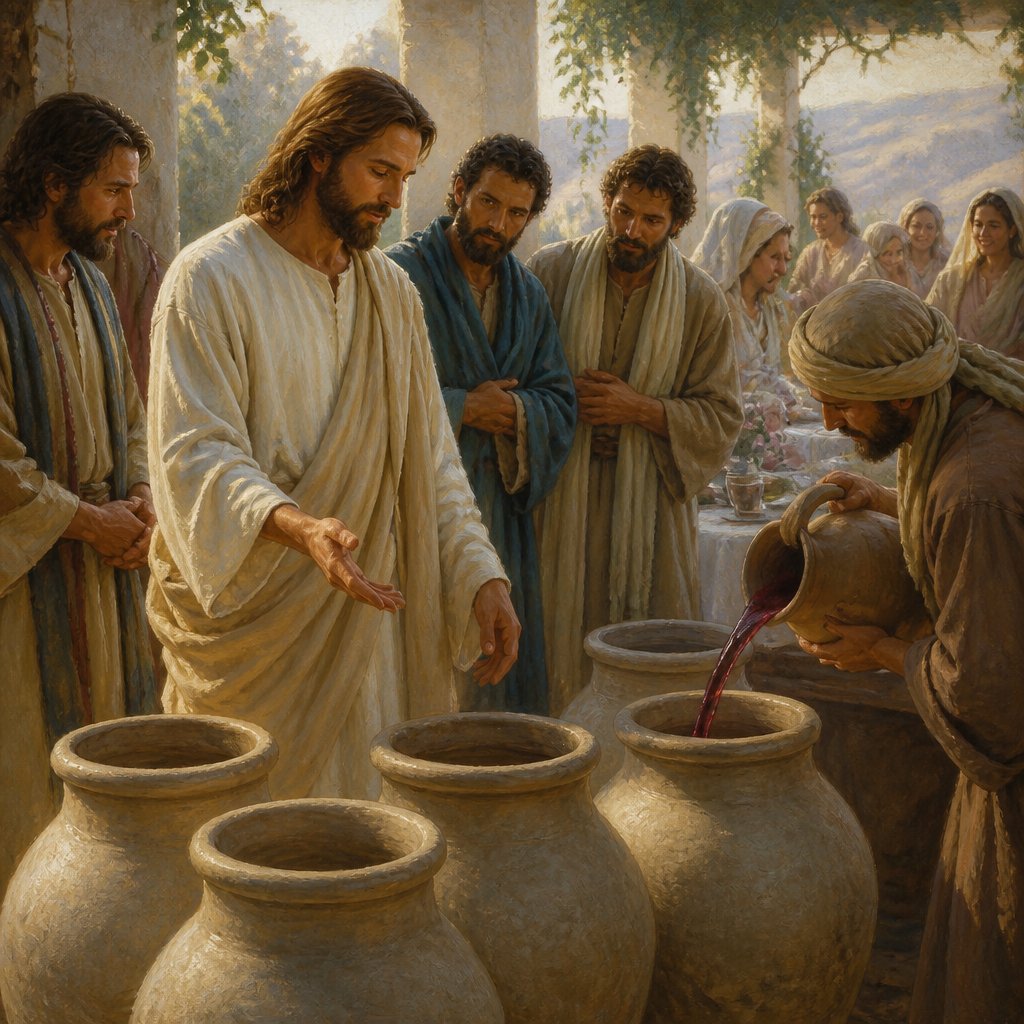
The Bible verse John 2:11 in the King James Version reads, "This beginning of miracles did Jesus in Cana of Galilee, and manifested forth his glory; and his disciples believed on him." This verse is found within the context of the wedding at Cana, where Jesus performed his first recorded miracle by turning water into wine.
This verse holds significant meaning within the broader themes of the Gospel of John, as well as within the specific context of the wedding at Cana. The Gospel of John is unique in its presentation of Jesus as the divine Son of God, and this verse serves as a key moment in demonstrating Jesus' divinity and power. It marks the beginning of Jesus' public ministry and sets the stage for the subsequent signs and miracles that he performs.
The setting of the wedding at Cana is also significant, as it speaks to the theme of abundance and provision. The fact that Jesus performed this miracle at a wedding feast suggests that he is concerned with the joy and celebration of life, and that he is able to meet the needs of those who follow him. It also serves as a foreshadowing of the ultimate wedding feast with Christ and his bride, the church, as described in the book of Revelation.
The verse also holds deep symbolism within the Christian faith, particularly in its manifestation of Jesus' glory. The Greek word for "glory" used in this verse is "doxa," which conveys the idea of honor, praise, and splendor. Jesus' manifestation of his glory at the wedding at Cana emphasizes his power and authority as the divine Son of God. It serves as a revelation of his true nature and distinguishes him as more than just a mere human being.
Furthermore, this verse also speaks to the theme of belief and discipleship. The fact that the disciples believed in Jesus after witnessing this miracle underscores the transformative power of his actions. This theme of belief is central to the Gospel of John, as the author emphasizes the importance of believing in Jesus as the Son of God in order to receive eternal life. The disciples' response to Jesus' miracle serves as a model for all believers, urging them to have faith and trust in his power and authority.
In addition to these broader themes, the verse also holds personal significance for individual believers. It serves as a reminder of Jesus' ability to intervene in our lives and provide for our needs. Just as he turned water into wine at the wedding at Cana, he is able to work miracles in our own lives, bringing about transformation and abundance where there was once scarcity. This verse encourages believers to place their trust in Jesus and to believe in his power to bring about change and renewal.
In conclusion, John 2:11 in the King James Version of the Bible holds profound meaning within the broader themes of the Gospel of John and the specific context of the wedding at Cana. It serves as a pivotal moment in demonstrating Jesus' divinity and power, while also emphasizing the themes of abundance, provision, belief, and discipleship. As believers reflect on this verse, they are encouraged to trust in Jesus' ability to work miracles in their own lives and to believe in his power to bring about transformation and renewal.
Have questions about John 2:11?
Dive deeper into this scripture with Bible Chat — an AI-powered tool for exploring God's Word through conversation. Ask questions, get context, and grow in your understanding of the Bible.
Get Our Apps


John 2:11 Artwork

John 2:11 - "This beginning of miracles did Jesus in Cana of Galilee, and manifested forth his glory; and his disciples believed on him."

1 John 2:11 - "But he that hateth his brother is in darkness, and walketh in darkness, and knoweth not whither he goeth, because that darkness hath blinded his eyes."
"This beginning of miracles did Jesus in Cana of Galilee, and manifested forth his glory; and his disciples believed on him." - John 2:11
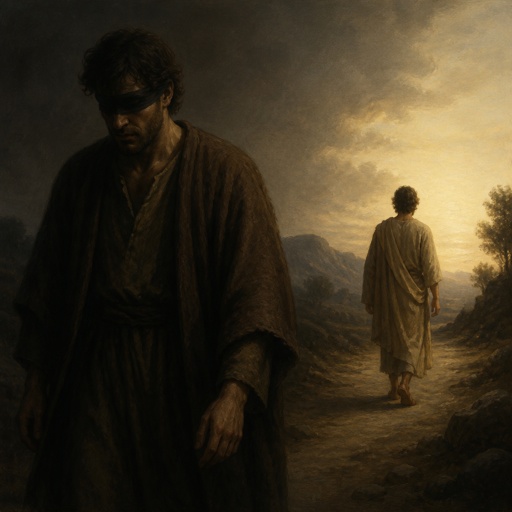
"But he that hateth his brother is in darkness, and walketh in darkness, and knoweth not whither he goeth, because that darkness hath blinded his eyes." - 1 John 2:11

2 John 1:11 - "For he that biddeth him God speed is partaker of his evil deeds."

1 John 2:27

1 John 2:27

1 John 2:27

1 John 2:27

Matthew 11:2 - "Now when John had heard in the prison the works of Christ, he sent two of his disciples,"

John 11:2 - "(It was that Mary which anointed the Lord with ointment, and wiped his feet with her hair, whose brother Lazarus was sick.)"

John (11:35) Jesus wept.

"For he that biddeth him God speed is partaker of his evil deeds." - 2 John 1:11
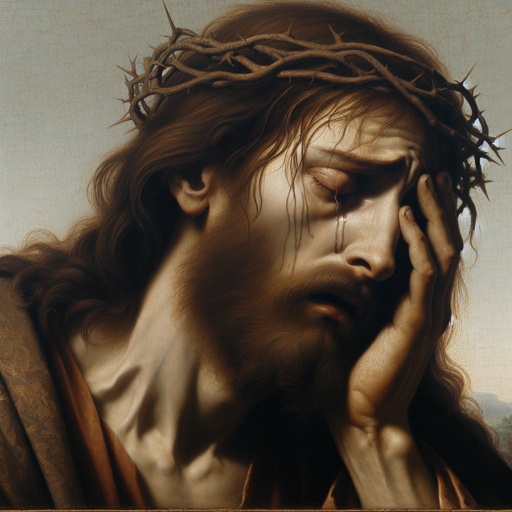
John (11:35) Jesus wept.

John (11:35) Jesus wept.

John 11:35

John 15.1-11

John 11:35

John (11:35) Jesus wept.

John (11:35) Jesus wept.

John (11:35) Jesus wept.

John (11:35) Jesus wept.

John (11:35) Jesus wept.

John (11:35) Jesus wept.
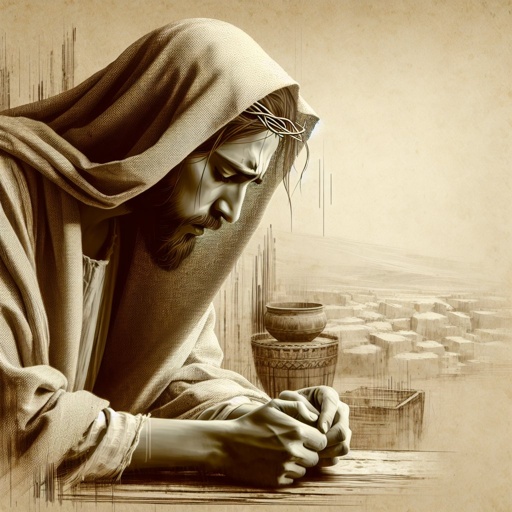
John 11:35 - "Jesus wept."

John (11:35) Jesus wept.

John (11:35) Jesus wept.

John (11:35) Jesus wept.

John (11:35) Jesus wept.

John (11:35) Jesus wept.