What does John 21:20 mean?
"Then Peter, turning about, seeth the disciple whom Jesus loved following; which also leaned on his breast at supper, and said, Lord, which is he that betrayeth thee?" - John 21:20
In John 21:20, the King James Version reads:
"Then Peter, turning about, seeth the disciple whom Jesus loved following; which also leaned on his breast at supper, and said, Lord, which is he that betrayeth thee?"
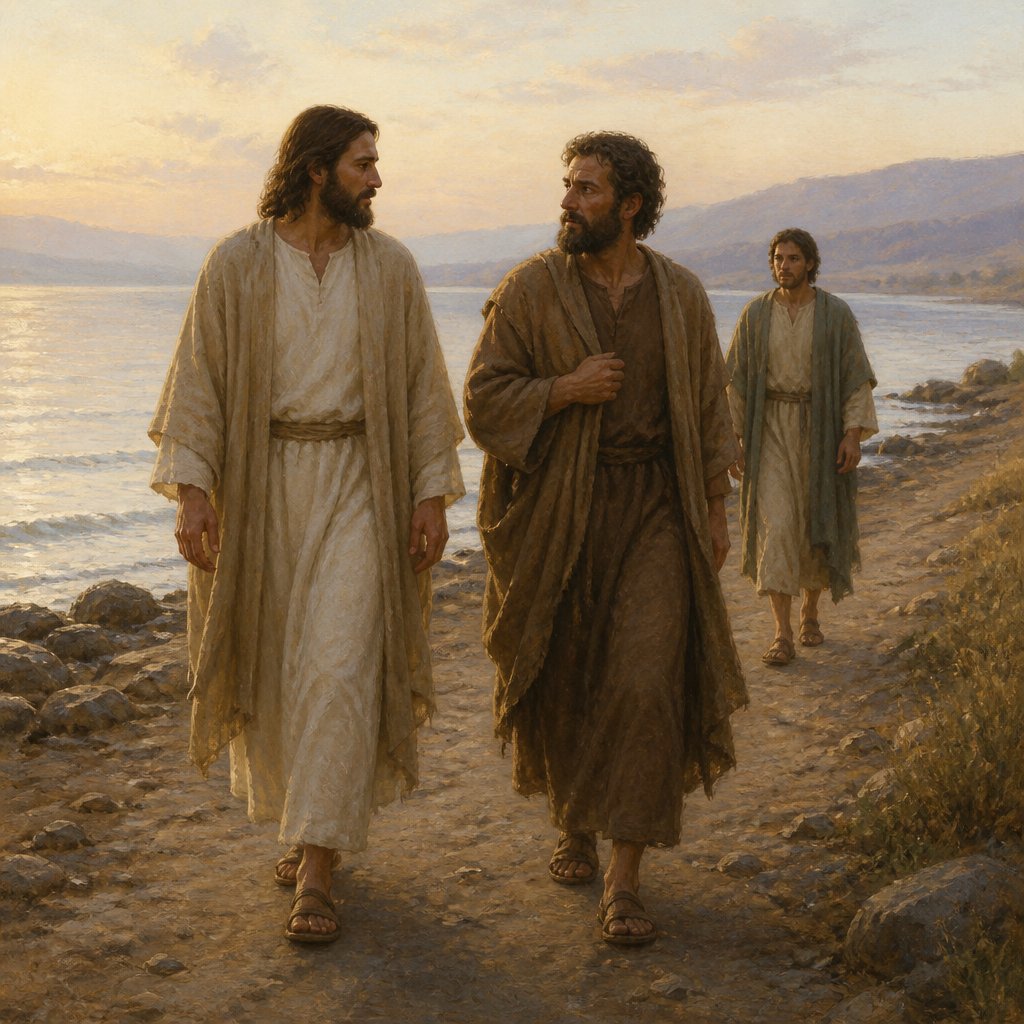
This verse occurs after Jesus has appeared to his disciples for the third time following his resurrection. In this particular instance, Jesus has just finished a conversation with Peter, where he reinstates Peter after Peter had denied knowing Jesus three times before his crucifixion. At this point, Peter turns around and sees the disciple whom Jesus loved following them. This disciple is traditionally believed to be John, also known as the author of the Gospel of John. The phrase "the disciple whom Jesus loved" is used throughout the Gospel of John to refer to this particular disciple.
This verse is significant for a few reasons. Firstly, it serves as a reminder of the close relationship that existed between Jesus and his disciples. The fact that John is referred to as "the disciple whom Jesus loved" highlights the deep bond that Jesus had with his followers. This love is a central theme in the Gospel of John, and it is emphasized throughout the text as a defining characteristic of Jesus' ministry.
Additionally, this verse provides insight into the dynamics of the relationship between the disciples. The fact that Peter turns around and sees John following them indicates a level of familiarity and mutual concern among the disciples. The reference to John as the disciple who "leaned on his breast at supper" recalls the Last Supper, where John was positioned close to Jesus, indicating a special intimacy between them.
This verse also carries symbolic significance. The image of John leaning on Jesus' breast at the Last Supper symbolizes the close relationship between Jesus and his disciples, as well as the importance of love and intimacy in Christian fellowship. It also serves as a reminder of the unity and mutual support that should exist among believers, as demonstrated by the close bond between the disciples.
In a broader context, this verse reflects the themes of love, faith, and loyalty that are central to the Gospel of John. Throughout the gospel, Jesus repeatedly emphasizes the importance of love for God and for one another, and this verse serves as a demonstration of the deep love and care that Jesus had for his disciples.
Furthermore, this verse also ties in with the theme of discipleship and following Jesus. The fact that John is following Jesus and the other disciples symbolizes the call to discipleship and the commitment to following Jesus in both word and deed. It serves as a reminder for believers to continue to follow Jesus and to remain faithful to him, even in the face of trials and challenges.
In conclusion, John 21:20 is a rich and significant verse that holds deep meaning within the context of the Gospel of John. It serves as a reminder of the close relationship between Jesus and his disciples, and it highlights the themes of love, faith, and discipleship that are central to the Christian faith. The verse also carries symbolic significance, emphasizing the importance of love and unity among believers. Overall, this verse offers profound insights into the dynamics of the relationship between Jesus and his disciples, and it continues to inspire and encourage believers in their journey of faith.
Have questions about John 21:20?
Dive deeper into this scripture with Bible Chat — an AI-powered tool for exploring God's Word through conversation. Ask questions, get context, and grow in your understanding of the Bible.
Get Our Apps


John 21:20 Artwork

John 21:20 - "Then Peter, turning about, seeth the disciple whom Jesus loved following; which also leaned on his breast at supper, and said, Lord, which is he that betrayeth thee?"

"Then Peter, turning about, seeth the disciple whom Jesus loved following; which also leaned on his breast at supper, and said, Lord, which is he that betrayeth thee?" - John 21:20

John 20:21

John 20:21 - "Then said Jesus to them again, Peace be unto you: as my Father hath sent me, even so send I you."

1 John 3:20-21 For if our heart condemn us, God is greater than our heart, and knoweth all things. Beloved, if our heart condemn us not, then have we confidence toward God.

john 21:9

John 21:6

John 21:21 - "Peter seeing him saith to Jesus, Lord, and what shall this man do?"

Luke 13:20-21

Luke 13:20-21
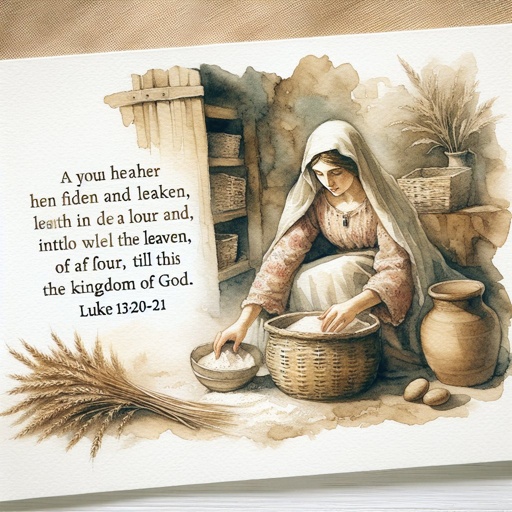
Luke 13:20-21

Luke 13:20-21

Luke 13:20-21

John 20:27

John 20:14

John 20:27

John 21:6

John 21:17

John 21:25

John 21:6

John 21:6

1 John 3:20-21 For if our heart condemn us, God is greater than our heart, and knoweth all things. Beloved, if our heart condemn us not, then have we confidence toward God. (Picture only no words)

1 John 3:20-21 For if our heart condemn us, God is greater than our heart, and knoweth all things. Beloved, if our heart condemn us not, then have we confidence toward God. (Picture only no words)

John 14:15-21

Genesis 21-20

John 20:11-12

John 20:11-13
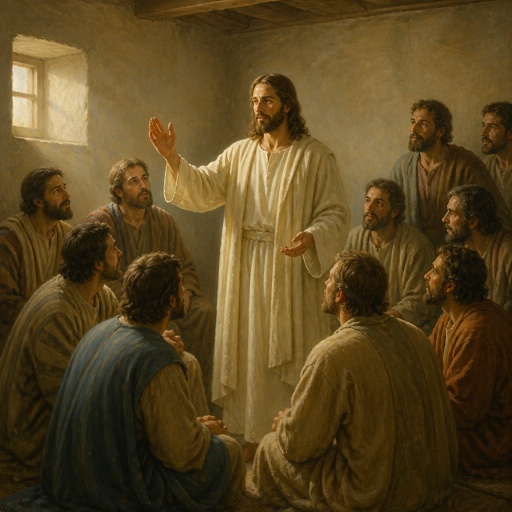
"Then said Jesus to them again, Peace be unto you: as my Father hath sent me, even so send I you." - John 20:21

John 20:30-31

Job 3:20-21 - "Job 3:20-21: Why is light given to those in misery, and life to the bitter of soul, to those who long for death that does not come, who search for it more than for hidden treasure?"