What does John 20:19-20 mean?
"On the evening of that day, the first day of the week, when the doors were shut where the disciples were assembled for fear of the Jews, came Jesus and stood in the midst, and saith unto them, Peace be unto you. And when he had so said, he shewed unto them his hands and his side. Then were the disciples glad, when they saw the Lord." - John 20:19-20
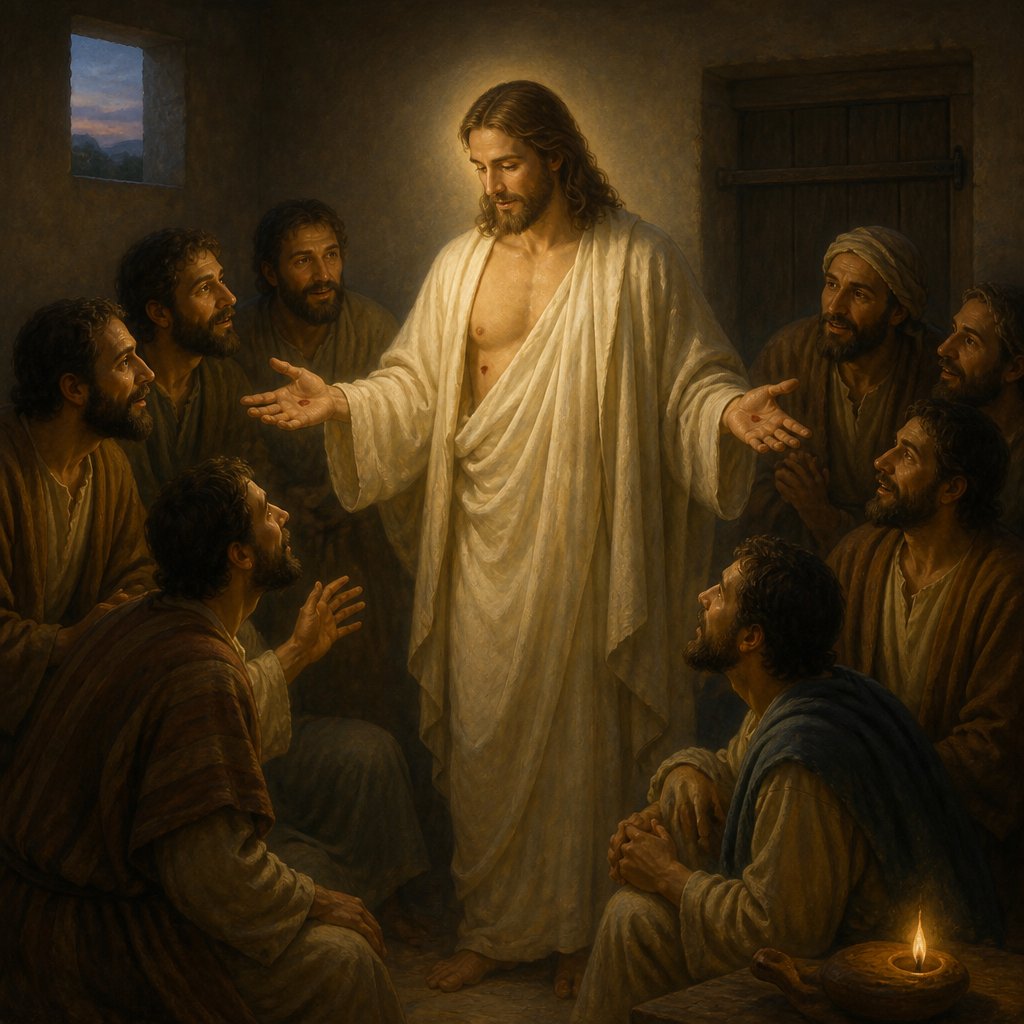
John 20:19-20 (KJV) reads: "Then the same day at evening, being the first day of the week, when the doors were shut where the disciples were assembled for fear of the Jews, came Jesus and stood in the midst, and saith unto them, Peace be unto you. And when he had so said, he shewed unto them his hands and his side. Then were the disciples glad, when they saw the Lord."
This passage from the Gospel of John recounts a significant event in the life of Jesus and his disciples. It takes place on the evening of the first day of the week, following the resurrection of Jesus. The disciples are gathered together in a locked room, filled with fear and uncertainty after the crucifixion of their beloved teacher and friend. Suddenly, Jesus appears in their midst, bringing them a message of peace and offering them proof of his resurrection by revealing the wounds in his hands and side.
One of the key themes present in this passage is the idea of peace in the midst of uncertainty and fear. The disciples are hiding behind closed doors, afraid of what might happen to them as followers of Jesus. In a moment of great vulnerability, Jesus appears to them and speaks words of comfort and reassurance. His greeting of "Peace be unto you" is not just a simple salutation, but a powerful declaration of the peace that Jesus brings to those who believe in him. This theme of peace amidst turmoil is a recurring motif in the teachings of Jesus and is reflective of his role as the Prince of Peace.
Another significant theme in this passage is the revelation of the resurrected Jesus to his disciples. The disciples had witnessed the crucifixion and felt the deep sorrow and despair that followed. However, the appearance of Jesus in their midst brings them immense joy and relief. His ability to conquer death and reveal himself to them as the risen Lord solidifies their belief in his divinity and the fulfillment of his promises. This moment serves as a turning point for the disciples, marking the beginning of their new understanding of Jesus' identity as the Messiah and the foundation of their faith.
The context of this passage is crucial for understanding its significance. The disciples' fear and seclusion reflect the tumultuous and uncertain period following Jesus' death. They were living in a state of shock and confusion, grappling with the loss of their leader and the uncertainty of what would come next. The appearance of Jesus in their midst serves as a powerful demonstration of his continued presence and his victory over death. It also marks the beginning of the disciples' transformation from fearful followers to courageous evangelists who would eventually spread the message of Jesus' resurrection to the ends of the earth.
Symbolism plays a significant role in this passage as well. The closed doors represent the disciples' isolation and fear, while Jesus' sudden appearance signifies his ability to transcend physical barriers and bring hope to those in despair. The wounds in Jesus' hands and side serve as tangible evidence of his death and resurrection, validating his identity as the Son of God. The act of showing his wounds also demonstrates Jesus' compassion and understanding of the disciples' doubts and fears, offering them the reassurance they need to believe in the miraculous events that have transpired.
In conclusion, John 20:19-20 (KJV) is a powerful and poignant passage that captures the transformative moment when Jesus appears to his disciples after his resurrection. It conveys themes of peace, revelation, and hope, while providing a powerful symbol of Jesus' victory over death. The context and symbolism further enhance the depth and significance of this passage, making it a foundational element of the Christian faith. This passage serves as a reminder of the enduring power of Jesus' resurrection and the peace he brings to those who believe in him.
Have questions about John 20:19-20?
Dive deeper into this scripture with Bible Chat — an AI-powered tool for exploring God's Word through conversation. Ask questions, get context, and grow in your understanding of the Bible.
Get Our Apps


John 20:19-20 Artwork

John 20:19-20 - "On the evening of that first day of the week, when the disciples were together, with the doors locked for fear of the Jewish leaders, Jesus came and stood among them and said, “Peace be with you!” After he said this, he showed them his hands and side. The disciples were overjoyed when they saw the Lord."
"On the evening of that first day of the week, when the disciples were together, with the doors locked for fear of the Jewish leaders, Jesus came and stood among them and said, “Peace be with you!” After he said this, he showed them his hands and side. The disciples were overjoyed when they saw the Lord." - John 20:19-20

John 19:20 - "This title then read many of the Jews: for the place where Jesus was crucified was nigh to the city: and it was written in Hebrew, and Greek, and Latin."

John 20:21

John 20:14

John 20:27

John 20:27

1 John 3:19-20 - "By this we know that we are of the truth, and shall assure our hearts before Him. For if our heart condemns us, God is greater than our heart, and knows all things."

Genesis 19-20

Genesis 20-19

John 20:11-12

John 20:11-13

John 20:30-31

John 20:19 - "¶ Then the same day at evening, being the first day of the week, when the doors were shut where the disciples were assembled for fear of the Jews, came Jesus and stood in the midst, and saith unto them, Peace be unto you."

Joshua 19:20 - "And Rabbith, and Kishion, and Abez,"

Exodus 27:19-20

Wisdom 8:19-20

Matthew 28:19-20

Matthew 28: 19-20

Matthew 28:19-20

Exodus 19:16-20

Wisdom 8:19-20

Matthew 28:19-20
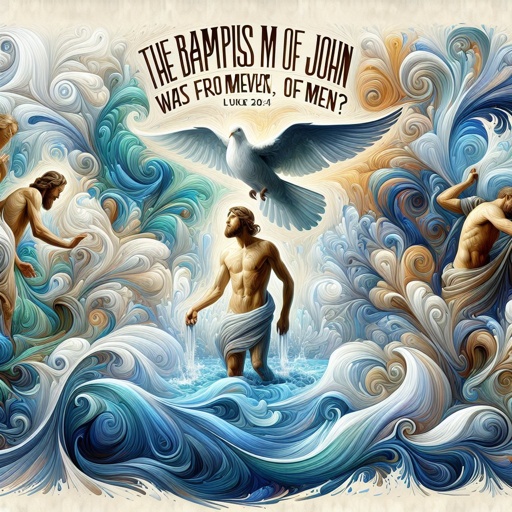
Luke 20:4 - "The baptism of John, was it from heaven, or of men?"

John 20:20 - "And when he had so said, he shewed unto them his hands and his side. Then were the disciples glad, when they saw the Lord."

John 3:19-20 - "And this is the condemnation, that light is come into the world, and men loved darkness rather than light, because their deeds were evil. For every one that doeth evil hateth the light, neither cometh to the light, lest his deeds should be reproved."

John 6:20 - "But he saith unto them, It is I; be not afraid."

1 Corinthians 1:19-20

1 Corinthians 1:19-20

1 Corinthians 1:19-20