What does John 20:12 mean?
"And seeth two angels in white sitting, the one at the head, and the other at the feet, where the body of Jesus had lain." - John 20:12
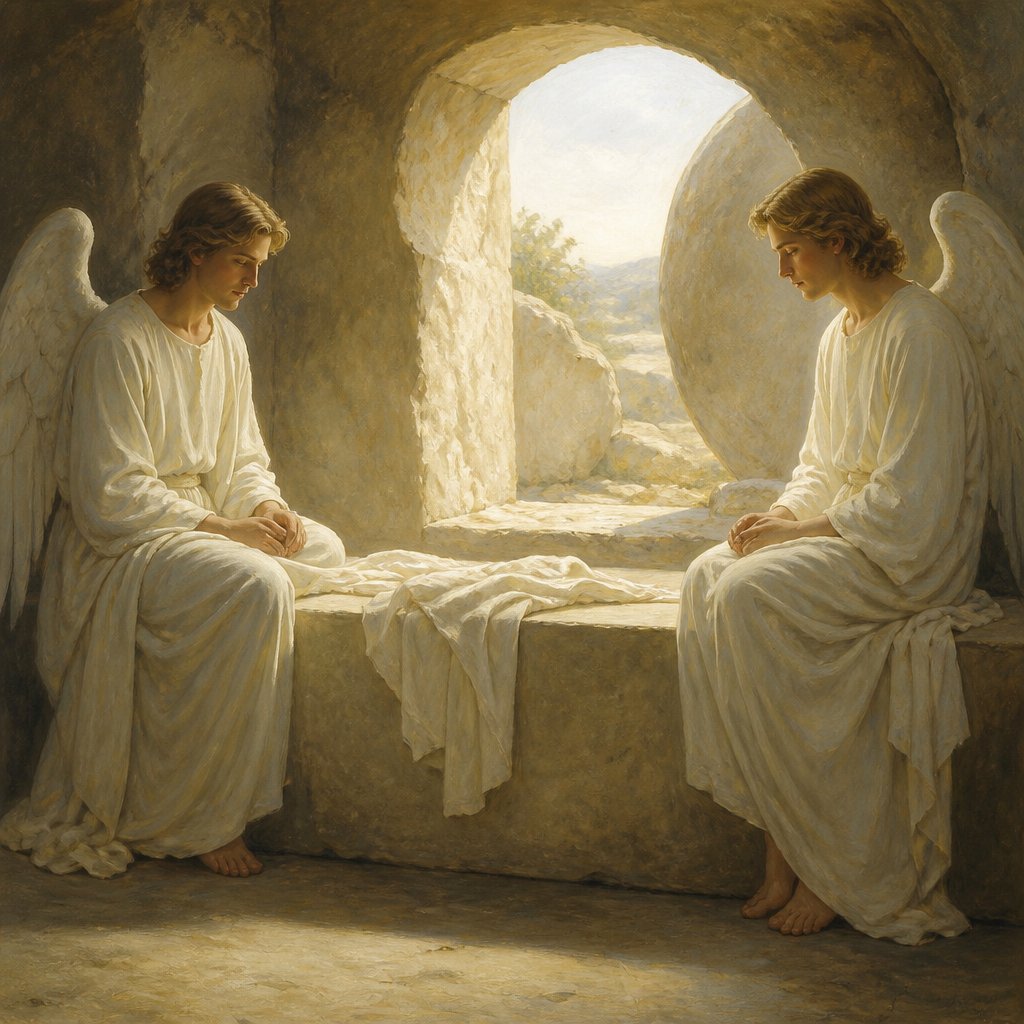
John 20:12 (KJV) states, "And seeth two angels in white sitting, the one at the head, and the other at the feet, where the body of Jesus had lain."
This verse comes from the gospel of John, which is one of the four canonical gospels in the New Testament. The gospel of John focuses on the deity of Jesus Christ and the significance of his life, death, and resurrection. In this particular chapter, John describes the events surrounding the discovery of Jesus' empty tomb and his resurrection.
In the immediate context of this verse, Mary Magdalene, one of Jesus' devoted followers, has just arrived at the tomb and found the stone rolled away. She runs to tell the disciples, leaving Peter and another disciple to investigate the empty tomb. After they leave, Mary remains at the tomb, weeping. It is at this point that she looks into the tomb and sees two angels in white, one at the head and the other at the feet, where Jesus' body had been laid.
The scene described in this verse is rich with symbolism and significance. The presence of angels at the tomb is a powerful affirmation of the supernatural events that have taken place. Throughout the Bible, angels are often depicted as messengers of God, delivering important announcements and providing comfort to those in need. In this case, the angels serve as witnesses to the miraculous resurrection of Jesus Christ, affirming the divine nature of his victory over death.
The fact that the angels are described as being in white further reinforces their heavenly and pure nature. White is often used symbolically to represent purity, holiness, and righteousness. The presence of the angels in white serves to emphasize the sacredness of the moment and the divine nature of the resurrection.
The positioning of the angels, one at the head and the other at the feet, is also significant. This detail echoes the description of the cherubim on the mercy seat of the Ark of the Covenant in the Old Testament. In Exodus 25:18-22, God instructs Moses to make two cherubim of gold, one at each end of the mercy seat, and to meet each other with their wings. The mercy seat was the place where God's presence dwelt, and it was there that atonement for sin was made. The positioning of the angels at the tomb parallels this imagery, suggesting that the resurrection of Jesus is the ultimate act of atonement and the fulfillment of God's redemptive plan for humanity.
Furthermore, the presence of the angels in the tomb serves as a foreshadowing of the resurrection appearances of Jesus. Throughout the gospels, angels play a prominent role in announcing and witnessing the resurrection of Jesus. In the book of Matthew, an angel appears at the empty tomb and tells the women that Jesus has risen. In Luke, two angels appear to the women at the tomb and declare that Jesus is alive. The presence of the angels in John 20:12 sets the stage for these later appearances and underscores the significance of Jesus' victory over death.
Overall, John 20:12 captures a pivotal moment in the narrative of Jesus' resurrection. The presence of the angels at the empty tomb symbolizes the divine affirmation of the resurrection and the fulfillment of God's redemptive plan. The imagery of the angels in white and their positioning at the head and feet of the place where Jesus' body had lain conveys the holiness and sacredness of the resurrection event. This verse serves as a powerful reminder of the supernatural and transcendent nature of Jesus' victory over death and the hope that it brings to all who believe.
Have questions about John 20:12?
Dive deeper into this scripture with Bible Chat — an AI-powered tool for exploring God's Word through conversation. Ask questions, get context, and grow in your understanding of the Bible.
Get Our Apps


John 20:12 Artwork

John 20:12 - "And seeth two angels in white sitting, the one at the head, and the other at the feet, where the body of Jesus had lain."
"And seeth two angels in white sitting, the one at the head, and the other at the feet, where the body of Jesus had lain." - John 20:12

John 20:11-12

John 12:20 - "¶ And there were certain Greeks among them that came up to worship at the feast:"
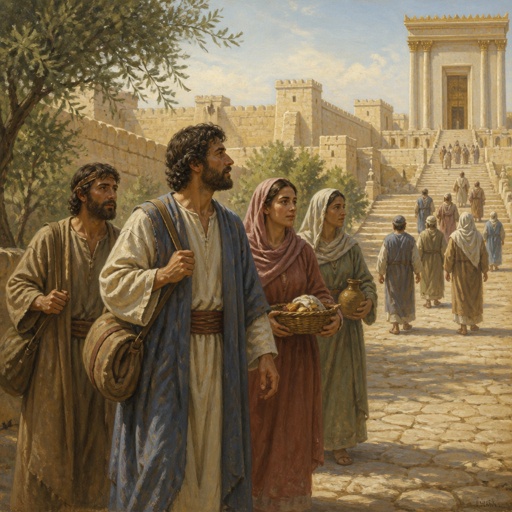
"¶ And there were certain Greeks among them that came up to worship at the feast:" - John 12:20

John 20:21

John 20:27

John 20:14

John 20:27

John 20:11-13

John 20:30-31
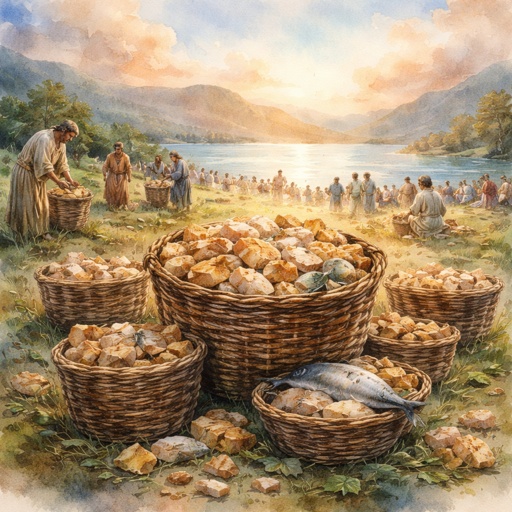
John 6:12

John 8:12
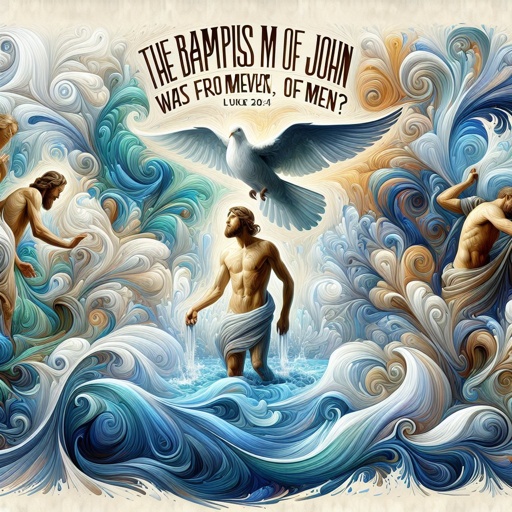
Luke 20:4 - "The baptism of John, was it from heaven, or of men?"

John 12:25

John 8:12

John 8:12
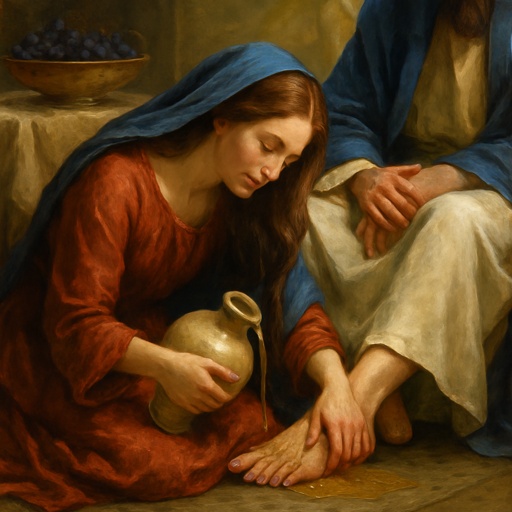
John 12:3

John 8:12

John 6:20 - "But he saith unto them, It is I; be not afraid."

Genesis 20-12
John 1:20 - "And he confessed, and denied not; but confessed, I am not the Christ."

John 20:10 - "Then the disciples went away again unto their own home."

John 12:12 - "¶ On the next day much people that were come to the feast, when they heard that Jesus was coming to Jerusalem,"

John 20:20 - "And when he had so said, he shewed unto them his hands and his side. Then were the disciples glad, when they saw the Lord."

John 20:3 - "Peter therefore went forth, and that other disciple, and came to the sepulchre."

John 20:9 - "For as yet they knew not the scripture, that he must rise again from the dead."

Luke 3:20 - "Added yet this above all, that he shut up John in prison."

acts 20:7-12

John 20:24 - "¶ But Thomas, one of the twelve, called Didymus, was not with them when Jesus came."