What does John 1:14 mean?
"And the Word was made flesh, and dwelt among us, (and we beheld his glory, the glory as of the only begotten of the Father,) full of grace and truth." - John 1:14
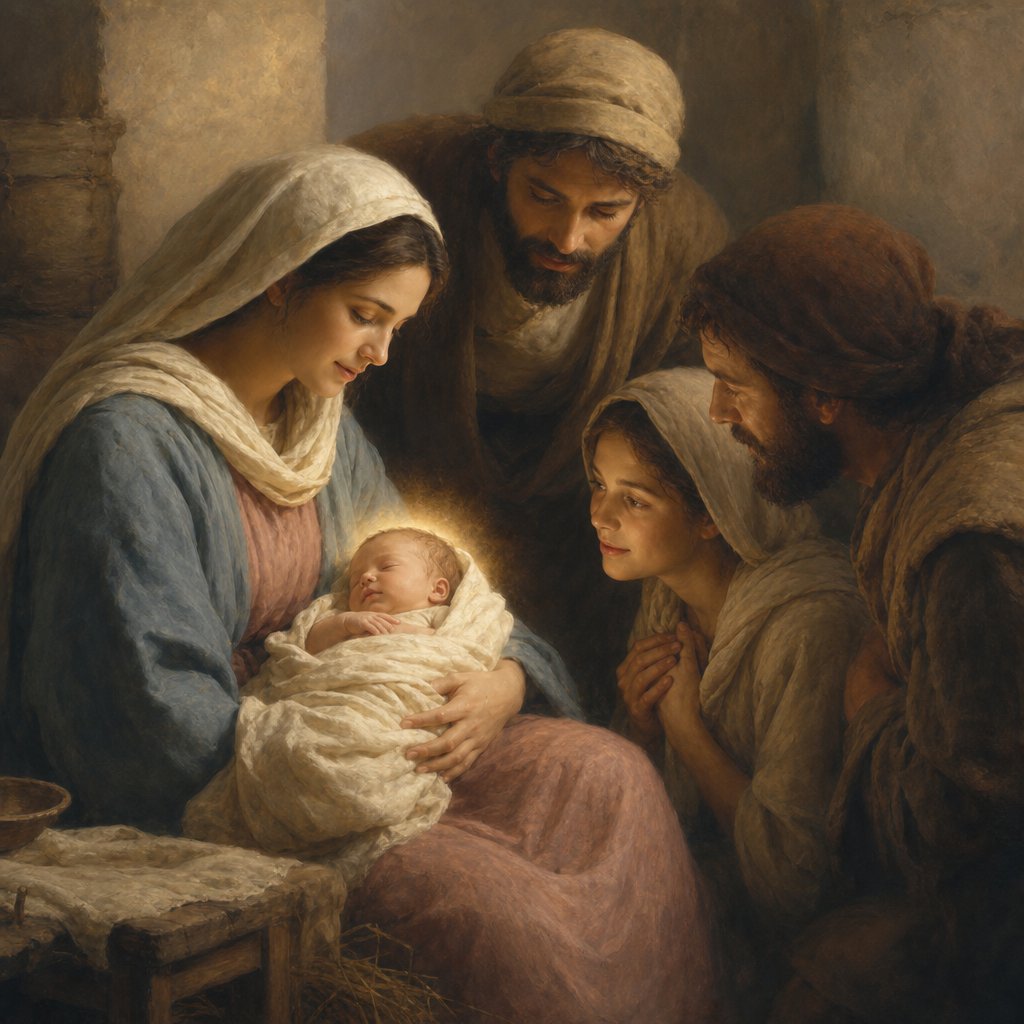
John 1:14 in the King James Version reads, “And the Word was made flesh, and dwelt among us, (and we beheld his glory, the glory as of the only begotten of the Father,) full of grace and truth.” The meaning of the verse is bound to how John has been using the title “the Word” from the beginning of the chapter, and it announces, in one sentence, the central claim of the Gospel: the eternal Word of God truly entered human history as a real man, lived in the midst of real people, revealed the very glory of God in a human life, and brought to mankind God’s saving kindness and God’s faithful reality.
In the immediate context, John has already said, “In the beginning was the Word, and the Word was with God, and the Word was God,” and also, “All things were made by him; and without him was not any thing made that was made.” So when verse 14 says, “the Word was made flesh,” it is not describing the start of the Word’s existence, as though the Word came into being at Bethlehem. It is describing a new manner of existence: the One who already “was” in the beginning, and through whom all things were made, took on what He was not before in this way, namely “flesh,” meaning true human nature in its weakness and mortality. John does not say the Word merely appeared in flesh, or spoke through flesh, but that He “was made flesh.” The language is plain and strong. The verse insists on incarnation, not illusion. It is the Creator stepping into the creation, not as a distant voice only, but in embodied life.
The phrase “and dwelt among us” carries both historical concreteness and rich symbolism. John is not merely saying that Christ visited; he is saying He took up residence in the human world, among ordinary people, within time, place, family, labor, hunger, weariness, tears, and death. The surrounding context reinforces this movement from the invisible to the visible: “No man hath seen God at any time; the only begotten Son, which is in the bosom of the Father, he hath declared him.” The Son “declares” the unseen God by being present among men. In John’s telling, God is no longer known only through distant report; He is known through a life lived “among us.” This is also why the verse is written in the plural voice: “among us,” “we beheld.” John speaks as a witness, and he includes the apostolic testimony as part of the verse’s force. Christianity, in John’s framing, is not primarily speculation about God, but witness to what God has done in the open.
When John adds, “and we beheld his glory,” he explains what was perceived in this dwelling: not merely moral greatness or prophetic power, but “glory.” In Scripture, glory is the weighty manifestation of God’s own presence, the visible or knowable radiance of who He is. John claims that in the flesh of Jesus, the disciples truly encountered the divine reality. This does not mean that Christ’s humanity was a disguise that could not be trusted; rather, the humanity is the very means by which the glory is seen. The glory is not set against the flesh, but revealed through it. John’s Gospel repeatedly shows glory in signs, in words, and supremely in the work Christ came to do; yet here John begins by saying that the glory was already there to be beheld in the living presence of the Word made flesh.
John then qualifies the glory with a comparison: “the glory as of the only begotten of the Father.” This phrase guards the uniqueness of Christ. The glory beheld is not merely like that of a holy man, or like that of an angel, or like that of a prophet. It is the glory proper to the Father’s “only begotten.” In the KJV wording, “only begotten” stresses singular sonship: a relationship to the Father that is not shared in the same way by any other. Believers may become “sons of God,” as the chapter says, but this Son is “the only begotten of the Father,” and His glory corresponds to that unique filial relation. John is saying that what they saw in Jesus was not borrowed splendor; it fit Him as the Son fits the Father, belonging to Him by nature and identity, not by appointment alone.
Finally, John sums up the character of this incarnate Word: “full of grace and truth.” “Full” suggests abundance and completeness, not scarcity. “Grace” in this setting speaks of God’s free favor toward the undeserving, His active kindness that stoops to rescue, pardon, heal, and restore. “Truth” speaks of God’s faithfulness, His reliability, His reality as opposed to shadow and uncertainty; it also points to the way Christ reveals what God is truly like. Joined together, “grace and truth” show that the incarnation is not only a display of power or majesty; it is the arrival of saving goodness and trustworthy revelation. The Word made flesh does not merely inform mankind about God; He brings God’s favor and God’s faithfulness into human reach. In the flow of John 1, this fullness is contrasted with human inability and darkness: “the light shineth in darkness; and the darkness comprehended it not.” Darkness does not overcome the light, but it also does not naturally receive it; therefore the coming of the Word is both revelation and rescue. “Grace” answers the need of sinners; “truth” answers the need of the deceived and wandering. Together they describe the kind of kingdom and salvation Christ brings.
The verse therefore gathers several themes into one: the preexistence and deity of the Word, the reality of His humanity, the nearness of God in history, the witness of those who saw Him, the disclosure of divine glory in a human life, the uniqueness of the Son’s relation to the Father, and the saving character of His coming as “grace and truth.” John 1:14 is significant because it declares that God’s ultimate self-disclosure is not merely a message spoken from afar, but a Person who comes near; not merely commands on stone, but the Word in flesh; not merely a glimpse of glory at a distance, but glory “beheld” among men; and not merely truth that condemns, but truth accompanied by grace that redeems.
Have questions about John 1:14?
Dive deeper into this scripture with Bible Chat — an AI-powered tool for exploring God's Word through conversation. Ask questions, get context, and grow in your understanding of the Bible.
Get Our Apps


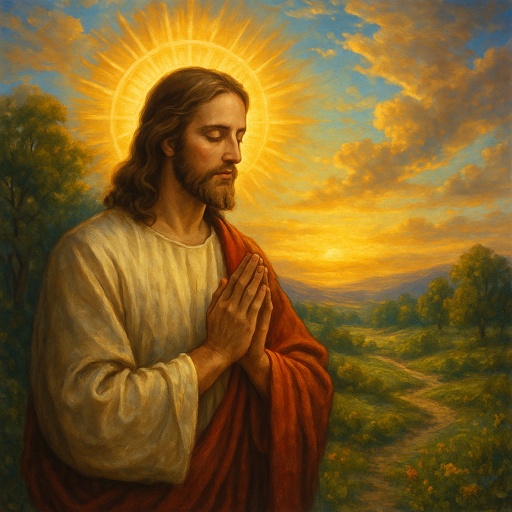
John 1:14 Artwork

John 1:14 - "And the Word was made flesh, and dwelt among us, (and we beheld his glory, the glory as of the only begotten of the Father,) full of grace and truth."

"And the Word was made flesh, and dwelt among us, ( and we beheld his glory, the glory as of the only begotten of the Father,) full of grace and truth." - John 1:14

3 John 1:14 - "But I trust I shall shortly see thee, and we shall speak face to face. Peace be to thee. Our friends salute thee. Greet the friends by name."
"And the Word was made flesh, and dwelt among us, (and we beheld his glory, the glory as of the only begotten of the Father,) full of grace and truth." - John 1:14
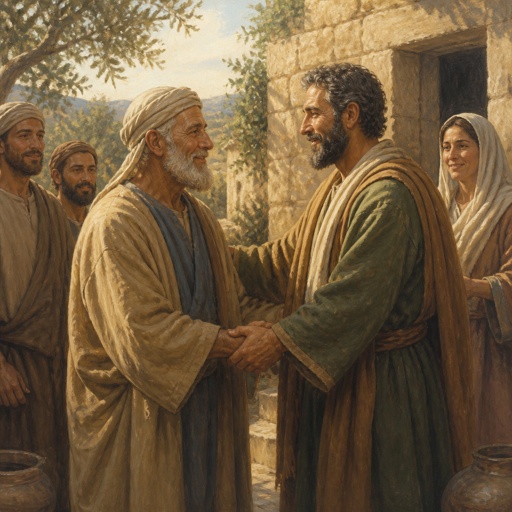
"But I trust I shall shortly see thee, and we shall speak face to face. Peace be to thee. Our friends salute thee. Greet the friends by name." - 3 John 1:14

John 3:14

John 14:16

John 14:15-21

1 John 2:14

1 John 2:14

John 14:1-2

John 1:4 - "In him was life; and the life was the light of men."

1 John 1:4 - "And these things write we unto you, that your joy may be full."

John 14:1 - "Let not your heart be troubled: ye believe in God, believe also in me."

3 John 1:4 - "I have no greater joy than to hear that my children walk in truth."

1 John 4:14 - "And we have seen and do testify that the Father sent the Son to be the Saviour of the world."

Mark 1:14 - "Now after that John was put in prison, Jesus came into Galilee, preaching the gospel of the kingdom of God,"

"In him was life; and the life was the light of men." - John 1:4

1 John 5:14 - "And this is the confidence that we have in him, that, if we ask any thing according to his will, he heareth us:"

2 John 1:4 - "I rejoiced greatly that I found of thy children walking in truth, as we have received a commandment from the Father."

"And these things write we unto you, that your joy may be full." - 1 John 1:4

1 John 1:4 (KJVA) 4 And these things write we unto you, that your joy may be full.

John 14

John 14:30

"I have no greater joy than to hear that my children walk in truth." - 3 John 1:4

John 14:6
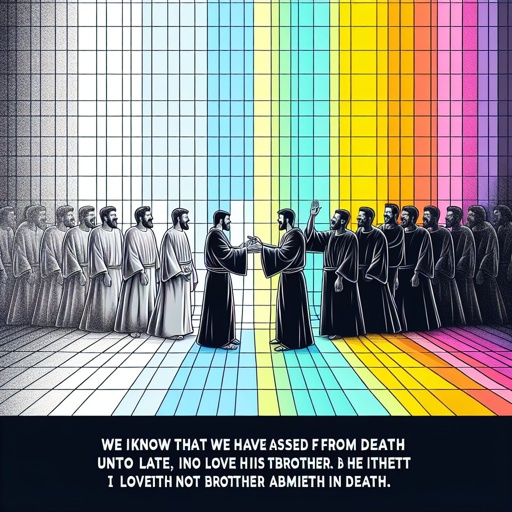
1 John 3:14 - "We know that we have passed from death unto life, because we love the brethren. He that loveth not his brother abideth in death."
"Let not your heart be troubled: ye believe in God, believe also in me." - John 14:1

John 14:28

John 20:14