What does John 19:41 mean?
"Now in the place where he was crucified there was a garden; and in the garden a new sepulchre, wherein was never man yet laid." - John 19:41
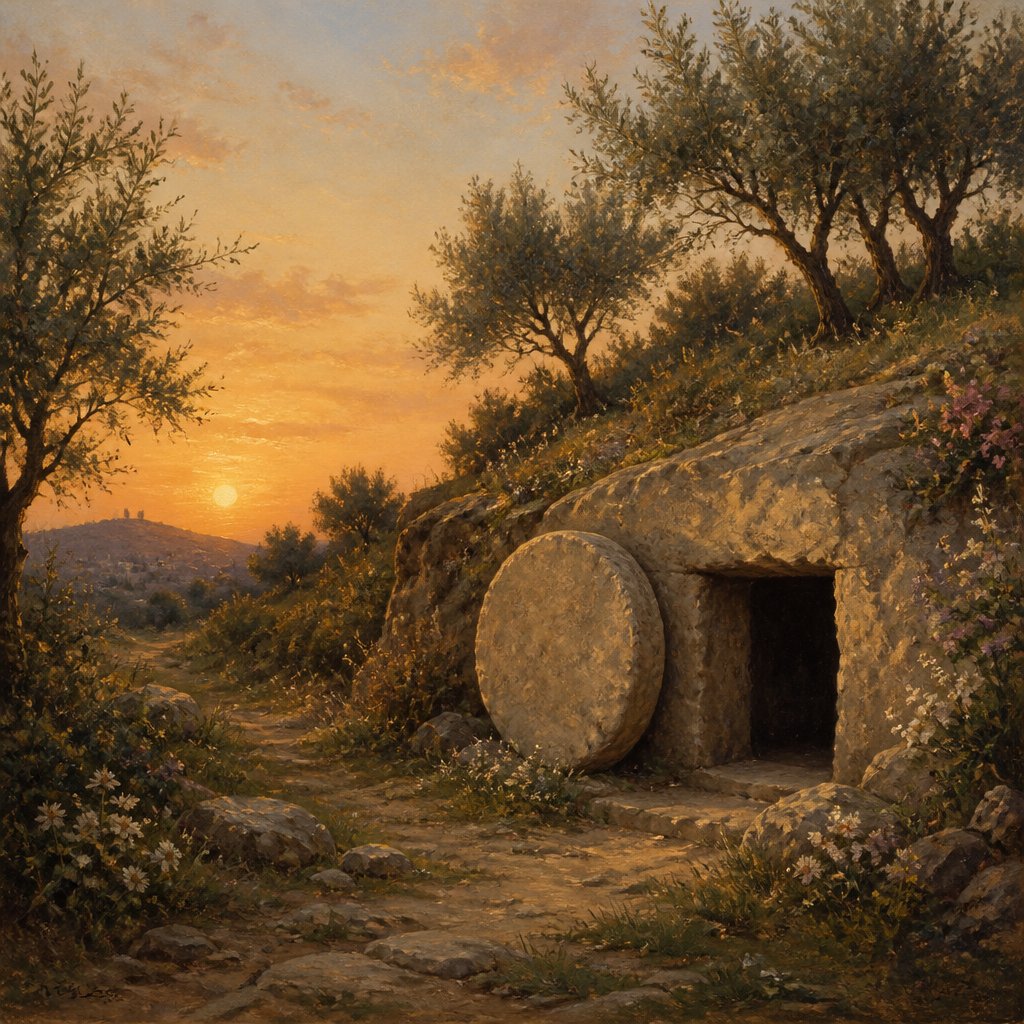
John 19:41 (KJV) states, "Now in the place where he was crucified there was a garden; and in the garden a new sepulchre, wherein was never man yet laid."
This verse comes at the end of the narrative describing the crucifixion of Jesus Christ. It serves as a transition to the next important event in the story, which is the burial of Jesus. However, the imagery and symbolism in this verse also hold deeper meaning that can be examined and understood within the broader context of the Christian faith.
First, let's examine the context in which this verse appears. The chapter begins with Jesus being handed over to Pilate and ultimately being sentenced to death by crucifixion. It describes the events leading up to his crucifixion, including the mocking and humiliation Jesus endured, as well as the interactions with Pilate and the Jewish leaders. The verse in question appears at the end of this narrative, setting the scene for the burial of Jesus and his eventual resurrection.
The mention of a garden in this verse is significant. Throughout the Bible, gardens are often associated with life, growth, and renewal. In the book of Genesis, the Garden of Eden is described as a paradise where humanity enjoyed communion with God before the Fall. In the New Testament, Jesus is also depicted as being in a garden before his arrest, where he prays and ultimately surrenders to the will of God.
The juxtaposition of the garden with the crucifixion site serves as a powerful contrast between death and the hope of new life. The garden symbolizes the possibility of resurrection and redemption, even in the face of death and suffering. This imagery reinforces the central message of the Christian faith, which is the belief in the resurrection of Jesus Christ and the hope of eternal life for believers.
The mention of the new sepulchre, wherein was never man yet laid, further emphasizes the uniqueness and significance of Jesus' burial. In Jewish tradition, tombs were often reused for multiple burials, but the fact that Jesus was laid in a new sepulchre underscores the idea that his death and burial were unlike any other. This detail points to the exceptional nature of Jesus' sacrifice and the profound impact it has on humanity.
In addition to the immediate context of the crucifixion and burial of Jesus, this verse also carries broader theological themes. It serves as a reminder of the transformative power of God's grace and the promise of new life. Through his death and resurrection, Jesus offers hope and redemption to all who believe in him, transforming the despair of the crucifixion into the hope of the empty tomb.
Furthermore, the garden and the new sepulchre can be seen as symbols of the renewal and restoration that are central to the Christian faith. They represent the idea that even in the midst of death and despair, God offers the possibility of new beginnings and the promise of salvation. This verse echoes the message of hope and renewal that is central to the Easter story and the Christian understanding of redemption.
In conclusion, John 19:41 is a verse that holds deep meaning within the broader context of the Christian faith. It serves as a transition to the burial of Jesus, but it also carries powerful imagery and symbolism that speaks to the transformative power of God's grace and the promise of new life. The garden and the new sepulchre symbolize the hope and renewal that are at the heart of the Christian message, and they invite believers to reflect on the profound significance of Jesus' death and resurrection. This verse serves as a poignant reminder of the central themes of the Easter story, offering hope and comfort to all who encounter its message.
Have questions about John 19:41?
Dive deeper into this scripture with Bible Chat — an AI-powered tool for exploring God's Word through conversation. Ask questions, get context, and grow in your understanding of the Bible.
Get Our Apps


John 19:41 Artwork

John 19:41 - "Now in the place where he was crucified there was a garden; and in the garden a new sepulchre, wherein was never man yet laid."
"Now in the place where he was crucified there was a garden; and in the garden a new sepulchre, wherein was never man yet laid." - John 19:41

Isaiah 41, 19

John 9:1-41

John 10:41 - "And many resorted unto him, and said, John did no miracle: but all things that John spake of this man were true."

John 5:41 - "I receive not honour from men."

John 4:41 - "And many more believed because of his own word;"

Joshua 19:41 - "And the coast of their inheritance was Zorah, and Eshtaol, and Ir-shemesh,"

Mark 10:41 - "And when the ten heard it, they began to be much displeased with James and John."

Acts 19:41 - "And when he had thus spoken, he dismissed the assembly."

John 7:41 - "Others said, This is the Christ. But some said, Shall Christ come out of Galilee?"

John 12:41 - "These things said Esaias, when he saw his glory, and spake of him."

Luke 19:41 - "¶ And when he was come near, he beheld the city, and wept over it,"
"I receive not honour from men." - John 5:41

Job 41:19 - "Out of his mouth go burning lamps, and sparks of fire leap out."

John 6:41 - "The Jews then murmured at him, because he said, I am the bread which came down from heaven."

"And many resorted unto him, and said, John did no miracle: but all things that John spake of this man were true." - John 10:41
"And many more believed because of his own word;" - John 4:41

"And the coast of their inheritance was Zorah, and Eshtaol, and Ir-shemesh," - Joshua 19:41

John 19:38

John 19:1

John 8:41 - "Ye do the deeds of your father. Then said they to him, We be not born of fornication; we have one Father, even God."

John 19:19 - "¶ And Pilate wrote a title, and put it on the cross. And the writing was, JESUS OF NAZARETH THE KING OF THE JEWS."

John 17.6-19

John 1:41 - "He first findeth his own brother Simon, and saith unto him, We have found the Messias, which is, being interpreted, the Christ."

"And when the ten heard it, they began to be much displeased with James and John." - Mark 10:41

John 19:1-3

John 19:25-27

Isaiah 41:19 - "I will plant in the wilderness the cedar, the shittah tree, and the myrtle, and the oil tree; I will set in the desert the fir tree, and the pine, and the box tree together:"

John 9:41 - "Jesus said unto them, If ye were blind, ye should have no sin: but now ye say, We see; therefore your sin remaineth."