What does John 19:38 mean?
"¶ And after this Joseph of Arimathaea, being a disciple of Jesus, but secretly for fear of the Jews, besought Pilate that he might take away the body of Jesus: and Pilate gave him leave. He came therefore, and took the body of Jesus." - John 19:38
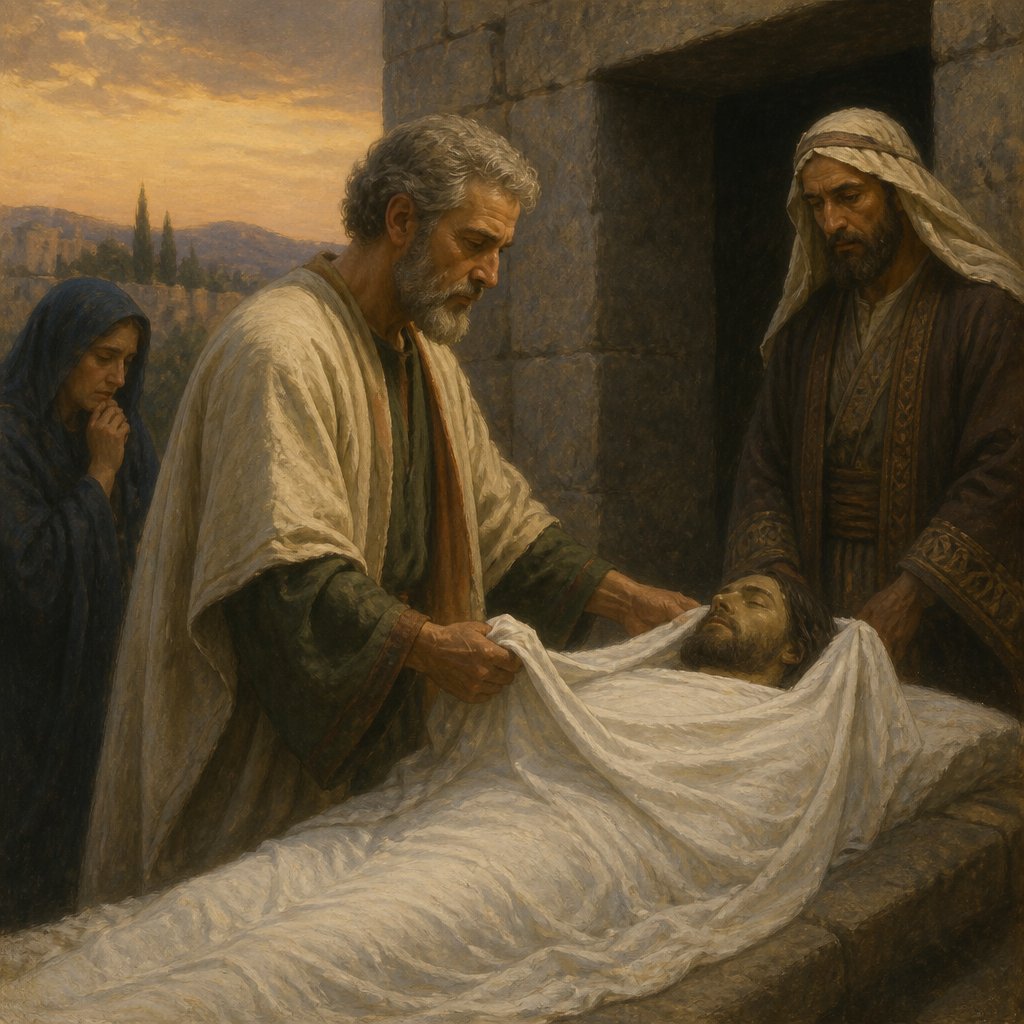
John 19:38 from the King James Version (KJV) reads, "And after this Joseph of Arimathaea, being a disciple of Jesus, but secretly for fear of the Jews, besought Pilate that he might take away the body of Jesus: and Pilate gave him leave. He came therefore, and took the body of Jesus."
This verse provides a significant moment in the biblical narrative of the crucifixion and burial of Jesus Christ. The context of this verse is crucial to understanding its meaning and significance. At this point in the narrative, Jesus has just been crucified and has died on the cross. The events leading up to his death included his arrest, trial, and condemnation by the Roman authorities, as well as his crucifixion at Golgotha.
Joseph of Arimathaea, who is mentioned in this verse, is a prominent member of the Jewish Sanhedrin and a disciple of Jesus Christ. However, it is stated that he has been a secret disciple of Jesus for fear of the Jews. Despite this fear, Joseph of Arimathaea displays an act of courage and devotion by stepping forward to request the body of Jesus from Pilate, the Roman governor. This act is not only a demonstration of his faith and love for Jesus, but it also symbolizes the beginning of a public declaration of his discipleship.
The mention of Pilate giving Joseph of Arimathaea permission to take the body of Jesus is significant in the context of Roman authority. It reflects the fulfillment of the prophecy that no bones of the Messiah would be broken (Exodus 12:46; Numbers 9:12; Psalm 34:20), thus emphasizing the innocence and purity of Jesus in death.
The act of Joseph of Arimathaea taking the body of Jesus holds profound symbolism. It symbolizes the deep love and reverence for Jesus, as well as the desire to give him a proper burial. In Jewish tradition, it was important to bury the deceased as soon as possible after death. By taking the body of Jesus, Joseph of Arimathaea ensures that the body of Jesus is not left on the cross but is given a fitting burial.
This verse also serves to highlight the theme of courage and loyalty in the face of adversity. Joseph of Arimathaea's willingness to publicly display his allegiance to Jesus, despite the potential consequences, serves as an example of steadfast faith and commitment. His actions demonstrate the transformation from being a secret disciple to openly acknowledging his faith in Jesus, even in the midst of opposition.
Furthermore, the narrative of Jesus' burial is a reminder of the humanity and mortality of Jesus. It emphasizes the physical reality of his death and the fulfillment of his sacrifice. The burial of Jesus also sets the stage for the resurrection, which is a central theme in the Christian faith.
In conclusion, John 19:38 from the King James Version (KJV) holds deep significance in the biblical narrative of the crucifixion and burial of Jesus Christ. This verse demonstrates the courage and love of Joseph of Arimathaea, as well as serving as a symbol of devotion and faith. It also underscores the humanity and mortality of Jesus, setting the stage for the pivotal event of his resurrection. This verse continues to resonate with Christians as a powerful testament to unwavering faith and love for Christ.
Have questions about John 19:38?
Dive deeper into this scripture with Bible Chat — an AI-powered tool for exploring God's Word through conversation. Ask questions, get context, and grow in your understanding of the Bible.
Get Our Apps


John 19:38 Artwork

John 19:38
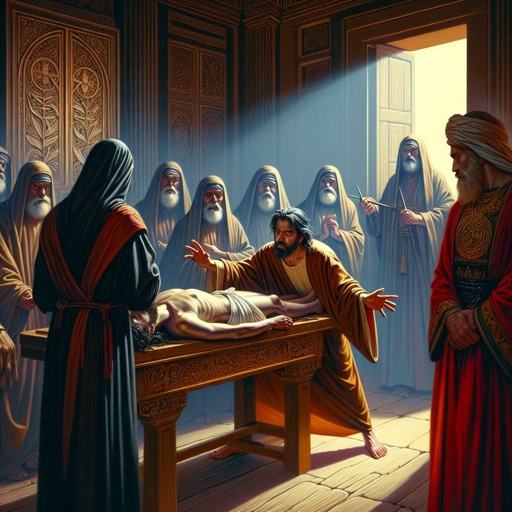
John 19:38 - "¶ And after this Joseph of Arimathaea, being a disciple of Jesus, but secretly for fear of the Jews, besought Pilate that he might take away the body of Jesus: and Pilate gave him leave. He came therefore, and took the body of Jesus."
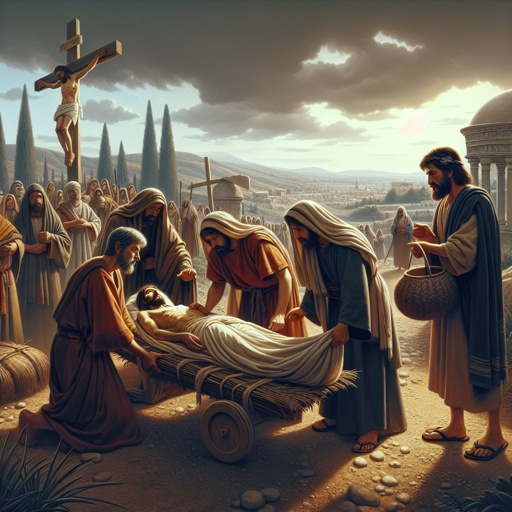
John 19:38-42 - "Later, Joseph of Arimathea asked Pilate for the body of Jesus. Now Joseph was a disciple of Jesus, but secretly because he feared the Jewish leaders. With Pilate’s permission, he came and took the body away. He was accompanied by Nicodemus, the man who earlier had visited Jesus at night. Nicodemus brought a mixture of myrrh and aloes, about seventy-five pounds. Taking Jesus’ body, the two of them wrapped it, with the spices, in strips of linen. This was in accordance with Jewish burial customs. At the place where Jesus was crucified, there was a garden, and in the garden a new tomb, in which no one had ever been laid. Because it was the Jewish day of Preparation and since the tomb was nearby, they laid Jesus there."
"¶ And after this Joseph of Arimathaea, being a disciple of Jesus, but secretly for fear of the Jews, besought Pilate that he might take away the body of Jesus: and Pilate gave him leave. He came therefore, and took the body of Jesus." - John 19:38
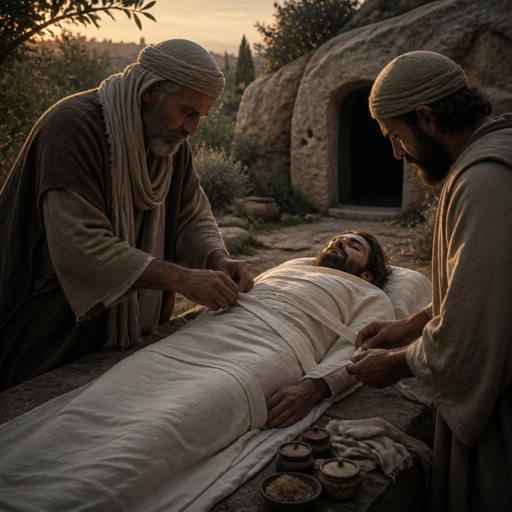
"Later, Joseph of Arimathea asked Pilate for the body of Jesus. Now Joseph was a disciple of Jesus, but secretly because he feared the Jewish leaders. With Pilate’s permission, he came and took the body away. He was accompanied by Nicodemus, the man who earlier had visited Jesus at night. Nicodemus brought a mixture of myrrh and aloes, about seventy-five pounds. Taking Jesus’ body, the two of them wrapped it, with the spices, in strips of linen. This was in accordance with Jewish burial customs. At the place where Jesus was crucified, there was a garden, and in the garden a new tomb, in which no one had ever been laid. Because it was the Jewish day of Preparation and since the tomb was nearby, they laid Jesus there." - John 19:38-42
John 7:38

John 7:38

John 7:38

John 7:38

John 7:38

John 7:38

John 7:38

Genesis 19-38

John 9:38 - "And he said, Lord, I believe. And he worshipped him."

Psalms 38:19 - "But mine enemies are lively, and they are strong: and they that hate me wrongfully are multiplied."

Job 38:19 - "Where is the way where light dwelleth? and as for darkness, where is the place thereof,"

John 11:38 - "Jesus therefore again groaning in himself cometh to the grave. It was a cave, and a stone lay upon it."

John 6:38 - "For I came down from heaven, not to do mine own will, but the will of him that sent me."

Luke 19:38 - "Saying, Blessed be the King that cometh in the name of the Lord: peace in heaven, and glory in the highest."

Joshua 19:38 - "And Iron, and Migdal-el, Horem, and Beth-anath, and Beth-shemesh; nineteen cities with their villages."

John 5:38 - "And ye have not his word abiding in you: for whom he hath sent, him ye believe not."

Exodus 38:19 - "And their pillars were four, and their sockets of brass four; their hooks of silver, and the overlaying of their chapiters and their fillets of silver."

John 4:38 - "I sent you to reap that whereon ye bestowed no labour: other men laboured, and ye are entered into their labours."

John 7:38 - "He that believeth on me, as the scripture hath said, out of his belly shall flow rivers of living water."

Genesis 38:19 - "And she arose, and went away, and laid by her vail from her, and put on the garments of her widowhood."

John 19:1

Out of his heart will flow rivers of living water. John 7:38

John 19:19 - "¶ And Pilate wrote a title, and put it on the cross. And the writing was, JESUS OF NAZARETH THE KING OF THE JEWS."

John 8:38 - "I speak that which I have seen with my Father: and ye do that which ye have seen with your father."

John 10:38 - "But if I do, though ye believe not me, believe the works: that ye may know, and believe, that the Father is in me, and I in him."