What does John 18:33-40 mean?
"Then Pilate entered into the judgment hall again, and called Jesus, and said unto him, Art thou the King of the Jews? Jesus answered him, Sayest thou this thing of thyself, or did others tell it thee of me? Pilate answered, Am I a Jew? Thine own nation and the chief priests have delivered thee unto me: what hast thou done? Jesus answered, My kingdom is not of this world: if my kingdom were of this world, then would my servants fight, that I should not be delivered to the Jews: but now is my kingdom not from hence. Pilate therefore said unto him, Art thou a king then? Jesus answered, Thou sayest that I am a king. To this end was I born, and for this cause came I into the world, that I should bear witness unto the truth. Every one that is of the truth heareth my voice. Pilate saith unto him, What is truth? And when he had said this, he went out again unto the Jews, and saith unto them, I find in him no fault at all. But ye have a custom, that I should release unto you one at the passover: will ye therefore that I release unto you the King of the Jews? Then cried they all again, saying, Not this man, but Barabbas. Now Barabbas was a robber." - John 18:33-40
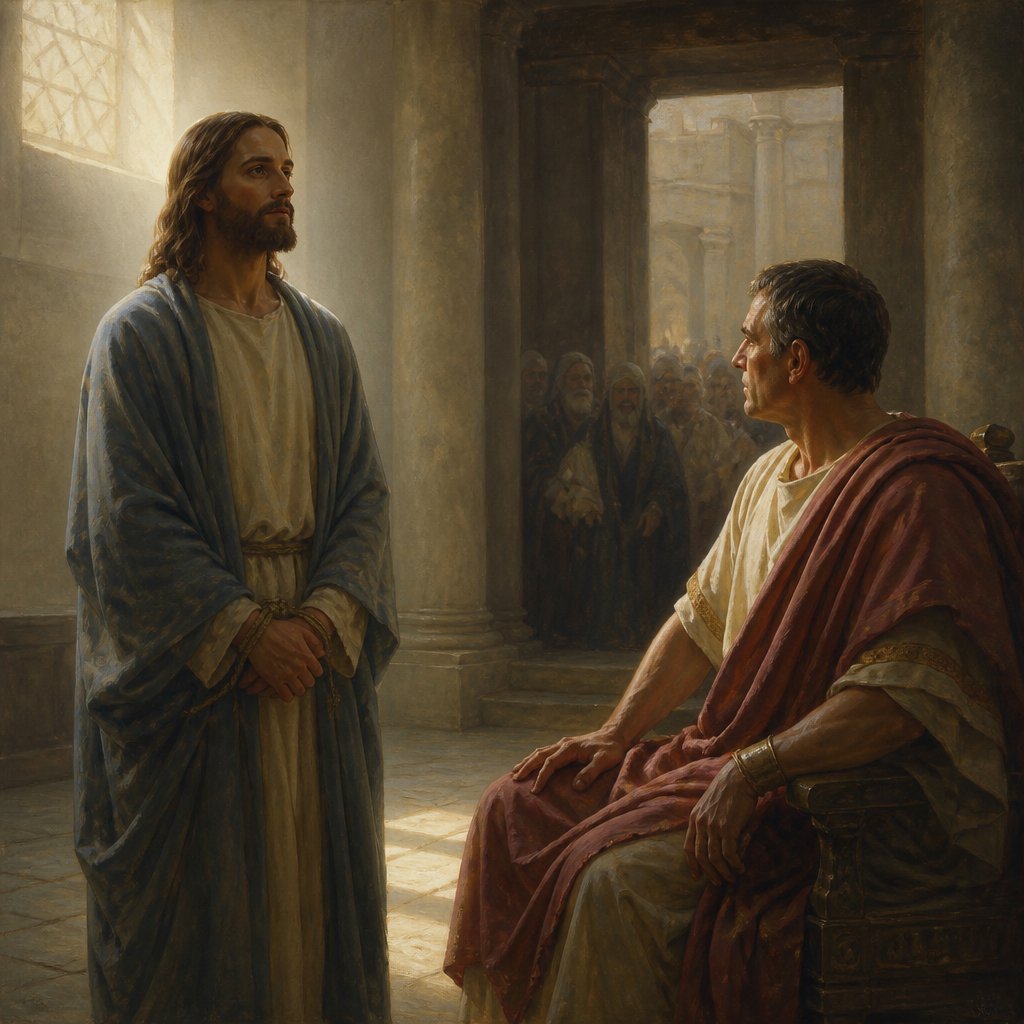
In John 18:33-40, we read an account of Jesus' trial before Pontius Pilate, the Roman governor of Judea. This passage captures a critical moment in the life of Jesus, as he faced the ultimate test of his mission on earth. The dialogue between Jesus and Pilate reveals profound truths about the nature of Jesus' kingdom, his identity as the Son of God, and the clash between the authority of Rome and the authority of God.
The passage opens with Pilate engaging in a conversation with Jesus. He asks Jesus if he is the King of the Jews, to which Jesus responds, "My kingdom is not of this world: if my kingdom were of this world, then would my servants fight, that I should not be delivered to the Jews: but now is my kingdom not from hence" (John 18:36, KJV). In this statement, Jesus makes it clear that his kingdom is not a political or earthly kingdom, but rather a spiritual kingdom that transcends the boundaries of this world. This sets the stage for the central theme of the passage, which is the conflict between the kingdom of God and the kingdom of the world.
Pilate, perplexed by Jesus' response, questions him further, asking, "Art thou a king then?" Jesus answers, "Thou sayest that I am a king. To this end was I born, and for this cause came I into the world, that I should bear witness unto the truth. Every one that is of the truth heareth my voice" (John 18:37, KJV). In this exchange, Jesus affirms his divine mission and purpose as the bearer of truth, and the one who has come to establish the kingdom of God on earth. This declaration highlights the contrast between the power and authority of earthly kings, such as Pilate, and the authority of Jesus as the true King appointed by God.
As the conversation continues, Pilate seems to struggle with the spiritual significance of Jesus' claims. He responds by asking, "What is truth?" (John 18:38, KJV), expressing a sense of doubt and skepticism about the nature of truth and the reality of Jesus' kingdom. This question reflects the broader theme of the passage, which is the clash between worldly wisdom and divine truth. Pilate, as a representative of the Roman Empire, embodies the values of the world, which prioritize power, control, and human authority. In contrast, Jesus embodies the values of the kingdom of God, which are rooted in humility, love, and spiritual authority.
The tension between these conflicting worldviews reaches a critical point when Pilate attempts to release Jesus, acknowledging that he finds no fault in him. However, the Jewish leaders, who feel threatened by Jesus' claims to kingship and divine authority, demand his crucifixion. Pilate ultimately succumbs to the pressure from the crowd and hands Jesus over to be crucified, symbolizing the triumph of worldly powers over the truth of God.
The symbolism in this passage is rich and multi-layered, reflecting the deeper spiritual struggles and conflicts that underlie the events of Jesus' trial. Jesus' assertion of a kingdom that is not of this world challenges the conventional understanding of power and authority, inviting us to contemplate the nature of true kingship and the values of the kingdom of God. The dialogue between Jesus and Pilate also highlights the universal struggle between the forces of darkness and the forces of light, between falsehood and truth, and between the temporal and the eternal.
In the broader context of the Gospel of John, this passage serves as a pivotal moment in Jesus' mission, foreshadowing his ultimate sacrifice on the cross and the establishment of his kingdom through his death and resurrection. Through his unwavering commitment to the truth and his submission to the will of God, Jesus demonstrates the redemptive power of divine love and the ultimate triumph of the kingdom of God over the kingdoms of this world.
In conclusion, John 18:33-40 offers a profound meditation on the clash between the kingdom of God and the kingdom of the world, as exemplified in the dialogue between Jesus and Pilate. This passage invites us to reflect on the nature of true kingship, the meaning of divine authority, and the struggle between worldly wisdom and spiritual truth. As we contemplate the timeless significance of this encounter, may we be inspired to seek the truth, embrace the values of the kingdom of God, and bear witness to the redemptive power of Christ's love in our lives.
Have questions about John 18:33-40?
Dive deeper into this scripture with Bible Chat — an AI-powered tool for exploring God's Word through conversation. Ask questions, get context, and grow in your understanding of the Bible.
Get Our Apps


John 18:33-40 Artwork

John 18:33-40 - "Then Pilate entered into the judgment hall again, and called Jesus, and said unto him, Art thou the King of the Jews? Jesus answered him, Sayest thou this thing of thyself, or did others tell it thee of me? Pilate answered, Am I a Jew? Thine own nation and the chief priests have delivered thee unto me: what hast thou done? Jesus answered, My kingdom is not of this world: if my kingdom were of this world, then would my servants fight, that I should not be delivered to the Jews: but now is my kingdom not from hence. Pilate therefore said unto him, Art thou a king then? Jesus answered, Thou sayest that I am a king. To this end was I born, and for this cause came I into the world, that I should bear witness unto the truth. Every one that is of the truth heareth my voice. Pilate saith unto him, What is truth? And when he had said this, he went out again unto the Jews, and saith unto them, I find in him no fault at all. But ye have a custom, that I should release unto you one at the passover: will ye therefore that I release unto you the King of the Jews? Then cried they all again, saying, Not this man, but Barabbas. Now Barabbas was a robber."
"Then Pilate entered into the judgment hall again, and called Jesus, and said unto him, Art thou the King of the Jews? Jesus answered him, Sayest thou this thing of thyself, or did others tell it thee of me? Pilate answered, Am I a Jew? Thine own nation and the chief priests have delivered thee unto me: what hast thou done? Jesus answered, My kingdom is not of this world: if my kingdom were of this world, then would my servants fight, that I should not be delivered to the Jews: but now is my kingdom not from hence. Pilate therefore said unto him, Art thou a king then? Jesus answered, Thou sayest that I am a king. To this end was I born, and for this cause came I into the world, that I should bear witness unto the truth. Every one that is of the truth heareth my voice. Pilate saith unto him, What is truth? And when he had said this, he went out again unto the Jews, and saith unto them, I find in him no fault at all. But ye have a custom, that I should release unto you one at the passover: will ye therefore that I release unto you the King of the Jews? Then cried they all again, saying, Not this man, but Barabbas. Now Barabbas was a robber." - John 18:33-40

John 18:40 - "Then cried they all again, saying, Not this man, but Barabbas. Now Barabbas was a robber."

John 18:33 - "Then Pilate entered into the judgment hall again, and called Jesus, and said unto him, Art thou the King of the Jews?"

"Then cried they all again, saying, Not this man, but Barabbas. Now Barabbas was a robber." - John 18:40

John 6:40

John 6:40

John 16:33

John 16:33

John 16:33

John 16:33

John 16:33

John 16:33

Numbers 33:40 - "And king Arad the Canaanite, which dwelt in the south in the land of Canaan, heard of the coming of the children of Israel."

John 16 : 33

John 1:40 - "One of the two which heard John speak, and followed him, was Andrew, Simon Peter's brother."

John 10:40 - "And went away again beyond Jordan into the place where John at first baptized; and there he abode."

John 1:33

John 5:33 - "Ye sent unto John, and he bare witness unto the truth."
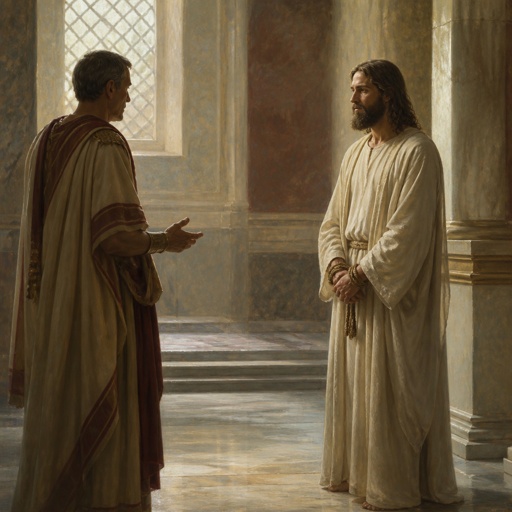
"Then Pilate entered into the judgment hall again, and called Jesus, and said unto him, Art thou the King of the Jews?" - John 18:33

John 5:40 - "And ye will not come to me, that ye might have life."

Genesis 18-33

John 7:40 - "¶ Many of the people therefore, when they heard this saying, said, Of a truth this is the Prophet."

Exodus 40:33 - "And he reared up the court round about the tabernacle and the altar, and set up the hanging of the court gate. So Moses finished the work."

John 19:40 - "Then took they the body of Jesus, and wound it in linen clothes with the spices, as the manner of the Jews is to bury."

Ezekiel 40:18 - "And the pavement by the side of the gates over against the length of the gates was the lower pavement."

John 9:33 - "If this man were not of God, he could do nothing."

Numbers 33:18 - "And they departed from Hazeroth, and pitched in Rithmah."

Genesis 40:18 - "And Joseph answered and said, This is the interpretation thereof: The three baskets are three days:"

Job 40:18 - "His bones are as strong pieces of brass; his bones are like bars of iron."