What does John 18:19-24 mean?
"The high priest then asked Jesus of his disciples, and of his doctrine. Jesus answered him, I spake openly to the world; I ever taught in the synagogue, and in the temple, whither the Jews always resort; and in secret have I said nothing. Why askest thou me? ask them which heard me, what I have said unto them: behold, they know what I said. And when he had thus spoken, one of the officers which stood by struck Jesus with the palm of his hand, saying, Answerest thou the high priest so? Jesus answered him, If I have spoken evil, bear witness of the evil: but if well, why smitest thou me? Now Annas had sent him bound unto Caiaphas the high priest." - John 18:19-24
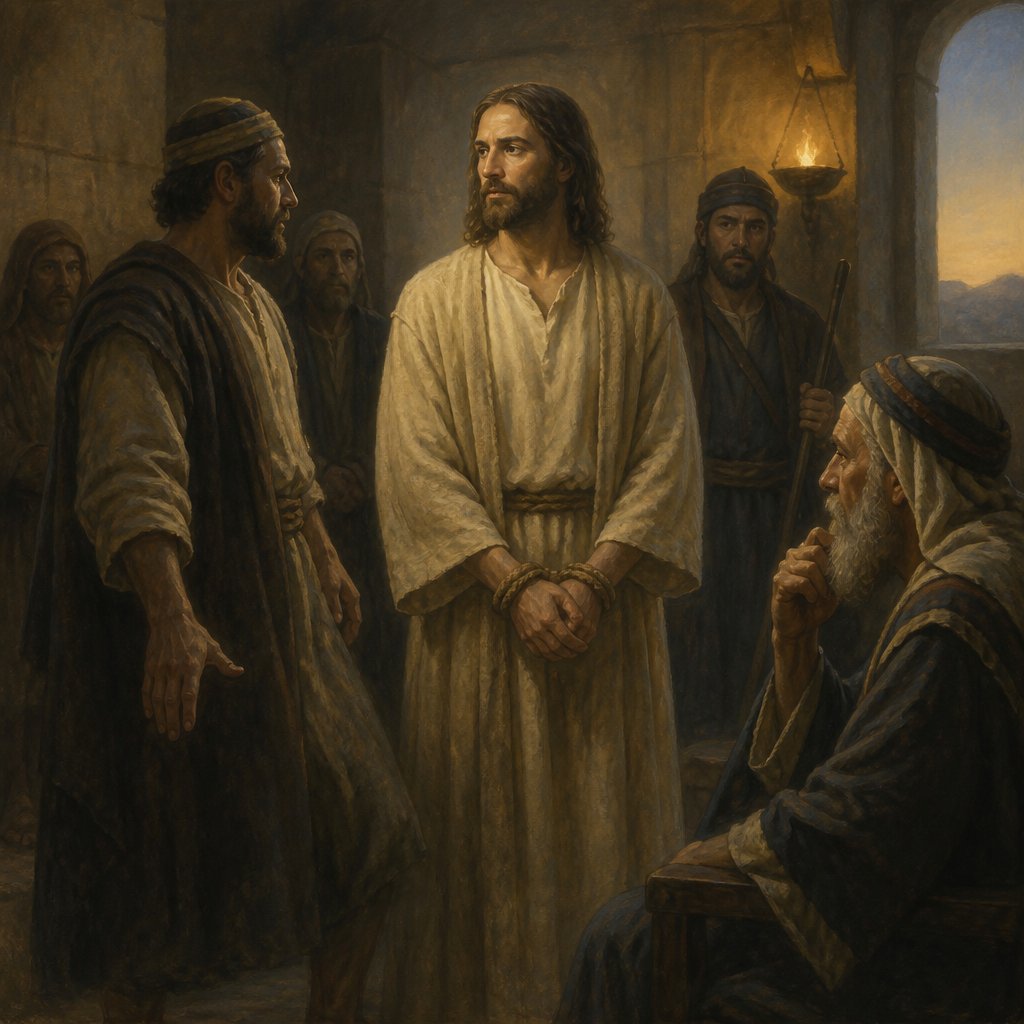
The verse John 18:19-24 from the King James Version of the Bible reads:
"The high priest then asked Jesus of his disciples, and of his doctrine. Jesus answered him, I spake openly to the world; I ever taught in the synagogue, and in the temple, whither the Jews always resort; and in secret have I said nothing. Why askest thou me? ask them which heard me, what I have said unto them: behold, they know what I said. And when he had thus spoken, one of the officers which stood by struck Jesus with the palm of his hand, saying, Answerest thou the high priest so? Jesus answered him, If I have spoken evil, bear witness of the evil: but if well, why smitest thou me? Now Annas had sent him bound unto Caiaphas the high priest."
This passage takes place after Jesus is arrested in the Garden of Gethsemane and is brought before the high priest Annas for questioning. It is a pivotal moment in the narrative of Jesus' trial and crucifixion, as it sets the stage for the events that will ultimately lead to his crucifixion.
One of the main themes of this passage is Jesus' unwavering commitment to speaking the truth. When questioned by the high priest about his disciples and his teachings, Jesus responds with confidence and boldness, stating that he has spoken openly to the world and has not kept his teachings a secret. This reaffirms Jesus' status as a truthful and honest teacher, who is unafraid to speak the truth even in the face of opposition and persecution.
Another theme that can be drawn from this passage is the unjust treatment of Jesus. After Jesus speaks boldly to the high priest, one of the officers standing nearby strikes him in the face. This act of violence against Jesus emphasizes the unjust and inhumane treatment he endured at the hands of those in authority. It foreshadows the physical and emotional suffering that Jesus will endure during his crucifixion, and serves to highlight the inherent injustice of his trial and execution.
The context of this passage is also significant in understanding its meaning. At this point in the narrative, Jesus has already been betrayed by Judas, arrested by the temple guards, and abandoned by his disciples. He is now being brought before the high priest and facing a series of interrogations and false accusations. The tension and drama of the moment are palpable, as Jesus stands firm in the face of adversity and persecution.
Symbolism can also be found within this passage, particularly in the actions and words of Jesus. His refusal to back down in the face of questioning and his willingness to endure physical violence symbolize his unwavering commitment to his mission and his willingness to suffer for the sake of others. Jesus' response to the officer who strikes him, "If I have spoken evil, bear witness of the evil: but if well, why smitest thou me?" reflects his commitment to the truth and his unwillingness to retaliate against his aggressors. This symbolizes Jesus' message of love, forgiveness, and non-violence, even in the face of persecution and injustice.
In conclusion, the passage John 18:19-24 from the King James Version of the Bible is a powerful and emotionally charged account of Jesus' unwavering commitment to truth and his unjust treatment at the hands of those in authority. It serves as a reminder of the unjust suffering that Jesus endured on behalf of all humanity and highlights the themes of truth, injustice, and the inherent conflict between the kingdom of God and the powers of this world. It also symbolizes Jesus' steadfast commitment to his mission and his message of love, forgiveness, and non-violence, even in the face of intense persecution and adversity.
Have questions about John 18:19-24?
Dive deeper into this scripture with Bible Chat — an AI-powered tool for exploring God's Word through conversation. Ask questions, get context, and grow in your understanding of the Bible.
Get Our Apps


John 18:19-24 Artwork

John 18:19-24 - "The high priest then questioned Jesus about his disciples and his teaching. Jesus answered him, “I have spoken openly to the world; I have always taught in synagogues and in the temple, where all Jews come together. I have said nothing in secret. Why do you ask me? Ask those who heard me, what I said to them; they know what I said.” When he had said this, one of the officers standing by struck Jesus with his hand, saying, “Is that how you answer the high priest?” Jesus answered him, “If I have spoken wrongly, bear witness to the wrong; but if rightly, why do you strike me?” Annas then sent him bound to Caiaphas the high priest."
"The high priest then questioned Jesus about his disciples and his teaching. Jesus answered him, “I have spoken openly to the world; I have always taught in synagogues and in the temple, where all Jews come together. I have said nothing in secret. Why do you ask me? Ask those who heard me, what I said to them; they know what I said.” When he had said this, one of the officers standing by struck Jesus with his hand, saying, “Is that how you answer the high priest?” Jesus answered him, “If I have spoken wrongly, bear witness to the wrong; but if rightly, why do you strike me?” Annas then sent him bound to Caiaphas the high priest." - John 18:19-24

John 18:24 - "Now Annas had sent him bound unto Caiaphas the high priest."

John 18:19 - "¶ The high priest then asked Jesus of his disciples, and of his doctrine."

John 19:18 - "Where they crucified him, and two other with him, on either side one, and Jesus in the midst."
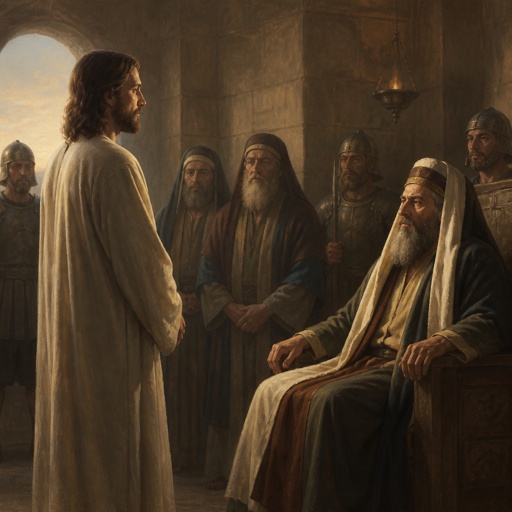
"¶ The high priest then asked Jesus of his disciples, and of his doctrine." - John 18:19

"Now Annas had sent him bound unto Caiaphas the high priest." - John 18:24

1 John 3:18-19 - "My little children, let us not love in word, neither in tongue; but in deed and in truth. And hereby we know that we are of the truth, and shall assure our hearts before him."

John 19:17-18 - "And he bearing his cross went forth into a place called the place of a skull, which is called in the Hebrew Golgotha: Where they crucified him, and two other with him, on either side one, and Jesus in the midst."

1 John 4:18-19 - "There is no fear in love; but perfect love casteth out fear: because fear hath torment. He that feareth is not made perfect in love. We love him, because he first loved us."

John 3:24 - "For John was not yet cast into prison."
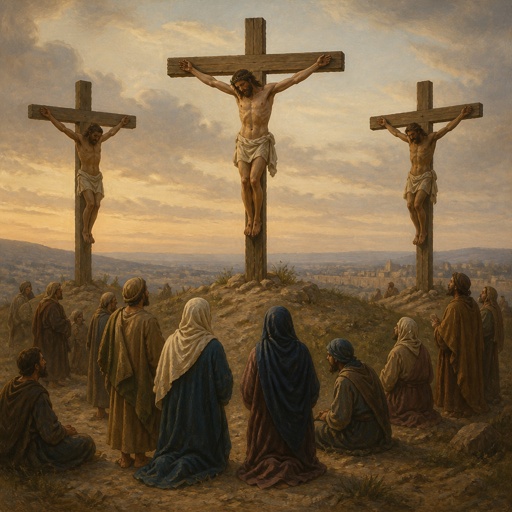
"Where they crucified him, and two other with him, on either side one, and Jesus in the midst." - John 19:18

John 19:24 - "They said therefore among themselves, Let us not rend it, but cast lots for it, whose it shall be: that the scripture might be fulfilled, which saith, They parted my raiment among them, and for my vesture they did cast lots. These things therefore the soldiers did."

"For John was not yet cast into prison." - John 3:24

John 15:18-19 - "If the world hates you, keep in mind that it hated me first. If you belonged to the world, it would love you as its own. As it is, you do not belong to the world, but I have chosen you out of the world. That is why the world hates you."

John 7:17-18

John 7:17-18

Genesis 24-19

Genesis 19-24

John 19:38

John 19:1

Genesis 19:24

John 7:17-18

John 7:17-18

Genesis 24-18

John 18:25

john 18:36

Genesis 18-24

John 19:19 - "¶ And Pilate wrote a title, and put it on the cross. And the writing was, JESUS OF NAZARETH THE KING OF THE JEWS."

John 17.6-19