What does John 16:33 mean?
"These things I have spoken unto you, that in me ye might have peace. In the world ye shall have tribulation: but be of good cheer; I have overcome the world." - John 16:33

“These things I have spoken unto you, that in me ye might have peace. In the world ye shall have tribulation: but be of good cheer; I have overcome the world.” John 16:33 (KJV).
John 16:33 is the closing sentence of a long, intimate portion of Christ’s teaching spoken on the night before His crucifixion, after the supper and just before He goes out with His disciples toward Gethsemane. In John 13–16 (KJV), Jesus prepares His own for His departure, warns them of hatred and persecution, promises the Comforter, and explains that sorrow will be turned into joy. By the time He speaks John 16:33, He has already told them that they will be “put out of the synagogues” and that some will think they do God service by killing them, that they will weep and lament while the world rejoices, and that the Holy Ghost will come to guide them into all truth. This verse gathers those threads into one final, steadying word: what He has said is meant to place them somewhere safe—“in me”—before the storm breaks.
When Jesus says, “These things I have spoken unto you, that in me ye might have peace,” He is pointing to the purpose of His instruction. The peace He offers is not the world’s peace of circumstances, stability, or approval, but a peace located “in me,” in union and fellowship with Himself. In the immediate context, the disciples are about to watch their Master arrested, condemned, and crucified; their expectations will be shattered, their courage tested, their understanding exposed as partial. Yet Jesus frames His teaching as a shelter for their hearts: if they hold His words, they can possess peace even when events look like defeat. The phrase “in me” functions like a boundary line between two realms that will appear throughout the verse: there is an “in me” realm where peace is found, and there is an “in the world” realm where trouble is expected. The significance is not that believers escape the world, but that they belong to Christ within it.
“In the world ye shall have tribulation” is not a vague prediction of occasional hardship; it is a promise of pressure. “Tribulation” in the KJV carries the sense of affliction, distress, and crushing opposition. In John’s Gospel, “the world” often stands for humanity organized in resistance to God, a system that rejects the Light. Jesus has already said in this same discourse, “If the world hate you, ye know that it hated me before it hated you” (John 15:18, KJV), and, “If they have persecuted me, they will also persecute you” (John 15:20, KJV). Therefore the tribulation is not merely the common hardships of life, but especially the conflict that arises when Christ’s people bear His name and walk in His truth in a world that does not want Him. The disciples’ coming trials—fear, scattering, rejection, imprisonment—will not mean Christ has failed; they will mean His words are true.
“But be of good cheer” is Christ’s command to courage, and it is striking because it is spoken while the shadow of the cross is already falling across the room. He does not deny the tribulation; He places it beside a stronger reality. The cheer He commands is not superficial happiness; it is heartened confidence rooted in who He is and what He has done. In the narrative flow of John, where misunderstanding and fear regularly meet Jesus’ calm authority, this phrase signals that the decisive factor for His disciples will not be the world’s hostility but His victory.
“I have overcome the world” is the foundation of the whole verse and the reason the command makes sense. The word “overcome” in the KJV carries the meaning of victory, conquest, and prevailing. Symbolically, Jesus sets Himself as the champion against the “world,” not by matching its weapons but by defeating it through obedience, truth, and sacrificial love. The timing intensifies the meaning: Jesus speaks as though the victory is already accomplished, though the cross and tomb are still ahead. In John’s Gospel this is consistent with Christ’s authority over events; He lays down His life willingly and speaks of His “hour” as something appointed. The cross, which will look like the world’s triumph, is in fact the means by which He overcomes the world’s power and exposes its judgment. His “overcoming” reaches beyond one moment of endurance; it implies that the world’s claim to final say over God’s people has been broken. Even when the world can inflict tribulation, it cannot finally defeat those who are “in” the Overcomer.
The themes in John 16:33 weave together peace, suffering, courage, and victory, and they do so in a distinctly Christian order. Peace is not promised instead of tribulation, but alongside it and within it. Tribulation is not proof of abandonment, but an expected mark of discipleship in “the world.” Courage is not summoned from self-reliance, but commanded on the basis of Christ’s completed conquest. And victory is not defined as immediate outward success, but as Christ’s prevailing over the world’s rebellion and fear, so that His people can endure with a settled heart. The symbolism of “in me” versus “in the world” is not merely spatial but spiritual: it is the difference between living under the world’s terms—approval, control, visible power—and living under Christ’s terms—faith, obedience, and hope grounded in His person.
In significance, John 16:33 stands as a kind of threshold verse between Christ’s teaching and His passion. It prepares the reader to interpret what follows. When the disciples scatter and when Jesus is condemned, the verse insists that these events do not overturn His word. When the world seems to win, the verse declares that the true victory has already been secured by Christ. For the believer, the verse offers a realistic worldview that refuses both despair and denial: “ye shall have tribulation” tells the truth about the present age, and “I have overcome the world” tells the truth about Christ’s supremacy. The peace promised is therefore not fragile; it is anchored in the One who speaks, the One who goes to the cross, and the One whose overcoming makes it possible to be “of good cheer” even in the world’s darkest hour.
Have questions about John 16:33?
Dive deeper into this scripture with Bible Chat — an AI-powered tool for exploring God's Word through conversation. Ask questions, get context, and grow in your understanding of the Bible.
Get Our Apps


John 16:33 Artwork

John 16:33

John 16:33

John 16:33

John 16:33
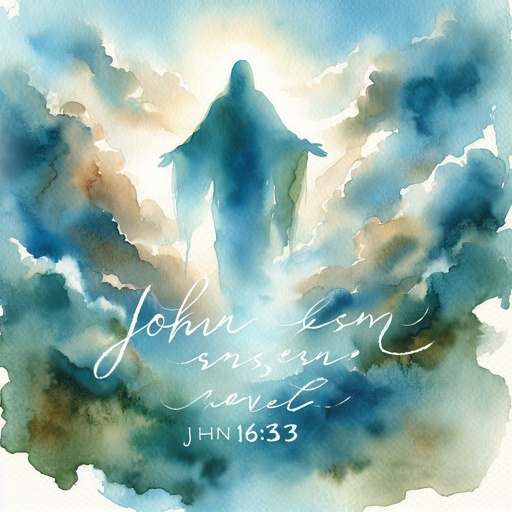
John 16:33

John 16:33

John 16 : 33

"These things I have spoken unto you, that in me ye might have peace. In the world ye shall have tribulation: but be of good cheer; I have overcome the world." - John 16:33

John 16:33 - "These things I have spoken unto you, that in me ye might have peace. In the world ye shall have tribulation: but be of good cheer; I have overcome the world."

"These things I have spoken unto you, that in me ye might have peace. In the world ye shall have tribulation: but be of good cheer; I have overcome the world." - John 16:33

John 1:33

John 5:33 - "Ye sent unto John, and he bare witness unto the truth."

John 9:33 - "If this man were not of God, he could do nothing."

John 12:33 - "This he said, signifying what death he should die."

Job 33:16 - "Then he openeth the ears of men, and sealeth their instruction,"

John 19:33 - "But when they came to Jesus, and saw that he was dead already, they brake not his legs:"

Proverbs 16:33 - "The lot is cast into the lap; but the whole disposing thereof is of the LORD."
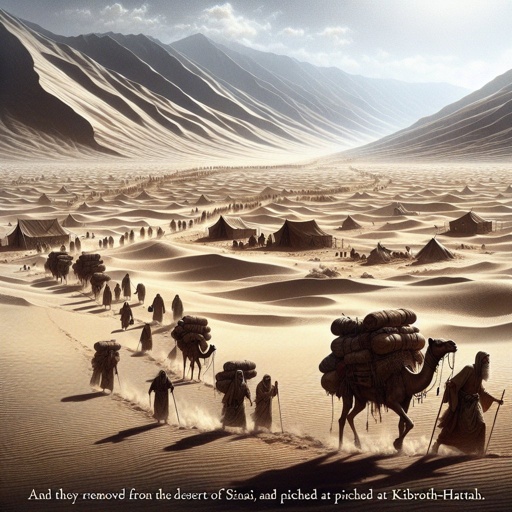
Numbers 33:16 - "And they removed from the desert of Sinai, and pitched at Kibroth-hattaavah."

"Ye sent unto John, and he bare witness unto the truth." - John 5:33

Genesis 33:16 - "¶ So Esau returned that day on his way unto Seir."

John 3:33 - "He that hath received his testimony hath set to his seal that God is true."

Mark 14:33 - "And he taketh with him Peter and James and John, and began to be sore amazed, and to be very heavy;"

John 4:33 - "Therefore said the disciples one to another, Hath any man brought him ought to eat?"

John 6:33 - "For the bread of God is he which cometh down from heaven, and giveth life unto the world."

Psalms 33:16 - "There is no king saved by the multitude of an host: a mighty man is not delivered by much strength."

John 3:16

John 4:16

John 3:16

john 3:16

John 3:16