What does John 14:21 mean?
"He that hath my commandments, and keepeth them, he it is that loveth me: and he that loveth me shall be loved of my Father, and I will love him, and will manifest myself to him." - John 14:21
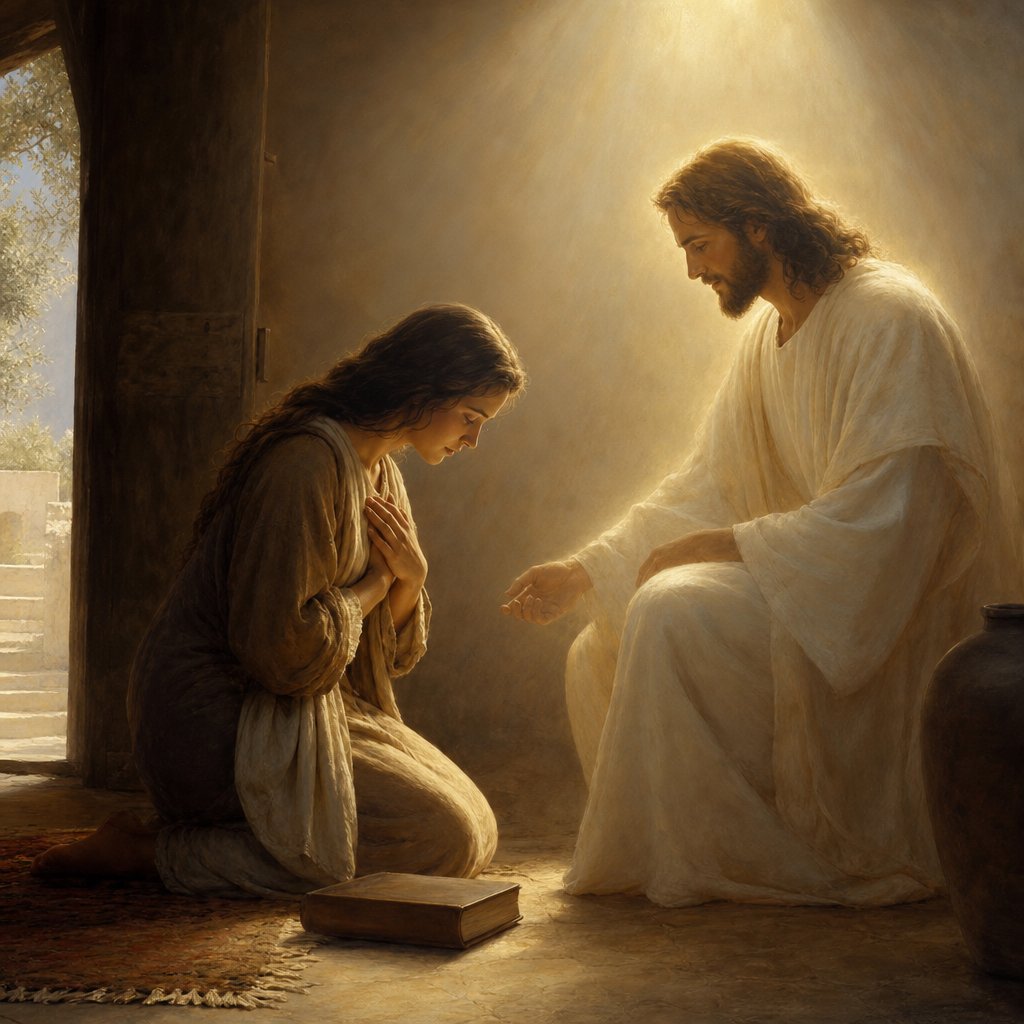
John 14:21 in the King James Version reads, “He that hath my commandments, and keepeth them, he it is that loveth me: and he that loveth me shall be loved of my Father, and I will love him, and will manifest myself to him.”
In its immediate setting, this sentence belongs to Jesus’ words to his disciples on the night in which he is about to be betrayed, spoken in the intimacy of what John records in the upper-room discourse. The tone is not that of public debate, but of final instruction and comfort. Jesus is preparing those who have walked with him for a new way of knowing him when his visible, earthly presence is about to be taken from them. That explains why the verse moves so naturally from obedience, to love, to being loved, and finally to a promise of “manifest” self-revelation: Jesus is describing how communion with him will continue when he is no longer seen with physical eyes.
The first phrase, “He that hath my commandments,” speaks of possession in the sense of receiving and holding. To “have” Christ’s commandments is more than awareness that such commandments exist; it implies that they are taken in, treasured, and owned as authoritative words. In the context of John 14, Jesus has just said, “If ye love me, keep my commandments” (John 14:15, KJV). Verse 21 returns to that theme and sharpens it: love for Christ is not left floating as mere feeling, admiration, or loyalty in the abstract, but is shown to be real where his words are received and retained.
The next phrase, “and keepeth them,” adds the key idea of guarding, observing, and practicing. In the KJV, “keep” often carries the sense of watching over something precious as well as obeying it. This makes the verse feel less like a cold legal formula and more like covenant faithfulness. Jesus is not describing obedience as a way to purchase love from God, but obedience as the living evidence of an already-formed love. The verse’s logic runs from inner attachment to outward fidelity: the one who truly loves Christ is the one who actually keeps what Christ says. In this way the verse exposes a spiritual symbolism that runs through John: words are not simply information; they are life-bearing realities that either are received and “kept,” or rejected and lost. To “keep” Christ’s commandments is, symbolically, to keep fellowship with Christ’s own mind and will, to let his speech govern one’s path as light governs a traveler.
Then comes the identification: “he it is that loveth me.” Jesus defines authentic love by its shape. The language is emphatic, as if to say, this is the person—this, and not some other standard. John’s Gospel often treats love as something that expresses itself in abiding, following, and doing. In this sense, love is not merely an emotion but a bond of allegiance. It is relational and moral at once: the heart cleaves to Christ, and the life bends toward Christ.
The verse then opens out into a larger horizon: “and he that loveth me shall be loved of my Father.” Here the theme becomes communion within the Godhead and the believer’s place within it. In John’s Gospel, the Father and the Son act together, and to be joined to the Son is to be brought into the Father’s love. The verse is not teaching that the Father is reluctant to love until a person achieves perfect obedience, because the broader context of John insists that God’s love is the source of salvation rather than its reward. Yet Jesus does describe a real distinction between God’s general benevolence and the enjoyed, relational experience of divine love. The language “shall be loved” points to love not as a distant doctrine but as an active, pledged relationship that becomes known and felt in the life of the one who clings to Christ. The Father’s love is not merely declared; it is brought near.
When Jesus adds, “and I will love him,” he is not competing with the Father’s love but joining it. In John, the Son reveals the Father; likewise, the Son communicates the Father’s love in a personal and direct way. Jesus promises his own love as an ongoing reality after his departure. That matters deeply in the upper-room context, because the disciples are about to face fear, scattering, and confusion. Jesus is saying that his love is not ending with his physical absence; it will continue, and it will be experienced by those who remain attached to him through keeping his words.
The final promise, “and will manifest myself to him,” carries the verse’s deepest consolation and its richest symbolism. “Manifest” means to make known, to disclose, to show oneself plainly. In the narrative flow of John 14, the disciples are troubled precisely because they cannot imagine relating to Jesus without seeing him. Jesus answers by promising a different kind of sight: not the sight of the crowd that witnesses miracles and still misunderstands, but the sight of personal revelation given to a loving, obedient disciple. Symbolically, this “manifestation” is a kind of unveiling. The physical Jesus will soon be hidden from the world by death, resurrection, and ascension, yet he will be disclosed to his own by spiritual reality. The promise anticipates the coming of the Comforter spoken of nearby in the chapter, and it also resonates with John’s broader theme that true knowledge of Christ is granted, not seized. In other words, “manifest” suggests that Christ is not merely studied like an object, but known as a living person who makes himself known.
This also sets up an important contrast that John’s Gospel repeatedly draws: the world can see signs and still remain blind, but the one who loves Christ receives an inward disclosure. The manifestation is not necessarily spectacular, but intimate and transformative. It is the kind of knowing that comes from obedience—because obedience clears away the rival loyalties and self-will that dull spiritual perception. In that sense, the verse implies that there is a moral dimension to spiritual understanding: keeping Christ’s commandments is not only the proof of love, but also the pathway by which Christ becomes more clearly known. The disciple does not obey in order to earn a vision; rather, love expressed in obedience becomes the place where Christ’s self-revelation is enjoyed.
Taken as a whole, John 14:21 weaves together several themes that are central to the Gospel: love that is proved by keeping Christ’s words, union with the Son that brings one into the Father’s love, and the promise of ongoing revelation after Jesus’ departure. It speaks covenant language in personal terms. The commandments are not presented as impersonal rules but as “my commandments,” belonging to Christ, carrying his authority and his character. To keep them is to remain close to him. The love of the Father and the love of the Son are portrayed not as abstract ideas but as living realities that rest upon, surround, and actively engage the believer. And the climax is not merely that the believer will do the right things, but that Christ will “manifest” himself—meaning that the ultimate end of Christian obedience is deeper knowledge of Christ himself, a relational disclosure that continues even when he is no longer physically present.
In prose form, the verse is thus a declaration that love for Jesus is recognizable and concrete, that such love draws the believer into the shared love of Father and Son, and that the result is a promised self-revelation of Christ to the obedient lover. John 14:21 is not simply a moral instruction; it is a promise of communion: obedience is the language of love, love is met by divine love, and divine love culminates in Christ making himself known.
Have questions about John 14:21?
Dive deeper into this scripture with Bible Chat — an AI-powered tool for exploring God's Word through conversation. Ask questions, get context, and grow in your understanding of the Bible.
Get Our Apps


John 14:21 Artwork
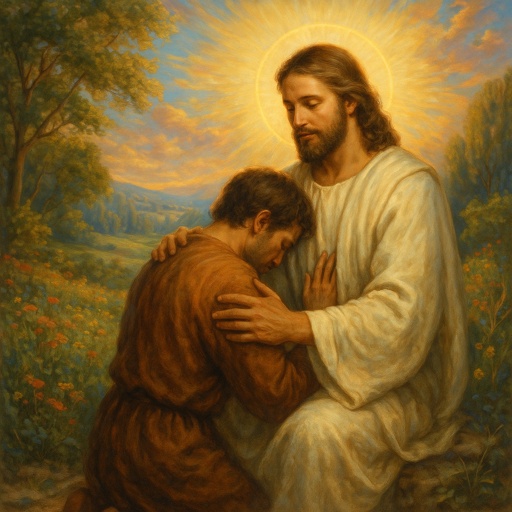
"He that hath my commandments, and keepeth them, he it is that loveth me: and he that loveth me shall be loved of my Father, and I will love him, and will manifest myself to him." - John 14:21

John 14:21 - "He that hath my commandments, and keepeth them, he it is that loveth me: and he that loveth me shall be loved of my Father, and I will love him, and will manifest myself to him."

John 14:21-24 - "Whoever has my commands and keeps them is the one who loves me. The one who loves me will be loved by my Father, and I too will love them and show myself to them. Then Judas (not Judas Iscariot) said, “But, Lord, why do you intend to show yourself to us and not to the world?” Jesus replied, “Anyone who loves me will obey my teaching. My Father will love them, and we will come to them and make our home with them. Anyone who does not love me will not obey my teaching. These words you hear are not my own; they belong to the Father who sent me."
"He that hath my commandments, and keepeth them, he it is that loveth me: and he that loveth me shall be loved of my Father, and I will love him, and will manifest myself to him." - John 14:21
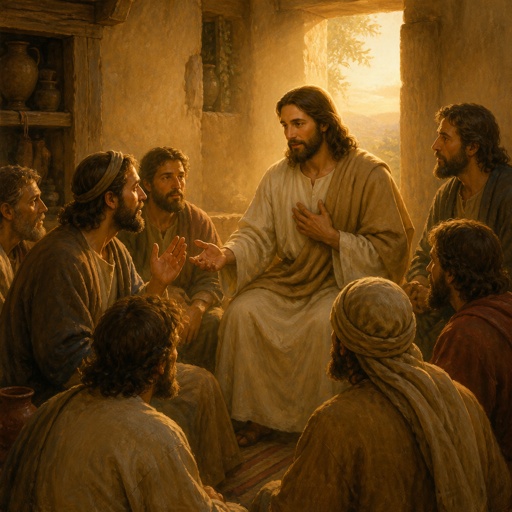
"Whoever has my commands and keeps them is the one who loves me. The one who loves me will be loved by my Father, and I too will love them and show myself to them. Then Judas (not Judas Iscariot) said, “But, Lord, why do you intend to show yourself to us and not to the world?” Jesus replied, “Anyone who loves me will obey my teaching. My Father will love them, and we will come to them and make our home with them. Anyone who does not love me will not obey my teaching. These words you hear are not my own; they belong to the Father who sent me." - John 14:21-24

John 14:15-21

numbers 21:8-9 & John 3:14

John 21:14 - "This is now the third time that Jesus shewed himself to his disciples, after that he was risen from the dead."
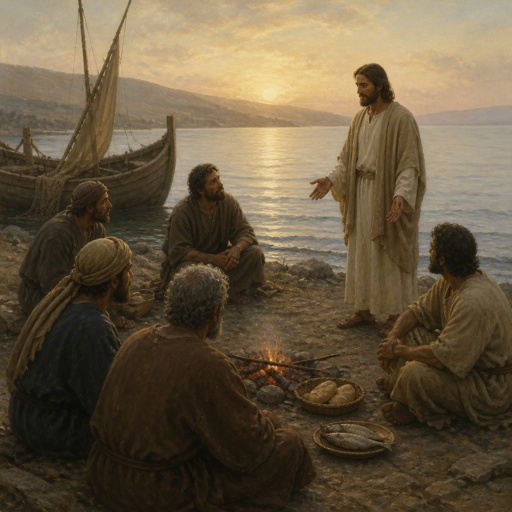
"This is now the third time that Jesus shewed himself to his disciples, after that he was risen from the dead." - John 21:14

John 20:21

john 21:9

John 21:6

John 21:21 - "Peter seeing him saith to Jesus, Lord, and what shall this man do?"

John 14

John 14:30

John 21:6

John 21:17

John 21:25

John 21:6

John 21:6

John 3:14

John 14:16

John 14:6

John 21:15-19

John 2:21 - "But he spake of the temple of his body."

John 14:28

John 20:14

John 14:14 - "If ye shall ask any thing in my name, I will do it."

Exodus 14: 21

Genesis 21:14