What does John 14:1 mean?
"Let not your heart be troubled: ye believe in God, believe also in me." - John 14:1
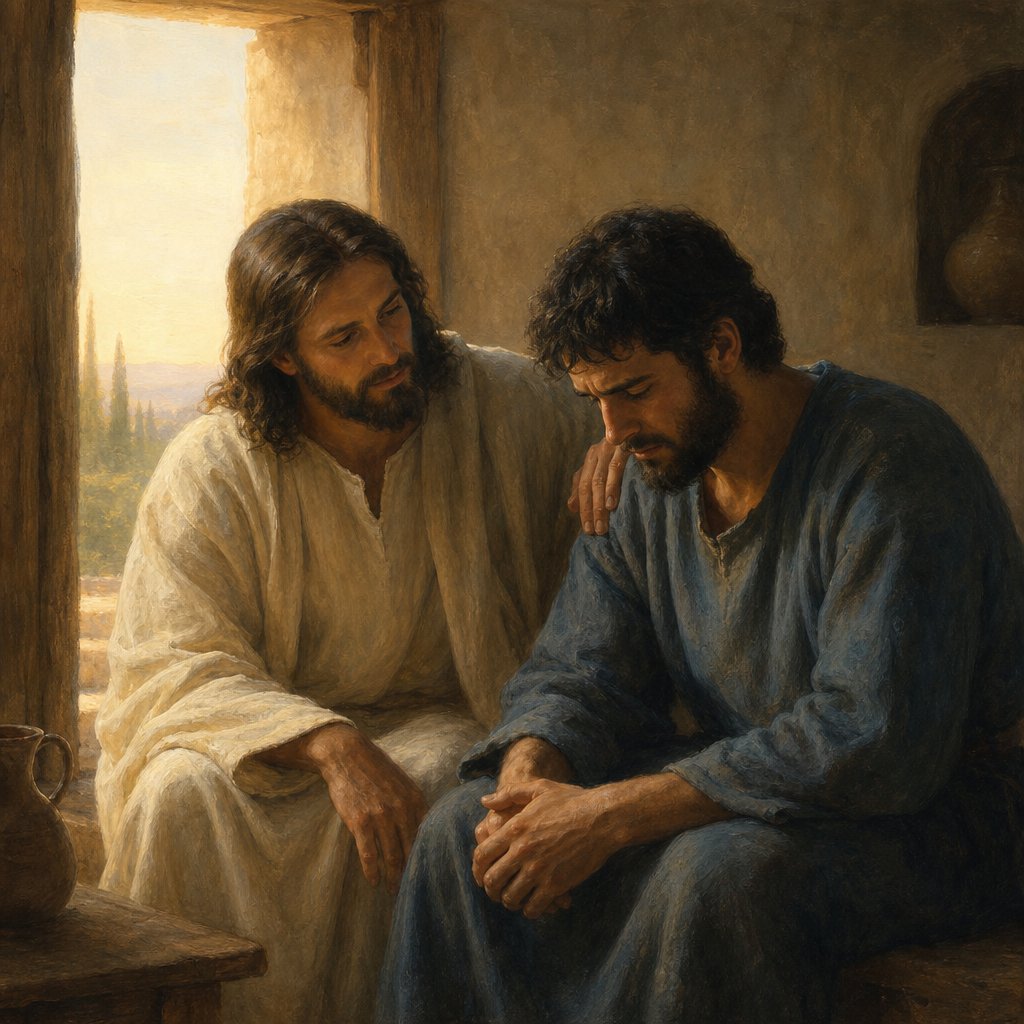
John 14:1 in the King James Version reads, “Let not your heart be troubled: ye believe in God, believe also in me.” Its meaning comes into focus when it is heard as the opening note of Jesus’ farewell comfort to his disciples on the night before his crucifixion. The words are not spoken from a calm distance, but from within the most emotionally charged moment of the Gospel narrative: Jesus has just washed the disciples’ feet, disclosed that one of them would betray him, and warned that Peter would deny him. The room is heavy with confusion, fear, shame, and the sense that something terrible is approaching. In that setting, “Let not your heart be troubled” is not a denial of danger; it is a command of steadying confidence addressed to people whose world is about to collapse.
In the KJV, “heart” is the inner life of a person: the seat of thought, will, trust, and desire, not merely the place of feelings. To say “Let not your heart be troubled” reaches deeper than telling them not to feel anxious; it calls them not to be shaken in the core of their allegiance and understanding of God. “Troubled” in this context carries the sense of being stirred up, agitated, thrown into turmoil. Jesus is speaking to disciples who believed they were following the Messiah to victory; now they are being told of departure, betrayal, and denial. Their trouble is spiritual disorientation as much as emotional distress. He therefore begins by addressing the center: do not let the upheaval outside become upheaval within.
The second half of the verse provides the reason and the remedy: “ye believe in God, believe also in me.” The KJV phrasing holds a deliberate parallelism. Faith that is already directed toward God is to be directed toward Jesus in the same way. He is not merely offering encouragement; he is relocating the disciples’ stability from circumstances to trust, and he is explicitly placing himself within the sphere of the faith they offer to God. Because the disciples are about to watch Jesus be arrested, condemned, and killed, their minds will be tempted to interpret those events as defeat, abandonment, or the collapse of God’s plan. Jesus counters that temptation by calling them to an act of belief that reaches beyond what the eyes will see. When everything looks like the end, belief becomes the anchor that keeps the heart from being “troubled.”
This verse also carries a strong theme of continuity between the God of Israel whom the disciples already “believe” and the Son who is speaking to them. The disciples’ faith is not being replaced but expanded and brought to its proper object. In John’s Gospel, the identity of Jesus is repeatedly tied to divine prerogatives: he speaks what the Father gives him, he reveals the Father, he gives life, he is the way to the Father. John 14 begins with Jesus asking for the same kind of trust they have always been taught to give to God, because the relationship with God they seek is now inseparable from relationship with him. The verse therefore functions as a threshold statement: the disciples are stepping into the period when Jesus will no longer be physically present with them, and their faith must mature from reliance on sight to reliance on his word.
The immediate context of John 14 deepens the meaning further. John 14:1 is followed by the promise, “In my Father’s house are many mansions,” and the declaration, “I am the way, the truth, and the life.” That flow matters: the command not to be troubled is not grounded in vague optimism, but in a specific hope and a specific person. Jesus is about to “go” through death and resurrection and then, in the language of the chapter, to the Father. His “going” feels like abandonment to the disciples, yet he interprets it as purposeful preparation and future reunion. In that light, John 14:1 is the doorway into a larger promise: the disciples’ present distress is real, but it is not ultimate; separation will not have the final word.
Symbolically, the verse draws on one of the great contrasts in John: darkness versus light, fear versus peace, the instability of the world versus the stability of Christ. A “troubled” heart is like water churned up, unable to reflect anything clearly. Jesus’ command is, in effect, a call to stillness so that they can see God’s faithfulness even when events look chaotic. The parallel “believe in God… believe also in me” acts like a bridge spanning the chasm opening before them. The disciples stand on one side with their inherited faith in God’s sovereignty; Jesus bids them cross the bridge into a faith that clings to him when his path runs through suffering.
The verse is also significant because it acknowledges the legitimacy of trouble while refusing its rule. Jesus does not say the disciples will not be troubled; he speaks into the fact that they are. Yet he addresses the heart as something that can be guarded and directed. This is not mere self-control; in the KJV phrasing the heart is being called to rest in a trustworthy object: God, and also Christ. The command assumes that faith is not simply a feeling that appears when life is easy, but a posture that can be chosen in obedience when life is hardest.
Finally, John 14:1 reveals something essential about Jesus’ pastoral care and about the nature of discipleship. He does not minimize what is coming; he prepares them for it. He does not simply give information; he gives himself as the locus of trust. The significance of the verse, then, is that it stands at the intersection of impending suffering and enduring hope. It teaches that the antidote to a troubled heart is not the removal of frightening events but the re-centering of the soul on God as revealed in Jesus Christ. In the KJV’s simple symmetry, the verse presents faith as the steady line running through the storm: as you believe in God, so believe also in me.
Have questions about John 14:1?
Dive deeper into this scripture with Bible Chat — an AI-powered tool for exploring God's Word through conversation. Ask questions, get context, and grow in your understanding of the Bible.
Get Our Apps


John 14:1 Artwork

John 14:1-2

John 14:1 - "Let not your heart be troubled: ye believe in God, believe also in me."

"Let not your heart be troubled: ye believe in God, believe also in me." - John 14:1
"Let not your heart be troubled: ye believe in God, believe also in me." - John 14:1

John 14:1-3 - "Let not your heart be troubled: ye believe in God, believe also in me. In my Father's house are many mansions: if it were not so, I would have told you. I go to prepare a place for you. And if I go and prepare a place for you, I will come again, and receive you unto myself; that where I am, there ye may be also."
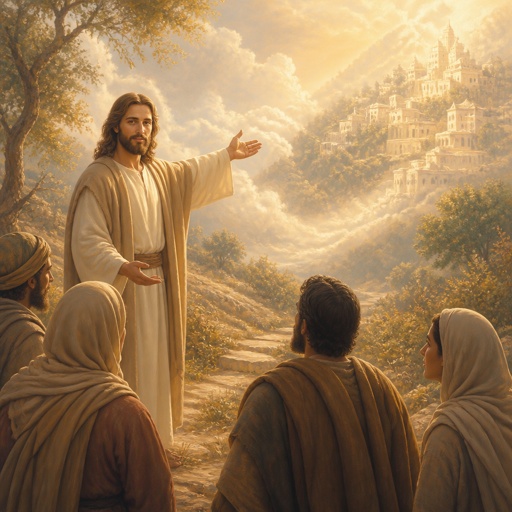
"Let not your heart be troubled: ye believe in God, believe also in me. In my Father's house are many mansions: if it were not so, I would have told you. I go to prepare a place for you. And if I go and prepare a place for you, I will come again, and receive you unto myself; that where I am, there ye may be also." - John 14:1-3
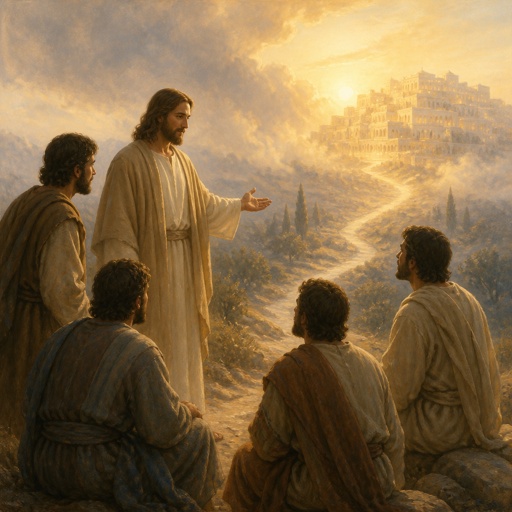
"Let not your heart be troubled: ye believe in God, believe also in me. In my Father's house are many mansions: if it were not so, I would have told you. I go to prepare a place for you. And if I go and prepare a place for you, I will come again, and receive you unto myself; that where I am, there ye may be also." - John 14:1-3

John 3:14

John 14:16

John 14:15-21

1 John 2:14

1 John 2:14

1 John 4:14 - "And we have seen and do testify that the Father sent the Son to be the Saviour of the world."

Mark 1:14 - "Now after that John was put in prison, Jesus came into Galilee, preaching the gospel of the kingdom of God,"

1 John 5:14 - "And this is the confidence that we have in him, that, if we ask any thing according to his will, he heareth us:"

John 1:14 - "And the Word was made flesh, and dwelt among us, (and we beheld his glory, the glory as of the only begotten of the Father,) full of grace and truth."

John 14

John 14:30

"And the Word was made flesh, and dwelt among us, ( and we beheld his glory, the glory as of the only begotten of the Father,) full of grace and truth." - John 1:14

John 14:6

1 John 3:14 - "We know that we have passed from death unto life, because we love the brethren. He that loveth not his brother abideth in death."

John 14:28

John 20:14

John 14:14 - "If ye shall ask any thing in my name, I will do it."
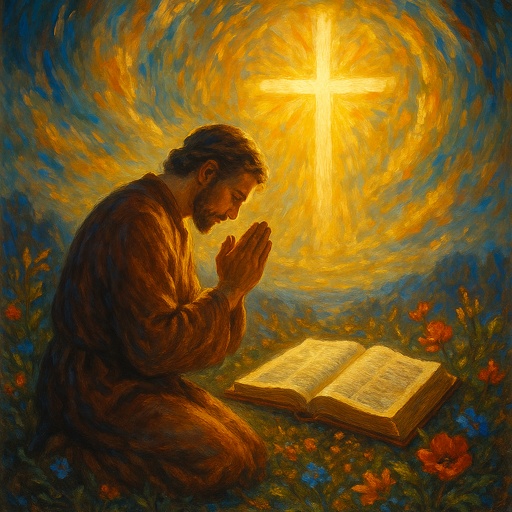
"And this is the confidence that we have in him, that, if we ask any thing according to his will, he heareth us:" - 1 John 5:14

3 John 1:14 - "But I trust I shall shortly see thee, and we shall speak face to face. Peace be to thee. Our friends salute thee. Greet the friends by name."

John 14:23-29

John 14:23-29

John 14:23-29

John 14:16-17