What does John 13:1 mean?
"Now before the feast of the passover, when Jesus knew that his hour was come that he should depart out of this world unto the Father, having loved his own which were in the world, he loved them unto the end." - John 13:1
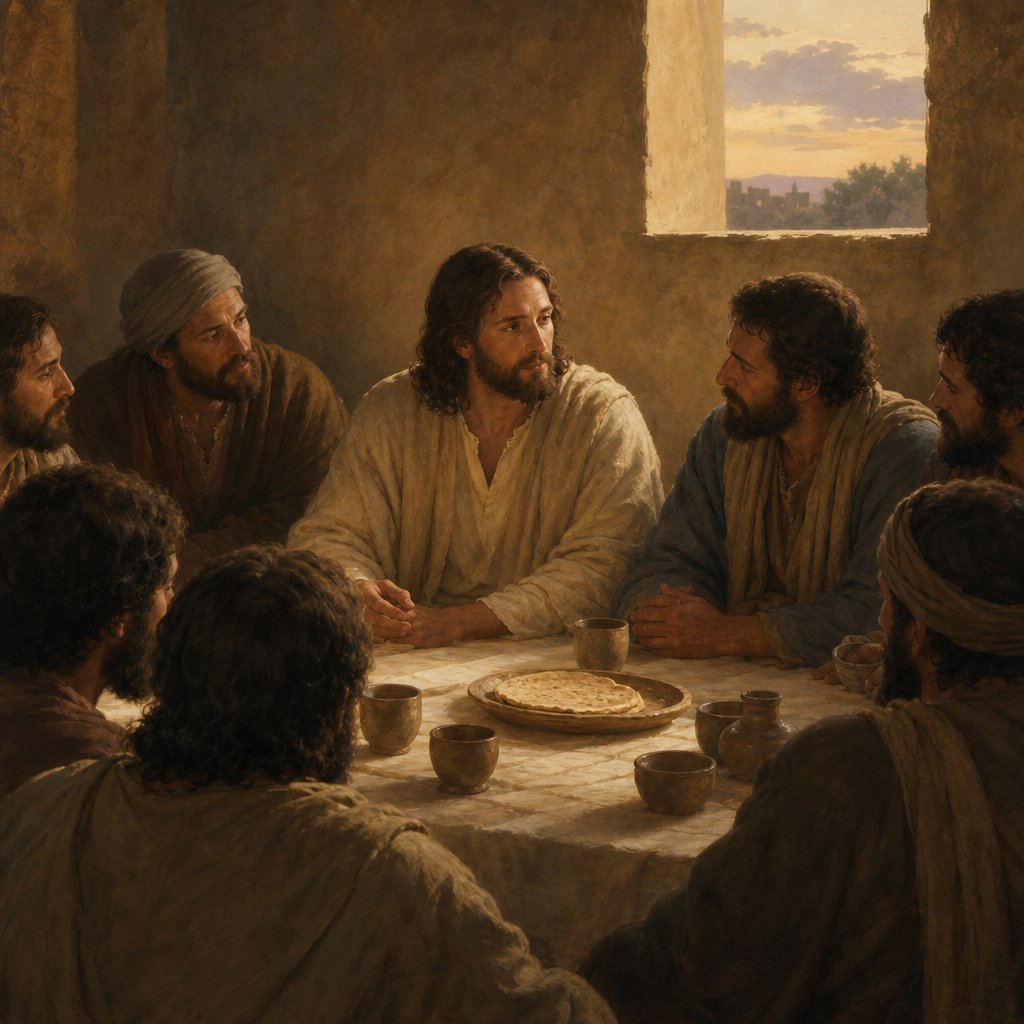
The Bible verse John 13:1 from the King James Version (KJV) reads, "Now before the feast of the passover, when Jesus knew that his hour was come that he should depart out of this world unto the Father, having loved his own which were in the world, he loved them unto the end." This verse marks the beginning of a significant event in the life of Jesus and has several layers of meaning and symbolism.
The context of this verse is crucial to understanding its significance. The verse takes place shortly before the feast of the Passover, a significant Jewish festival that commemorates the Israelites' liberation from slavery in Egypt. The Passover was a time for the Jewish people to remember their history and worship God. It was during this time that Jesus knew his "hour" had come, referring to the time of his crucifixion and departure from the world.
In this verse, Jesus shows his deep love for his disciples, symbolizing the boundless and unconditional love of God for humanity. This love is exemplified through Jesus's actions and teachings, and it is a central theme throughout the entire Bible. The phrase "he loved them unto the end" emphasizes the enduring nature of Jesus's love, even in the face of impending suffering and death. This love serves as a model for how believers should love one another and stay committed to God, even in difficult times.
The verse also foreshadows the ultimate sacrifice that Jesus would make for humanity. Jesus knew that his departure from the world was imminent and that he would soon be crucified. Despite this knowledge, he continued to love and care for his disciples, serving as an example of selflessness and sacrificial love. This underscores the theme of redemption and salvation, as Jesus's sacrifice would ultimately lead to the forgiveness of sins and eternal life for those who believe in him.
Additionally, the verse highlights the divinity of Jesus and his connection to God the Father. Jesus knew that he would depart from the world and return to the Father, emphasizing his unique role as the Son of God. This underscores the concept of the Trinity, with Jesus being one with the Father and the Holy Spirit, while also fulfilling his earthly mission as the Messiah and Savior.
Symbolically, the verse also reveals Jesus's humility and willingness to serve others. Shortly after this verse, Jesus would wash the feet of his disciples, demonstrating a servant's heart and teaching them about the importance of humility and service. This act foreshadows Jesus's ultimate act of servanthood on the cross, where he would bear the sins of humanity and offer redemption to all who believe in him.
In conclusion, John 13:1 from the King James Version of the Bible holds deep and profound meaning for Christians. It sets the stage for Jesus's sacrificial love, his impending departure from the world, and his final act of servanthood. It serves as a reminder of Jesus's unwavering love for his followers, his divine nature, and his ultimate sacrifice for the redemption of humanity. The verse continues to inspire and challenge believers to love one another, serve humbly, and remain faithful to God.
Have questions about John 13:1?
Dive deeper into this scripture with Bible Chat — an AI-powered tool for exploring God's Word through conversation. Ask questions, get context, and grow in your understanding of the Bible.
Get Our Apps


John 13:1 Artwork
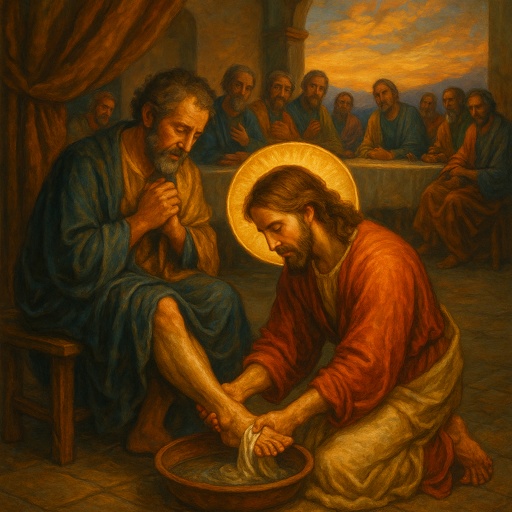
"Now before the feast of the passover, when Jesus knew that his hour was come that he should depart out of this world unto the Father, having loved his own which were in the world, he loved them unto the end." - John 13:1
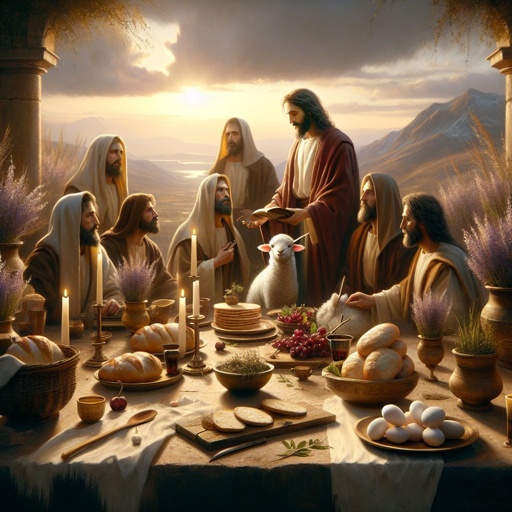
John 13:1 - "Now before the feast of the passover, when Jesus knew that his hour was come that he should depart out of this world unto the Father, having loved his own which were in the world, he loved them unto the end."
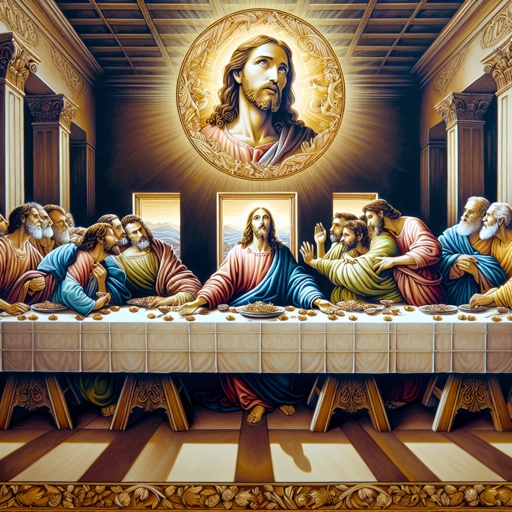
13:1逾越节以前,耶稣知道自己离世归父的时候到了。他既然爱世间属自己的人,就爱他们到底。

John 13:1-17 - "Now before the feast of the passover, when Jesus knew that his hour was come that he should depart out of this world unto the Father, having loved his own which were in the world, he loved them unto the end. And supper being ended, the devil having now put into the heart of Judas Iscariot, Simon's son, to betray him; Jesus knowing that the Father had given all things into his hands, and that he was come from God, and went to God; He riseth from supper, and laid aside his garments; and took a towel, and girded himself. After that he poureth water into a bason, and began to wash the disciples' feet, and to wipe them with the towel wherewith he was girded. Then cometh he to Simon Peter: and Peter saith unto him, Lord, dost thou wash my feet? Jesus answered and said unto him, What I do thou knowest not now; but thou shalt know hereafter. Peter saith unto him, Thou shalt never wash my feet. Jesus answered him, If I wash thee not, thou hast no part with me. Simon Peter saith unto him, Lord, not my feet only, but also my hands and my head. Jesus saith to him, He that is washed needeth not save to wash his feet, but is clean every whit: and ye are clean, but not all. For he knew who should betray him; therefore said he, Ye are not all clean. So after he had washed their feet, and had taken his garments, and was set down again, he said unto them, Know ye what I have done to you? Ye call me Master and Lord: and ye say well; for so I am. If I then, your Lord and Master, have washed your feet; ye also ought to wash one another's feet. For I have given you an example, that ye should do as I have done to you. Verily, verily, I say unto you, The servant is not greater than his lord; neither he that is sent greater than he that sent him. If ye know these things, happy are ye if ye do them."
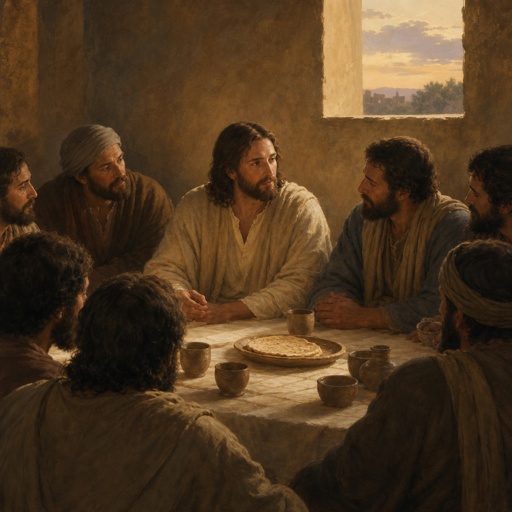
"Now before the feast of the passover, when Jesus knew that his hour was come that he should depart out of this world unto the Father, having loved his own which were in the world, he loved them unto the end." - John 13:1
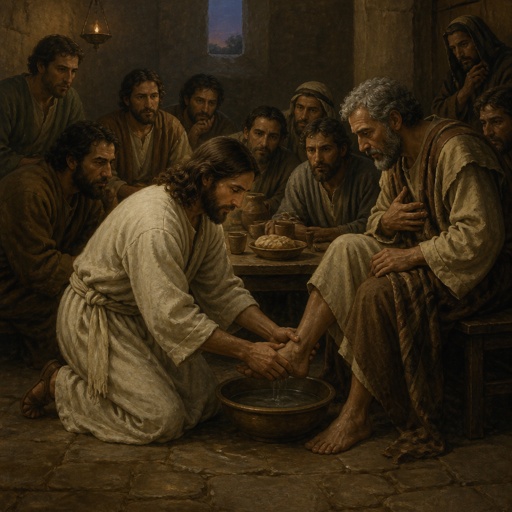
"Now before the feast of the passover, when Jesus knew that his hour was come that he should depart out of this world unto the Father, having loved his own which were in the world, he loved them unto the end. And supper being ended, the devil having now put into the heart of Judas Iscariot, Simon's son, to betray him; Jesus knowing that the Father had given all things into his hands, and that he was come from God, and went to God; He riseth from supper, and laid aside his garments; and took a towel, and girded himself. After that he poureth water into a bason, and began to wash the disciples' feet, and to wipe them with the towel wherewith he was girded. Then cometh he to Simon Peter: and Peter saith unto him, Lord, dost thou wash my feet? Jesus answered and said unto him, What I do thou knowest not now; but thou shalt know hereafter. Peter saith unto him, Thou shalt never wash my feet. Jesus answered him, If I wash thee not, thou hast no part with me. Simon Peter saith unto him, Lord, not my feet only, but also my hands and my head. Jesus saith to him, He that is washed needeth not save to wash his feet, but is clean every whit: and ye are clean, but not all. For he knew who should betray him; therefore said he, Ye are not all clean. So after he had washed their feet, and had taken his garments, and was set down again, he said unto them, Know ye what I have done to you? Ye call me Master and Lord: and ye say well; for so I am. If I then, your Lord and Master, have washed your feet; ye also ought to wash one another's feet. For I have given you an example, that ye should do as I have done to you. Verily, verily, I say unto you, The servant is not greater than his lord; neither he that is sent greater than he that sent him. If ye know these things, happy are ye if ye do them." - John 13:1-17

1 John 4:13

BORN AGAIN JOHN 3:1-13

1 John 3:13 - "Marvel not, my brethren, if the world hate you."

2 John 1:13 - "The children of thy elect sister greet thee. Amen."

John 1:13 - "Which were born, not of blood, nor of the will of the flesh, nor of the will of man, but of God."

3 John 1:13 - "I had many things to write, but I will not with ink and pen write unto thee:"

1 John 4:13 - "Hereby know we that we dwell in him, and he in us, because he hath given us of his Spirit."

"Marvel not, my brethren, if the world hate you." - 1 John 3:13

Luke 1:13

John 13

"The children of thy elect sister greet thee. Amen." - 2 John 1:13
"Which were born, not of blood, nor of the will of the flesh, nor of the will of man, but of God." - John 1:13

Luke 1:13

John 13:13 - "Ye call me Master and Lord: and ye say well; for so I am."

Luke 1:13

John 13:4-9

JOHN 6:11-13

John 20:11-13

Luke 1:13 - "But the angel said unto him, Fear not, Zacharias: for thy prayer is heard; and thy wife Elisabeth shall bear thee a son, and thou shalt call his name John."

1 John 5:13 - "These things have I written unto you that believe on the name of the Son of God; that ye may know that ye have eternal life, and that ye may believe on the name of the Son of God."

John 13:31-35

Acts 1:13 - "And when they were come in, they went up into an upper room, where abode both Peter, and James, and John, and Andrew, Philip, and Thomas, Bartholomew, and Matthew, James the son of Alphaeus, and Simon Zelotes, and Judas the brother of James."

3 John 1:3-4 - "For I rejoiced greatly when brethren came and testified of the truth that is in you, just as you walk in the truth. I have no greater joy than to hear that my children walk in truth."

John 9:13 - "¶ They brought to the Pharisees him that aforetime was blind."