What does John 12:24 mean?
"Verily, verily, I say unto you, Except a corn of wheat fall into the ground and die, it abideth alone: but if it die, it bringeth forth much fruit." - John 12:24
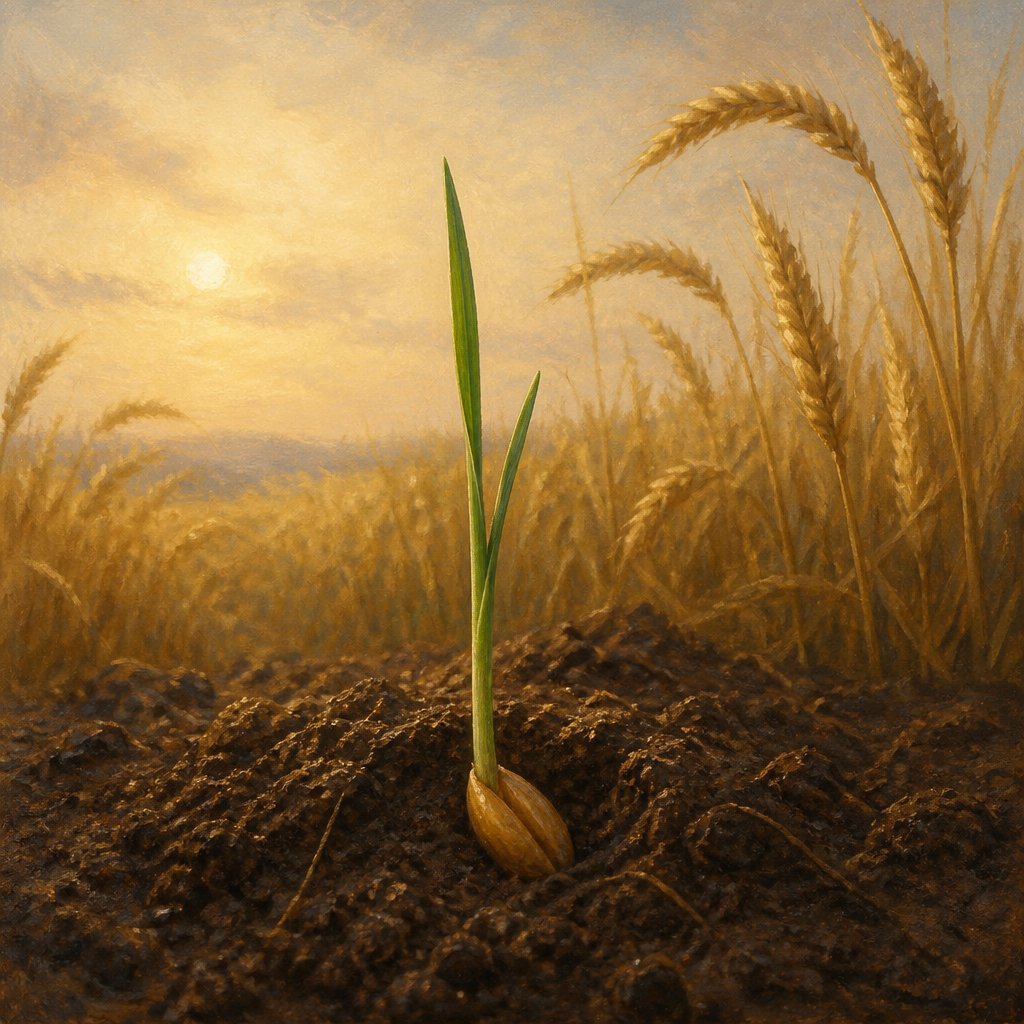
John 12:24 in the KJV reads, “Verily, verily, I say unto you, Except a corn of wheat fall into the ground and die, it abideth alone: but if it die, it bringeth forth much fruit.” Jesus speaks this as He approaches the hour of His suffering, and the verse functions like a small parable placed in the middle of a decisive moment in His ministry. In the surrounding passage, His public work has reached its height and its turning point: He has entered Jerusalem, His name is widely known, and yet He begins to speak not of immediate triumph but of what must happen before true glory can be revealed. The saying is therefore not a general proverb offered in isolation; it is Jesus interpreting His own path and inviting His hearers to understand the necessity and the purpose of His death.
The image is simple and earthy, but it is carefully chosen. A “corn of wheat” is a single grain, complete in itself, apparently small and self-contained. If it never leaves the safety of its stored condition, it “abideth alone.” The grain remains what it is, intact and preserved, but its life is solitary and unproductive. When it “fall into the ground and die,” it is not describing a pointless loss, but a necessary surrender. In planting, the seed disappears from sight. Its former shape is broken open in the dark. What looked like an ending becomes the means of a beginning. In that way Jesus uses the natural world to speak about spiritual reality: there is a kind of “life” that consists merely of self-preservation, and there is a deeper life that comes through a yielding that looks, on the surface, like death.
In its most immediate meaning, the “corn of wheat” points to Christ Himself. He stands as the one who could, as it were, “abide alone.” He is the sinless Son, complete and sufficient, needing nothing, owing nothing to death. Yet He declares that fruitfulness for many will come only if He goes the way that resembles the seed’s descent into the earth. His death is not treated as an accident, nor merely as an example of courage, but as the divinely appointed means by which “much fruit” will follow. The “much fruit” includes the gathering in of a people to God, the giving of eternal life to those who believe, the creation of a new community that shares in His life, and the spreading of His saving work beyond the narrow boundaries of one place and moment. The single grain yields a harvest. One death opens the way for many lives.
The verse also carries symbolism that fits the wider pattern of Scripture without requiring any change of wording. The ground receiving the seed evokes burial: Christ will be laid in the earth. The seed’s seeming “death” evokes the mystery that His death will not be the final word; it is the passage through which life multiplies. The language does not say the seed is annihilated, but that it “die” in the sense that it ceases to remain what it was, alone and unbroken, in order to become the source of abundant increase. In that, the saying quietly holds together the humiliation and the glory of Christ: the low descent of suffering and burial is the very road to exaltation and worldwide blessing.
“Verily, verily” gives the statement special weight. In the KJV this double “verily” marks a solemn certainty. Jesus is not offering speculation about how spiritual things might work; He is declaring a fixed divine necessity: “Except… it abideth alone: but if… it bringeth forth much fruit.” The structure is absolute and conditional at the same time. Without the falling and dying, the result is aloneness; with it, the result is abundance. This is why the verse is significant: it teaches that in God’s economy, apparent loss can be the appointed instrument of gain, and apparent defeat can be the means by which victory becomes fruitful for others.
While the primary reference is Christ, the saying also presses outward into discipleship in the immediate flow of the chapter. Jesus is not only explaining what He will do; He is revealing the pattern by which His followers will understand their own lives in relation to Him. If His mission bears fruit through self-giving, then those who belong to Him should not be surprised when fruitfulness in their own calling is joined to surrender, sacrifice, and the laying down of self. The verse therefore confronts the instinct to “abide alone,” to preserve oneself at all costs, and it suggests that true spiritual multiplication often comes by a costly kind of yielding—giving oneself to God’s will, letting pride be broken, letting self-rule be buried, letting love spend itself so that others may live.
John 12:24, then, is a window into the meaning of the cross before the cross happens. It is Jesus’ own interpretation of His coming death as purposeful, necessary, and life-giving. The seed falling into the ground gathers up the themes of sacrifice and increase, burial and harvest, loneliness and fellowship, loss and glory. It insists that Christ’s death will not leave Him “alone” in the sense of fruitless isolation, but will be the means by which “much fruit” comes into being, making His suffering not the negation of His mission but the way its power and abundance are released.
Have questions about John 12:24?
Dive deeper into this scripture with Bible Chat — an AI-powered tool for exploring God's Word through conversation. Ask questions, get context, and grow in your understanding of the Bible.
Get Our Apps


John 12:24 Artwork

John 12:24 - "Verily, verily, I say unto you, Except a corn of wheat fall into the ground and die, it abideth alone: but if it die, it bringeth forth much fruit."
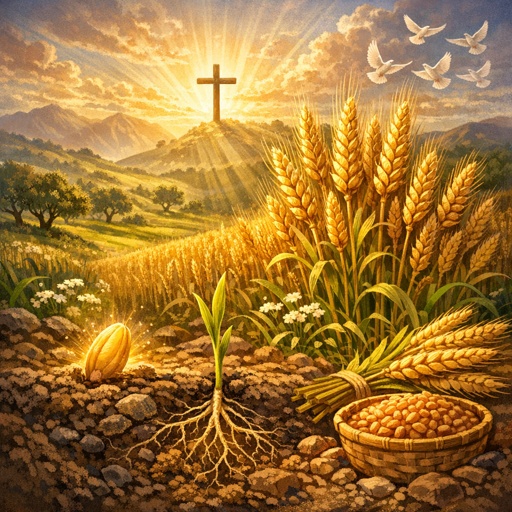
"Verily, verily, I say unto you, Except a corn of wheat fall into the ground and die, it abideth alone: but if it die, it bringeth forth much fruit." - John 12:24
"Verily, verily, I say unto you, Except a corn of wheat fall into the ground and die, it abideth alone: but if it die, it bringeth forth much fruit." - John 12:24

James 1:2-4

James 1: 2-4

Joel 1:2-4, 13-20

John 3:24 - "For John was not yet cast into prison."

John 12:23-24 - "And Jesus answered them, saying, The hour is come, that the Son of man should be glorified. Verily, verily, I say unto you, Except a corn of wheat fall into the ground and die, it abideth alone: but if it die, it bringeth forth much fruit."

"For John was not yet cast into prison." - John 3:24

2 Samuel 1:2-4 David is shocked the man is scared image in color

2 Samuel 1:2-4 David is shocked the man is scared image in color

John 1:24 - "And they which were sent were of the Pharisees."

John 7:24 - "Judge not according to the appearance, but judge righteous judgment."

Joshua 24:12

Joshua 24:12

Genesis 24-12
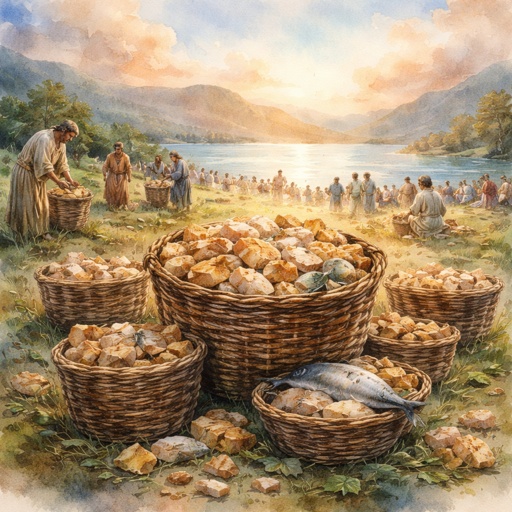
John 6:12

John 8:12

2 Samuel 1:2-4 David is shocked the man is scared image in color less details

John 12:25

John 8:12

John 8:12
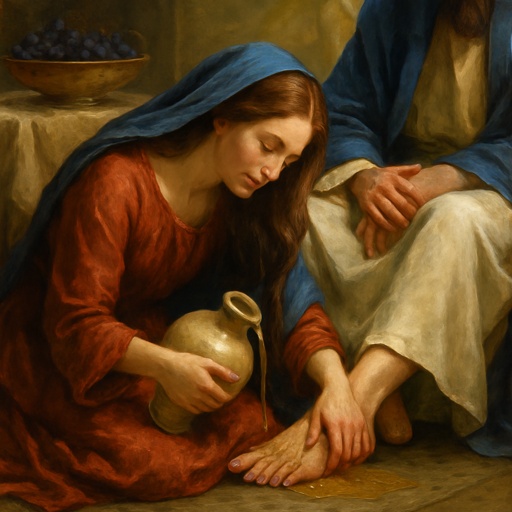
John 12:3

John 8:12

John 20:11-12

John 20:24 - "¶ But Thomas, one of the twelve, called Didymus, was not with them when Jesus came."

John 4:24 - "God is a Spirit: and they that worship him must worship him in spirit and in truth."

Luke 7:24 - "¶ And when the messengers of John were departed, he began to speak unto the people concerning John, What went ye out into the wilderness for to see? A reed shaken with the wind?"

John 12:12 - "¶ On the next day much people that were come to the feast, when they heard that Jesus was coming to Jerusalem,"

Acts 12:24 - "¶ But the word of God grew and multiplied."