What does John 12:13 mean?
"Took branches of palm trees, and went forth to meet him, and cried, Hosanna: Blessed is the King of Israel that cometh in the name of the Lord." - John 12:13
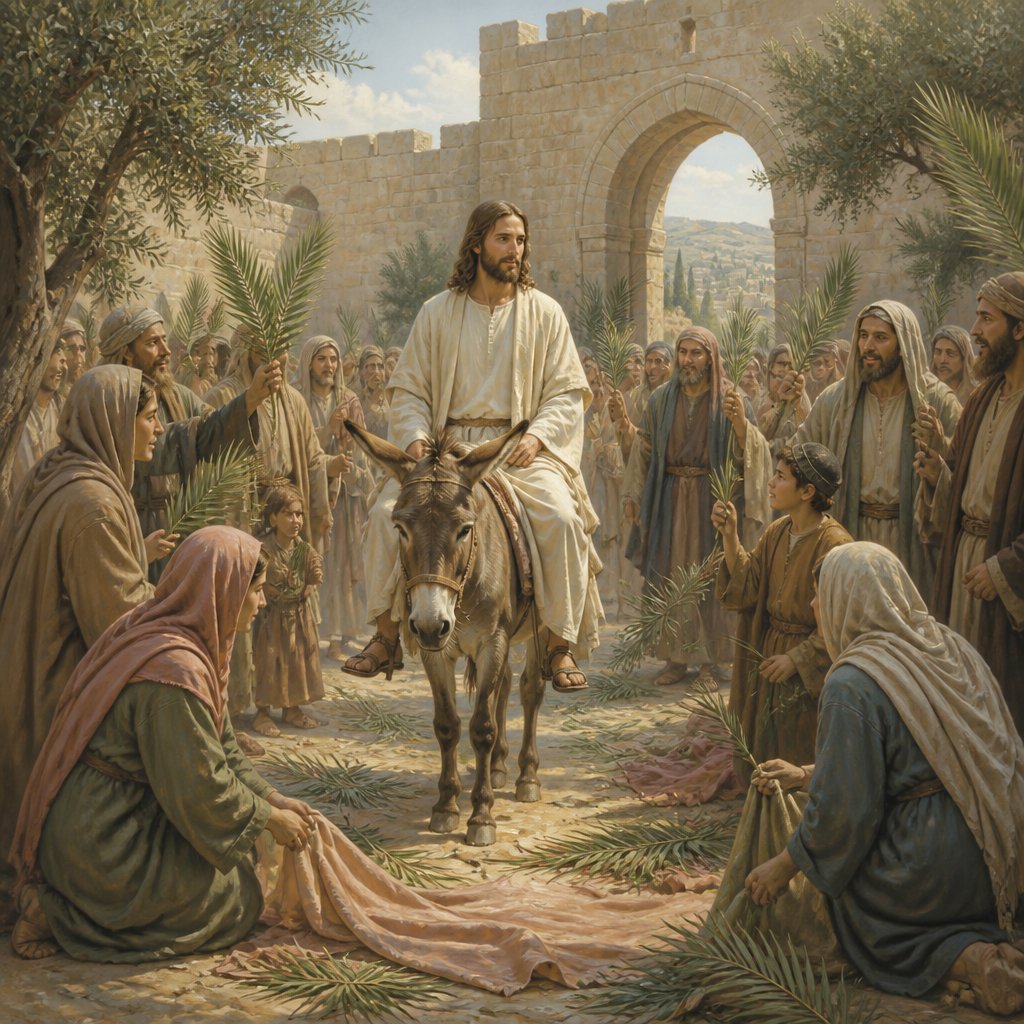
John 12:13 in the King James Version reads, "Took branches of palm trees, and went forth to meet him, and cried, Hosanna: Blessed is the King of Israel that cometh in the name of the Lord." This verse is part of the account of Jesus' triumphal entry into Jerusalem, which is a significant event in Christian tradition. To understand the verse in its full context, we must delve into the themes, context, and symbolism at play.
The triumphal entry of Jesus into Jerusalem is a pivotal moment in the narrative of the New Testament. It occurs during the week leading up to Jesus' crucifixion and thus holds deep significance in the Christian calendar. The people's actions in this verse are a reflection of their belief that Jesus is the long-awaited Messiah, the King of Israel prophesied in the Old Testament. The use of palm branches is a symbol of victory and triumph, as well as a sign of honor and homage. The crowd's exclamation of "Hosanna" further demonstrates their recognition of Jesus as the Messiah, as the term is an expression of praise and adoration.
The context of this verse is also crucial for its interpretation. Jesus' entry into Jerusalem fulfilled Old Testament prophecies, such as Zechariah 9:9, which foretold the coming of the King of Israel. This prophetic fulfillment underscores the belief of the people in Jesus as the promised Messiah. Furthermore, the timing of this event was significant, as it occurred during the Passover festival, a time when Jerusalem would have been filled with pilgrims and visitors.
The themes present in this verse are numerous and profound. One of the central themes is that of Jesus' identity as the Messiah and King of Israel. The people's acknowledgment of Jesus as such reflects their hope and anticipation of a savior who would deliver them from their oppression. Additionally, the theme of prophecy and fulfillment is evident in this verse, highlighting the divine plan and purpose behind Jesus' arrival in Jerusalem. The use of palm branches and the exclamation of "Hosanna" also bring forth the themes of victory, honor, and adoration, as the people celebrate the arrival of their long-awaited King.
Symbolism plays a significant role in this verse, as it does throughout the Bible. The palm branches, as previously mentioned, symbolize victory and triumph. In the context of Jesus' entry into Jerusalem, they represent the people's hope for deliverance and salvation through the coming of the Messiah. The cry of "Hosanna" is a symbolic expression of praise and adoration, demonstrating the people's reverence for Jesus as their King. Additionally, the recognition of Jesus as the one who comes in the name of the Lord signifies his divine authority and appointment as the Savior of Israel.
In conclusion, John 12:13 in the King James Version captures a moment of great significance in the life of Jesus and the Christian faith. It serves as a testament to the belief of the people in Jesus as the Messiah and King of Israel, fulfilling Old Testament prophecies and embodying the themes of victory, honor, and adoration. The symbolism of palm branches and the cry of "Hosanna" further enriches the verse, underscoring the deep reverence and hope embodied in this event. As Christians continue to celebrate the triumphal entry of Jesus into Jerusalem, this verse serves as a powerful reminder of the identity and mission of Jesus as the Savior and King.
Have questions about John 12:13?
Dive deeper into this scripture with Bible Chat — an AI-powered tool for exploring God's Word through conversation. Ask questions, get context, and grow in your understanding of the Bible.
Get Our Apps


John 12:13 Artwork
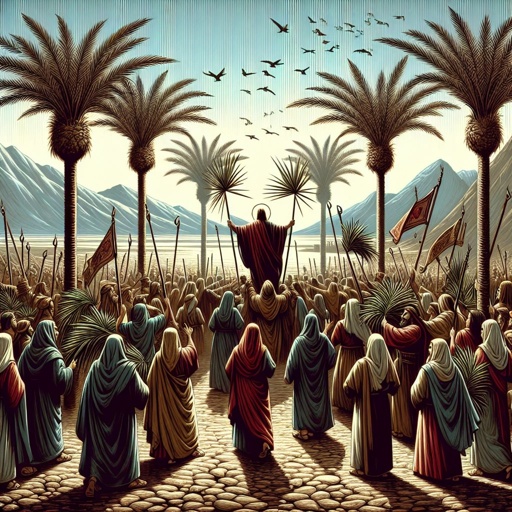
John 12:13 - "Took branches of palm trees, and went forth to meet him, and cried, Hosanna: Blessed is the King of Israel that cometh in the name of the Lord."
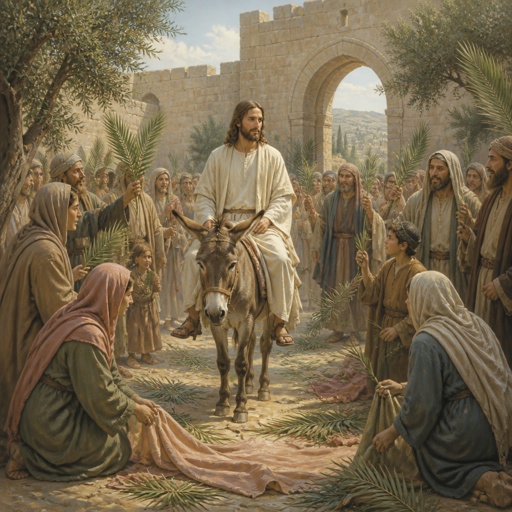
"Took branches of palm trees, and went forth to meet him, and cried, Hosanna: Blessed is the King of Israel that cometh in the name of the Lord." - John 12:13

A biblical scene depicting the moment Jesus, depicted as a Middle Eastern man with a serene countenance riding a donkey, enters Jerusalem on Palm Sunday, as described in the scriptures. The city of Jerusalem is filled with a diverse crowd of men, women, and children of various ages and attire appropriate to the period. They appear joyous and awed, waving large palm branches in a gesture of welcome, and the floor is covered in Palm fronds. The verse of inspiration is John 12:13 ."They took branches of palm trees and went forth to meet him, and cried, Hosanna! Blessed is he who comes in the name of the Lord!"

John 15:12-13 - "My command is this: Love each other as I have loved you. Greater love has no one than this: to lay down one’s life for one’s friends."
John 13:12 - "So after he had washed their feet, and had taken his garments, and was set down again, he said unto them, Know ye what I have done to you?"

John 13
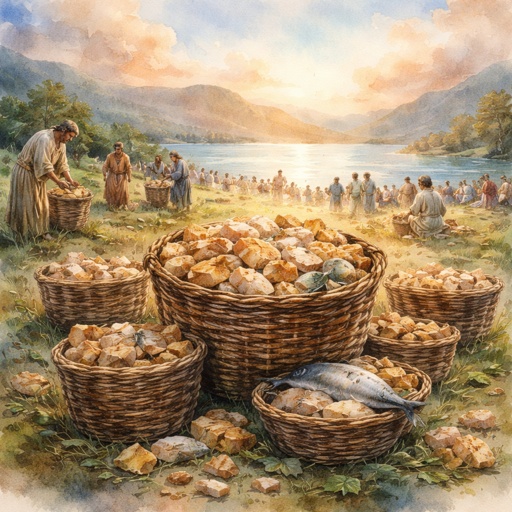
John 6:12

John 8:12

John 12:25

John 8:12

John 8:12
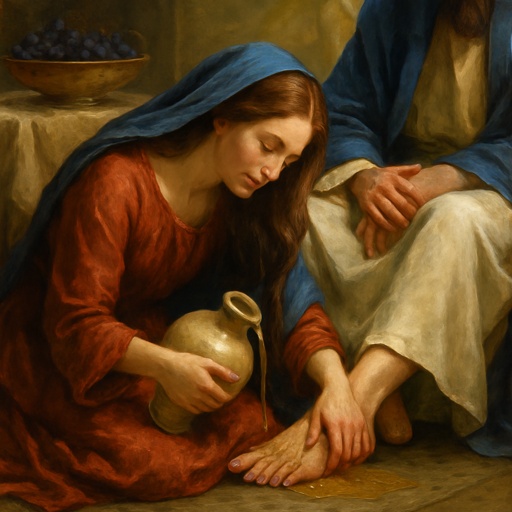
John 12:3

John 8:12

John 13:13 - "Ye call me Master and Lord: and ye say well; for so I am."

John 13:4-9

JOHN 6:11-13

John 20:11-13

John 20:11-12

1 John 4:13

John 13:31-35

John 12:12 - "¶ On the next day much people that were come to the feast, when they heard that Jesus was coming to Jerusalem,"

1 Corinthians 12:12-13

John 9:13 - "¶ They brought to the Pharisees him that aforetime was blind."

John 2:13 - "¶ And the Jews' passover was at hand, and Jesus went up to Jerusalem,"

John 10:13 - "The hireling fleeth, because he is an hireling, and careth not for the sheep."

Matthew 11:13 - "For all the prophets and the law prophesied until John."

John 19:12-13 - "From then on, Pilate tried to release him, but the Jews cried out, "If you let this man go, you are no friend of Caesar. Anyone who claims to be a king opposes Caesar." When Pilate heard this, he brought Jesus out and sat down on the judge's seat at a place known as the Stone Pavement (which in Aramaic is Gabbatha)."

1 John 2:12-13 - "I am writing to you, dear children, because your sins have been forgiven on account of his name. I am writing to you, fathers, because you know him who is from the beginning. I am writing to you, young men, because you have overcome the evil one."

Acts 12:2 - "And he killed James the brother of John with the sword."
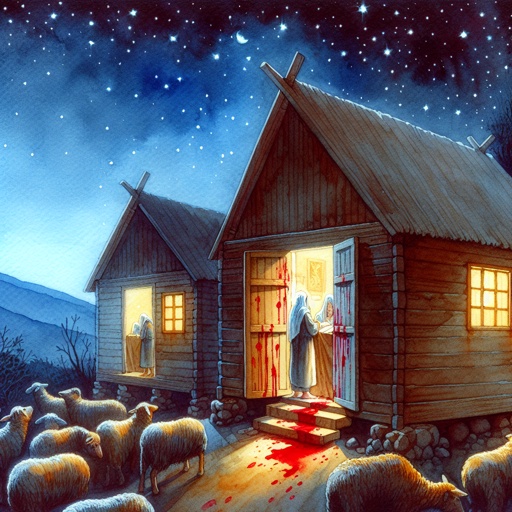
Exodus 12:13