What does John 12:10 mean?
"¶ But the chief priests consulted that they might put Lazarus also to death;" - John 12:10
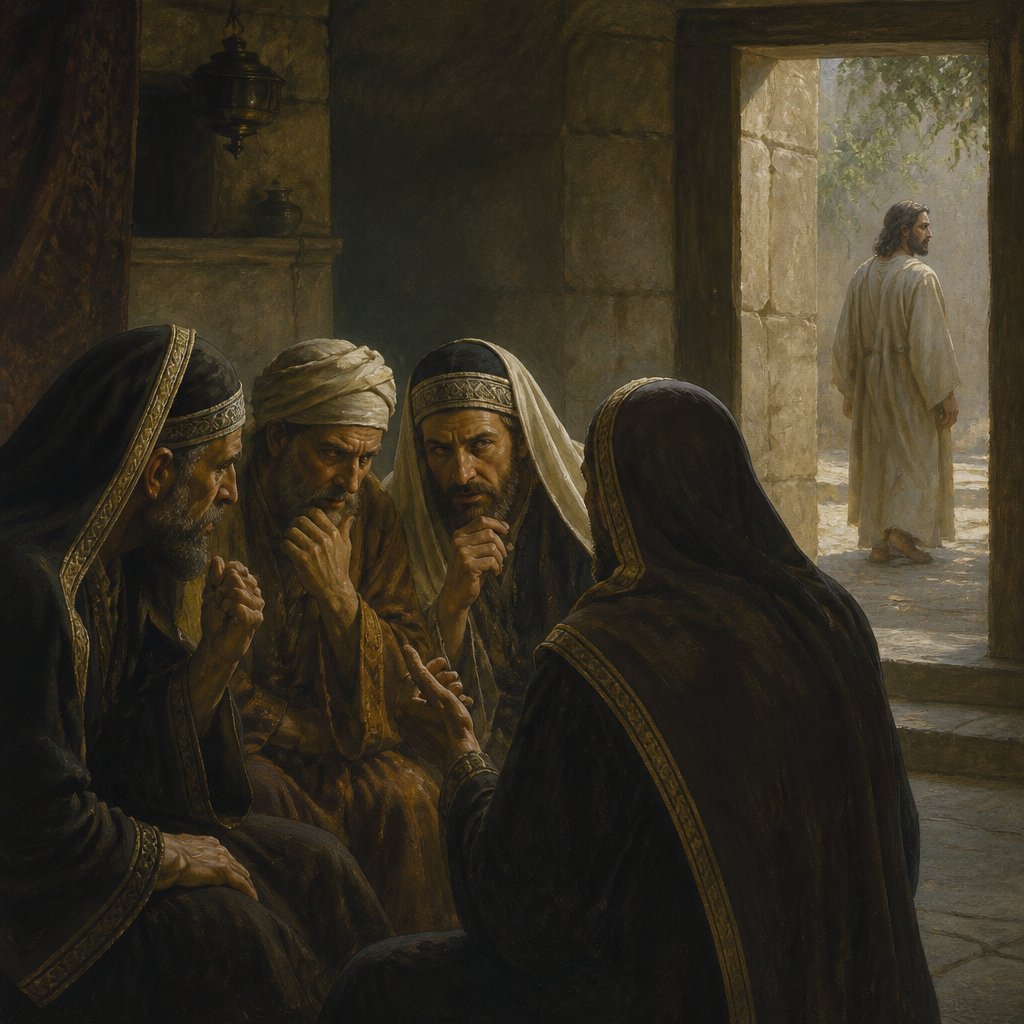
The Bible verse John 12:10 from the King James Version (KJV) reads, "But the chief priests consulted that they might put Lazarus also to death." This verse is part of the larger context of the crucifixion of Jesus Christ and the events leading up to it. The verse serves as a powerful example of the lengths to which the religious leaders of the time were willing to go to suppress the truth and maintain their power and authority.
The broader context of this verse is crucial to understanding its significance. In the preceding verses, we see that Jesus had performed a miraculous act by raising Lazarus from the dead. This astounding miracle had attracted much attention and had caused many people to believe in Jesus. In fact, the verse just before John 12:10 (John 12:9) states that "Much people of the Jews therefore knew that he was there: and they came not for Jesus' sake only, but that they might see Lazarus also, whom he had raised from the dead." The crowds were drawn to Jesus because of this incredible act, and it was causing a stir among the people.
In response to this, the chief priests and Pharisees, who were the religious authorities of the time, began to feel threatened by Jesus and his growing influence. They were concerned that this miraculous sign of raising Lazarus from the dead would cause even more people to believe in Jesus and follow him. The religious leaders were also fearful that the Roman authorities, who held political power over the region, would see Jesus as a threat and take action against them.
In light of this, the verse John 12:10 reveals the extent to which these religious leaders were willing to go to maintain their power and authority. Their response to the growing belief in Jesus was not to engage in a thoughtful and open-minded discussion about his teachings and actions, but rather to conspire to put Lazarus to death. They saw Lazarus as evidence of Jesus' power and authority, and as such, they wanted to eliminate him in order to suppress the truth of Jesus' identity as the Son of God.
The themes present in John 12:10 are significant and relevant to our understanding of the human condition and the nature of power and authority. The verse reveals the depths of human sin and the ways in which pride, jealousy, and fear can lead people to act in destructive and immoral ways. It also highlights the contrast between the religious leaders' actions and Jesus' own teachings of love, compassion, and righteousness.
Symbolically, the plot to put Lazarus to death is a foreshadowing of the impending crucifixion of Jesus. Both Lazarus and Jesus were targeted by the religious authorities out of fear and jealousy, and both instances serve as examples of the lengths to which the forces of darkness will go to suppress the truth and maintain their power. However, the ultimate victory of Jesus over death and sin reveals the futility of these efforts and serves as a powerful symbol of hope and redemption for all who believe in Him.
In conclusion, the Bible verse John 12:10 from the King James Version offers a powerful commentary on the human condition and the nature of power and authority. It serves as a reminder of the ways in which pride, jealousy, and fear can lead people to act in destructive and immoral ways. It also highlights the contrast between the actions of the religious leaders and the teachings of Jesus. Ultimately, the verse serves as a testament to the victory of truth and righteousness over the forces of darkness and offers a message of hope and redemption for all who believe.
Have questions about John 12:10?
Dive deeper into this scripture with Bible Chat — an AI-powered tool for exploring God's Word through conversation. Ask questions, get context, and grow in your understanding of the Bible.
Get Our Apps


John 12:10 Artwork

John 12:10 - "¶ But the chief priests consulted that they might put Lazarus also to death;"
"¶ But the chief priests consulted that they might put Lazarus also to death;" - John 12:10

John 10:12 - "But he that is an hireling, and not the shepherd, whose own the sheep are not, seeth the wolf coming, and leaveth the sheep, and fleeth: and the wolf catcheth them, and scattereth the sheep."

John 10:10

John 10:10

John 10:10

John 10:10

John 10:10

John 10:10

John 10:10
John 6:12

John 8:12

John 10:41 - "And many resorted unto him, and said, John did no miracle: but all things that John spake of this man were true."

John 12:25

John 8:12

John 8:12

John 12:3

John 8:12

John 10:30

John 10:30

John 10:9

John 10:9

John 10:9

John 20:11-12

John 12:12 - "¶ On the next day much people that were come to the feast, when they heard that Jesus was coming to Jerusalem,"

John 10:40 - "And went away again beyond Jordan into the place where John at first baptized; and there he abode."

Ezra 10:10-12

John 10:42 - "And many believed on him there."

John 15:9-10

John 15:9-10