What does John 11:24 mean?
"Martha saith unto him, I know that he shall rise again in the resurrection at the last day." - John 11:24
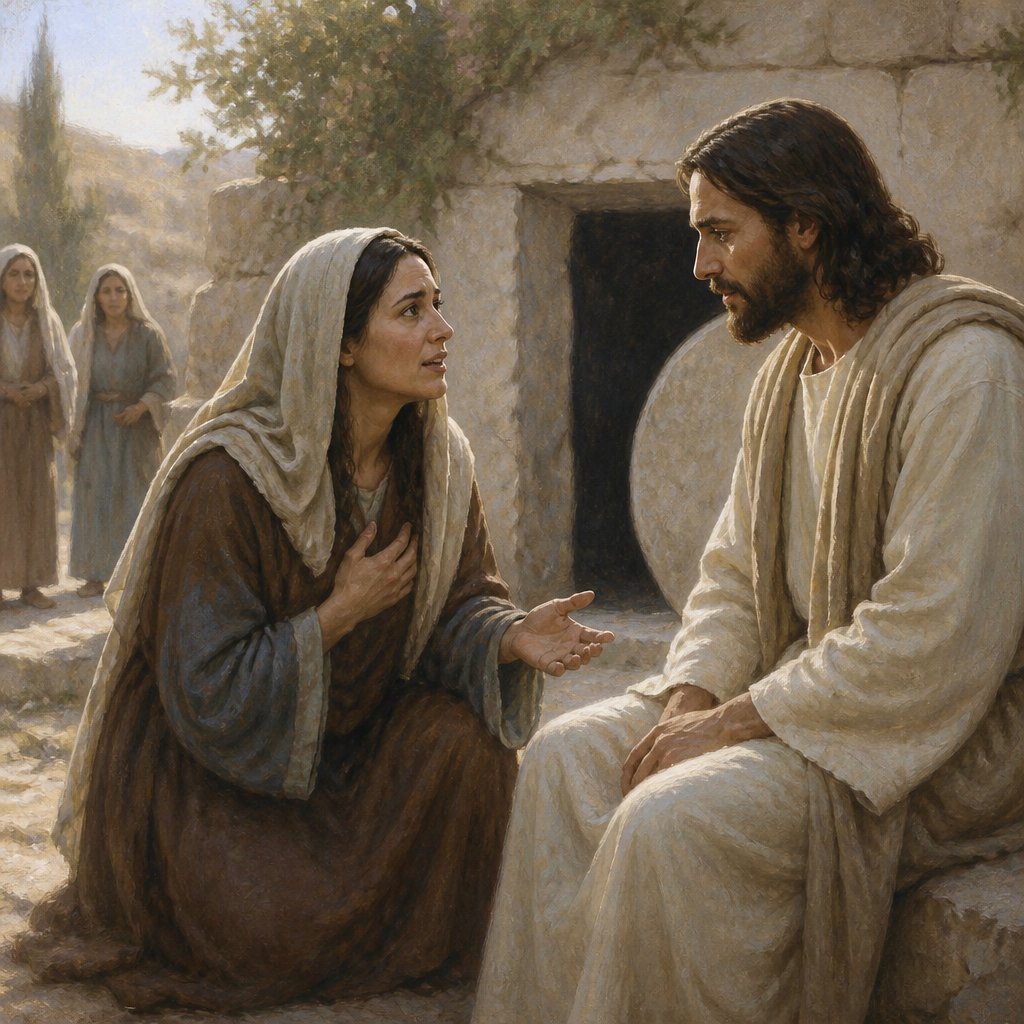
John 11:24 (KJV) reads, "Martha saith unto him, I know that he shall rise again in the resurrection at the last day."
This verse comes from the story of the resurrection of Lazarus, a dear friend of Jesus who has fallen ill and died. When Jesus arrives at the tomb, Martha, Lazarus' sister, expresses her faith in the resurrection, indicating her belief in the ultimate hope for believers in Christ. In the broader context of the chapter, this verse reflects the theme of belief, hope, and the power of Jesus to overcome death.
The story of Lazarus' resurrection holds deep significance within the larger narrative of the Gospel of John. It serves as a prelude to Jesus' own resurrection, which is a pivotal event in Christian theology. The raising of Lazarus from the dead demonstrates Jesus' authority over death and reaffirms the promise of eternal life for believers. Martha's statement in this verse reflects her conviction in the resurrection, which is a central tenet of Christian faith.
The theme of belief is prominent throughout the Gospel of John, as the author emphasizes the importance of faith in Jesus as the Son of God. In this passage, Martha's confession of belief in the resurrection at the last day is a testament to her faith in Jesus and the hope he brings. Her words reflect the hope and assurance that believers have in the promise of resurrection and eternal life through Christ.
Furthermore, Martha's declaration reveals her understanding of the eschatological hope of the last day. The concept of the last day in Jewish and Christian thought refers to the final judgment and the culmination of God's plans for humanity. Martha's belief in the resurrection at the last day points to the overarching theme of eschatological hope in the New Testament, which centers on the ultimate victory of Christ and the fulfillment of God's redemptive purposes.
Symbolism also plays a significant role in this verse. The resurrection of Lazarus serves as a symbol of the new life that Jesus brings to those who believe in him. It foreshadows the ultimate victory over death that Jesus achieves through his own resurrection. The raising of Lazarus also serves as a demonstration of the power of Jesus as the Messiah, who has authority over life and death.
In a broader literary and historical context, this verse contributes to the development of the Christological theme in the Gospel of John. It reveals Jesus' identity as the resurrection and the life, a theme that is further elaborated in the subsequent verses. This declaration by Martha sets the stage for Jesus' profound statement in John 11:25-26, where he proclaims, "I am the resurrection, and the life: he that believeth in me, though he were dead, yet shall he live: And whosoever liveth and believeth in me shall never die."
In conclusion, John 11:24 from the King James Version of the Bible reflects the themes of belief, hope, and the power of Jesus over death. The verse underscores the significance of the resurrection and the last day in Christian theology, while also highlighting the faith and conviction of Martha in Jesus as the redeemer and the source of eternal life. This passage holds deep theological significance and continues to inspire believers with the hope and assurance of life beyond the grave through Christ.
Have questions about John 11:24?
Dive deeper into this scripture with Bible Chat — an AI-powered tool for exploring God's Word through conversation. Ask questions, get context, and grow in your understanding of the Bible.
Get Our Apps


John 11:24 Artwork

John 11:24 - "Martha saith unto him, I know that he shall rise again in the resurrection at the last day."
John 11:24 Most assuredly, I say to you, unless a grain of wheat falls into the ground and dies, it remains alone; but if it dies, it produces much grain.
"Martha saith unto him, I know that he shall rise again in the resurrection at the last day." - John 11:24

John 3:24 - "For John was not yet cast into prison."

"For John was not yet cast into prison." - John 3:24

James 1:2-4

Mark 2:4

Romans 2:4

John 1:24 - "And they which were sent were of the Pharisees."

James 1: 2-4

John 7:24 - "Judge not according to the appearance, but judge righteous judgment."

John (11:35) Jesus wept.

James 2:2-4

Genesis 24-11
John (11:35) Jesus wept.

John (11:35) Jesus wept.

John 11:35

John 15.1-11

John 11:35

John (11:35) Jesus wept.

John (11:35) Jesus wept.

John (11:35) Jesus wept.

John (11:35) Jesus wept.
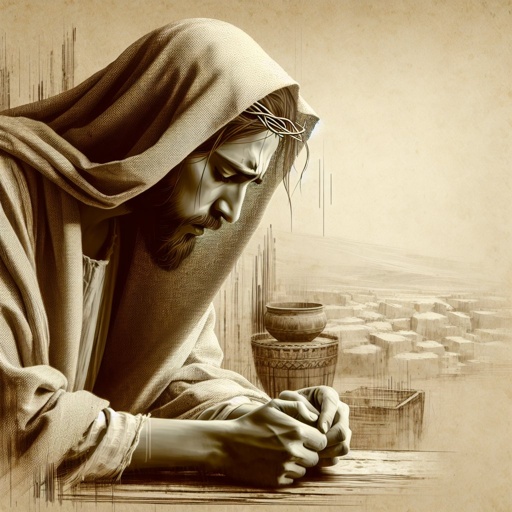
John 11:35 - "Jesus wept."

John (11:35) Jesus wept.

John (11:35) Jesus wept.

John (11:35) Jesus wept.

John (11:35) Jesus wept.

John (11:35) Jesus wept.

John (11:35) Jesus wept.