What does John 10:10 mean?
"The thief cometh not, but for to steal, and to kill, and to destroy: I am come that they might have life, and that they might have it more abundantly." - John 10:10

John 10:10 in the King James Version reads, “The thief cometh not, but for to steal, and to kill, and to destroy: I am come that they might have life, and that they might have it more abundantly.”
In its plain sense, the verse sets two purposes in sharp contrast. One purpose is predatory and emptying: the thief comes to take what is not his, and his taking ends in ruin. The other purpose is giving and fulfilling: Jesus says he has come so that “they might have life,” and not merely existence, but life “more abundantly.” The force of the statement is heightened by its structure. The thief’s aims are threefold and progressive—“to steal, and to kill, and to destroy”—moving from loss, to death, to total devastation. Jesus’ aim is likewise expressed in two clauses that deepen the promise—life, and then life in overflowing measure. The verse, therefore, is not just about danger and safety; it is about two kingdoms and two kinds of outcomes, one that diminishes and one that enlarges.
The immediate context of John 10 is the “shepherd” discourse, where Jesus is speaking about sheep, a fold, a door, a shepherd, and strangers. Just before this chapter, in John 9, Jesus has given sight to a man born blind, and that miracle becomes the occasion for exposing spiritual blindness and hard-hearted leadership. John 10 follows naturally from that confrontation. When Jesus speaks of thieves and strangers and hirelings in John 10, he is not speaking in abstractions. He is continuing to address a world in which religious authorities had proved willing to cast out and crush a healed man rather than rejoice in God’s work. The imagery of shepherding in John 10 is therefore a commentary on leadership, spiritual guidance, and belonging: who truly cares for the flock, who truly speaks for God, and who truly brings people into life.
Within that setting, “the thief” represents any force that approaches the flock without right, without love, and without truthful authority. In John 10, Jesus distinguishes between those who enter “by the door” and those who “climbeth up some other way” and are therefore “a thief and a robber.” The symbolism is straightforward: the rightful shepherd does not need deception or violence; he comes openly, calling the sheep, and his relationship is recognized by the sheep’s hearing and following. The thief, by contrast, is defined by illegitimate access and harmful intent. He may appear among the flock, but his presence is not for the flock’s good. He does not come to nourish, guide, or protect, but to take, to end life, and to leave devastation behind him.
When Jesus says, “I am come,” he is identifying himself as the opposite of the thief in both character and mission. The larger chapter includes Jesus’ statements, “I am the door of the sheep” and “I am the good shepherd,” and those images illuminate John 10:10. As “the door,” Jesus is the true entry into safety, pasture, and communion, not an intruder but the rightful access point to God’s care. As “the good shepherd,” Jesus’ relationship to the sheep is personal and sacrificial. A shepherd in this imagery is not simply a teacher dispensing information; he is a guardian of life, one who guides to pasture and stands between the flock and danger. This is why John 10 later emphasizes that the good shepherd “giveth his life for the sheep.” The abundant life Jesus gives is not detached from cost; it is secured by his own self-giving, in contrast to the thief who preserves himself by consuming others.
The word “life” in John’s Gospel is never merely biological survival. John repeatedly presents “life” as the gift that comes from the Son, rooted in God’s own life and fellowship. John 10:10 therefore has the weight of the whole book behind it: the life Jesus brings is the life that is in him, the light that overcomes darkness, the life that rescues from perishing and brings into enduring communion with God. This is why the verse does not merely promise improvement of circumstances, but a different kind of existence, a re-centered human life under the care of the true Shepherd. The contrast with “kill” and “destroy” makes clear that Jesus’ mission is fundamentally restorative and preservative; he comes to give what the thief takes away.
“More abundantly” adds a crucial dimension. It does not merely mean “more” in a material sense, as if Jesus were promising every follower an increase of earthly ease. In the shepherd context, abundance is the difference between being left exposed and being brought to pasture; between fear and security; between scattered wandering and belonging. Abundance is fullness, not scarcity. It is life that is not perpetually drained by what steals, kills, and destroys—sin’s bondage, false leadership, devouring temptation, and the spiritual violence of lies. The abundance Jesus gives is life as it was meant to be: filled with truth, guarded by a faithful Shepherd, guided by his voice, and held within a relationship that does not collapse when circumstances become hard. Even in affliction, such life can be “abundant” because its source is not the comfort of the moment but the Shepherd who keeps, leads, and lays down his life.
The symbolism of stealing, killing, and destroying also works inwardly, describing what happens to a person under false voices. “Steal” suggests gradual loss: joy, hope, integrity, peace, and clarity can be taken piece by piece. “Kill” suggests the endpoint of that loss: vitality and faith can be strangled, leaving spiritual deadness. “Destroy” suggests ruin beyond mere death, a breaking down of what makes a person whole, a scattering of identity and purpose. In the same way, “life” and “more abundantly” describe the rebuilding of the human being under Christ: wholeness, nourishment, protection, and direction. In John 10, the sheep know the Shepherd’s voice, and this is part of abundance: not confusion under competing calls, but a recognizable, trustworthy voice that leads to safety.
The significance of John 10:10, then, is that it declares the heart of Jesus’ mission in the language of shepherding and spiritual conflict. It insists that there are real agents and patterns in the world that diminish human life—by deception, violence, and ruin—and that Jesus stands over against them as the giver of life in overflowing measure. It also implicitly asks the reader to discern voices and pathways: whether one is entering by the true door, following the true shepherd, and receiving life; or being approached by what is alien to God’s care, which ultimately takes and shatters. In one sentence, the verse gathers the Gospel’s central contrast between darkness and light, death and life, falsehood and truth, and it places Jesus not simply as a moral example but as the decisive giver of life, the One whose coming reverses the thief’s work and restores the flock to fullness.
Have questions about John 10:10?
Dive deeper into this scripture with Bible Chat — an AI-powered tool for exploring God's Word through conversation. Ask questions, get context, and grow in your understanding of the Bible.
Get Our Apps


John 10:10 Artwork

John 10:10

John 10:10

John 10:10

John 10:10

John 10:10

John 10:10

John 10:10

John 10:10 - "The thief cometh not, but for to steal, and to kill, and to destroy: I am come that they might have life, and that they might have it more abundantly."

"The thief cometh not, but for to steal, and to kill, and to destroy: I am come that they might have life, and that they might have it more abundantly." - John 10:10

John 10:10 The thief comes only to steal and kill and destroy; I have come that they may have life, and have it to the full.

"The thief cometh not, but for to steal, and to kill, and to destroy: I am come that they might have life, and that they might have it more abundantly." - John 10:10
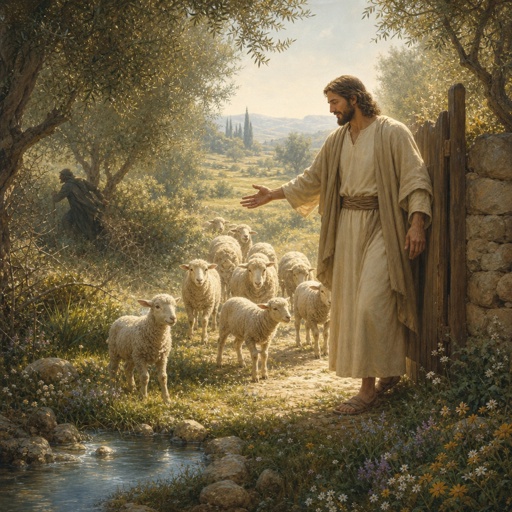
"The thief cometh not, but for to steal, and to kill, and to destroy: I am come that they might have life, and that they might have it more abundantly." - John 10:10

John 10:10 The thief comes only to steal and kill and destroy; I have come that they may have life, and have it to the full.

John 10:30

John 10:30

John 10:9

John 10:9

John 10:9

John 10:42 - "And many believed on him there."

John 15:9-10

John 15:9-10

John 10:22 - "¶ And it was at Jerusalem the feast of the dedication, and it was winter."

John 10:30 - "I and my Father are one."

John 10:41 - "And many resorted unto him, and said, John did no miracle: but all things that John spake of this man were true."

John 10:23 - "And Jesus walked in the temple in Solomon's porch."

John 10:2 - "But he that entereth in by the door is the shepherd of the sheep."

Matthew 14:10 - "And he sent, and beheaded John in the prison."

John 10:40 - "And went away again beyond Jordan into the place where John at first baptized; and there he abode."

John 10:19 - "¶ There was a division therefore again among the Jews for these sayings."

John 10:13 - "The hireling fleeth, because he is an hireling, and careth not for the sheep."