What does Job 9:34 mean?
"Let him take his rod away from me, and let not his fear terrify me:" - Job 9:34

The verse Job 9:34 from the King James Version of the Bible reads, "Let him take his rod away from me, and let not his fear terrify me." This verse is part of a larger passage in the book of Job, which is a complex and profound exploration of the nature of suffering and the relationship between God and humanity.
The book of Job is a poetic and philosophical work that grapples with the question of why bad things happen to good people. Job, the protagonist, is a righteous and wealthy man who is suddenly beset by a series of calamities, including the loss of his property, the death of his children, and the onset of a painful and disfiguring illness. In the midst of these trials, Job wrestles with his faith and with the nature of God, ultimately engaging in a series of profound dialogues with his friends and with God himself.
In the broader context of the book of Job, the verse Job 9:34 occurs in the midst of a speech by Job in which he expresses his sense of despair and his feelings of being overwhelmed by the power and majesty of God. Job is grappling with the apparent injustice of his sufferings and with the seeming absence of any explanation or justification for his plight. In this verse, Job pleads with God to remove his rod of punishment and to cease from terrifying him with fear. This reflects Job's sense of being oppressed and tormented by forces that are beyond his understanding and beyond his control.
Thematically, this verse speaks to the human experience of suffering and to the ways in which such suffering can lead to feelings of fear, powerlessness, and despair. The image of God wielding a rod of punishment conveys a sense of authority and judgment, and Job's plea for relief reflects his deep desire for a reprieve from his afflictions. This verse also touches on the theme of theodicy, which is the philosophical exploration of how a just and loving God can coexist with the presence of evil and suffering in the world. Job's plea for God to cease from terrifying him with fear reflects the timeless human question of why bad things happen and how we can make sense of the seemingly arbitrary nature of suffering.
Symbolically, the rod mentioned in this verse can be seen as a representation of God's authority and power. In the biblical tradition, a rod is often used as a symbol of divine guidance and discipline, as seen in passages such as Psalm 23:4, which speaks of God's rod and staff comforting and protecting the psalmist. Here, however, the rod is presented in a more menacing light, as it becomes a source of fear and terror for Job. This symbolizes the way in which our understanding of God's intentions and actions can be shaped by our own experiences of suffering and by the ways in which we interpret the events of our lives.
In conclusion, the verse Job 9:34 from the King James Version of the Bible is a poignant and powerful expression of Job's struggles with suffering, fear, and the enigmatic nature of God's presence in the world. Set within the broader context of the book of Job, this verse speaks to universal themes of human suffering, theodicy, and the quest for understanding in the face of life's trials. Through its rich symbolism and its evocative language, this verse continues to resonate with readers and to provoke contemplation of the profound mysteries of faith and the human experience.
Have questions about Job 9:34?
Dive deeper into this scripture with Bible Chat — an AI-powered tool for exploring God's Word through conversation. Ask questions, get context, and grow in your understanding of the Bible.
Get Our Apps


Job 9:34 Artwork
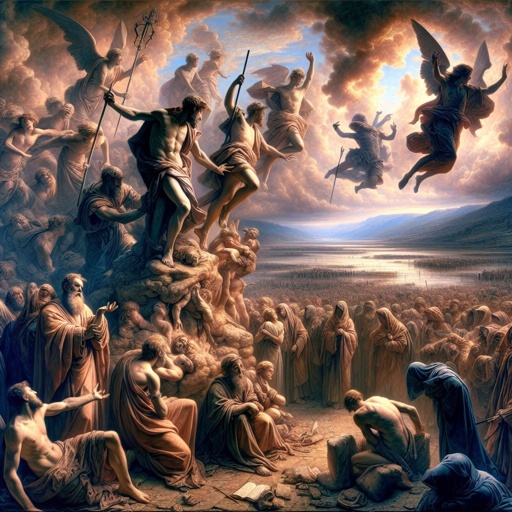
Job 9:34 - "Let him take his rod away from me, and let not his fear terrify me:"

"Let him take his rod away from me, and let not his fear terrify me:" - Job 9:34

Job 34:9 - "For he hath said, It profiteth a man nothing that he should delight himself with God."

"For he hath said, It profiteth a man nothing that he should delight himself with God." - Job 34:9

Job 34:34 - "Let men of understanding tell me, and let a wise man hearken unto me."

Job 34:35 - "Job hath spoken without knowledge, and his words were without wisdom."

Job 34:7 - "What man is like Job, who drinketh up scorning like water?"

Job 34:36 - "My desire is that Job may be tried unto the end because of his answers for wicked men."

Job 34:5 - "For Job hath said, I am righteous: and God hath taken away my judgment."

Job 34:1 - "Furthermore Elihu answered and said,"

Job 34:3 - "For the ear trieth words, as the mouth tasteth meat."

Job 34:30 - "That the hypocrite reign not, lest the people be ensnared."

Job 15:34 - "For the congregation of hypocrites shall be desolate, and fire shall consume the tabernacles of bribery."

Job 34:16 - "If now thou hast understanding, hear this: hearken to the voice of my words."

Job 34:26 - "He striketh them as wicked men in the open sight of others;"

Job 21:34 - "How then comfort ye me in vain, seeing in your answers there remaineth falsehood?"

Job 34:21 - "For his eyes are upon the ways of man, and he seeth all his goings."

Job 34:22 - "There is no darkness, nor shadow of death, where the workers of iniquity may hide themselves."

Job 34:25 - "Therefore he knoweth their works, and he overturneth them in the night, so that they are destroyed."

Job 34:12 - "Yea, surely God will not do wickedly, neither will the Almighty pervert judgment."

Job 34:18 - "Is it fit to say to a king, Thou art wicked? and to princes, Ye are ungodly?"

Job 9:1 - "Then Job answered and said,"

Job 41:34 - "He beholdeth all high things: he is a king over all the children of pride."

Job 34:15 - "All flesh shall perish together, and man shall turn again unto dust."

Job 34:24 - "He shall break in pieces mighty men without number, and set others in their stead."

"Furthermore Elihu answered and said," - Job 34:1

"Job hath spoken without knowledge, and his words were without wisdom." - Job 34:35

Job 34:27 - "Because they turned back from him, and would not consider any of his ways:"

Job 34:13 - "Who hath given him a charge over the earth? or who hath disposed the whole world?"

Job 34:28 - "So that they cause the cry of the poor to come unto him, and he heareth the cry of the afflicted."