What does Job 7:6 mean?
"My days are swifter than a weaver's shuttle, and are spent without hope." - Job 7:6

Job 7:6 from the King James Version of the Bible reads, "My days are swifter than a weaver's shuttle, and are spent without hope." This verse comes from the book of Job in the Old Testament and is a reflection of the intense suffering and despair that Job experienced during his trials.
To understand the meaning and commentary of this verse, it is important to provide some context. Job was a righteous man who experienced unimaginable suffering as a test of his faith. He lost his wealth, his children, and his health, and he was left to endure the anguish of his afflictions without understanding why they had befallen him. In the midst of his despair, Job lamented the brevity and futility of his life, expressing his feelings of hopelessness and the fleeting nature of his existence.
The imagery of a weaver's shuttle in Job 7:6 is particularly poignant. In ancient times, a weaver's shuttle was a tool used for weaving fabric on a loom. It moved quickly back and forth, creating intricate patterns and designs in the cloth. Job's comparison of his days to a weaver's shuttle emphasizes the rapid pace at which his life was passing by, as well as the intricate and complex nature of human existence. It also highlights the lack of control and agency that Job felt over his own life, as the shuttle is moved by external forces in the hands of the weaver.
The phrase "and are spent without hope" further underscores Job's deep sense of hopelessness and despair. He felt that his days were passing by without any sense of purpose or expectation for the future. The word "spent" suggests that his days were being used up or wasted, and the absence of hope left him feeling utterly despondent.
The themes present in Job 7:6 are profound and universal. Job's expression of despair resonates with anyone who has grappled with the challenges and uncertainties of life. The brevity of human existence, the struggle to find meaning in suffering, and the longing for hope in the face of adversity are all deeply human experiences that transcend time and culture. The verse also speaks to the existential questions that have troubled humanity for centuries, reflecting on the fleeting nature of life and the search for purpose in the midst of suffering.
From a theological perspective, Job's lament in this verse raises profound questions about the nature of suffering and the human relationship with God. Job's suffering was not a result of his sin, as his friends erroneously suggested, but rather a test of his faith and a part of God's larger plan. Job's struggle to reconcile his suffering with the righteousness of God is a central theme of the book, and his lament in Job 7:6 reflects the deep anguish and perplexity that he experienced as he grappled with these profound theological questions.
In conclusion, Job 7:6 is a poignant reflection on the brevity and futility of human existence, the experience of hopelessness and despair, and the universal struggle to find meaning and purpose in the face of suffering. It resonates with profound theological and existential questions, and its timeless themes continue to speak to the human condition today. The verse serves as a powerful reminder of the complex and often unfathomable nature of life, and the enduring human quest for hope and meaning in the midst of adversity.
Have questions about Job 7:6?
Dive deeper into this scripture with Bible Chat — an AI-powered tool for exploring God's Word through conversation. Ask questions, get context, and grow in your understanding of the Bible.
Get Our Apps


Job 7:6 Artwork
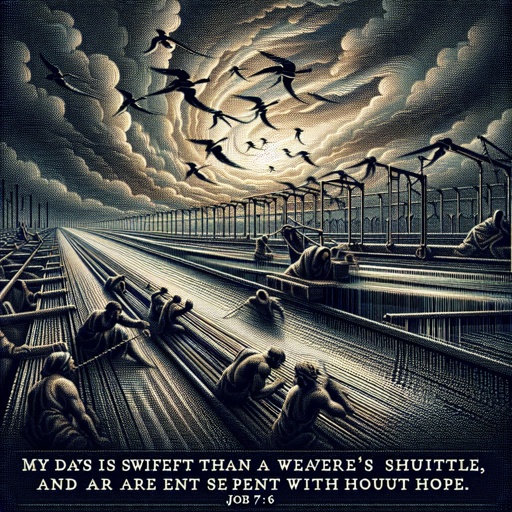
Job 7:6 - "My days are swifter than a weaver's shuttle, and are spent without hope."

"My days are swifter than a weaver's shuttle, and are spent without hope." - Job 7:6

Job 6:7 - "The things that my soul refused to touch are as my sorrowful meat."
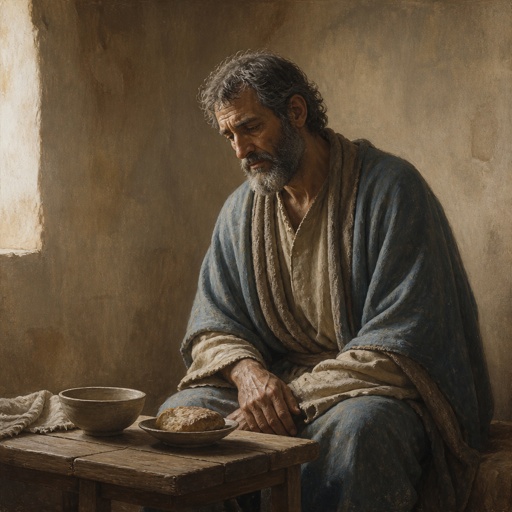
"The things that my soul refused to touch are as my sorrowful meat." - Job 6:7

Job 6:1 - "But Job answered and said,"

Job 40:6 - "¶ Then answered the LORD unto Job out of the whirlwind, and said,"

"But Job answered and said," - Job 6:1

Job 34:7 - "What man is like Job, who drinketh up scorning like water?"

Job 27:6

Job 1:7

Job 1:7

Job 1:7

Job 6:6 - "Can that which is unsavoury be eaten without salt? or is there any taste in the white of an egg?"

Job 7:7 - "O remember that my life is wind: mine eye shall no more see good."

Job 38:4-7

"¶ Then answered the LORD unto Job out of the whirlwind, and said," - Job 40:6

Job 30:6 - "To dwell in the clifts of the valleys, in caves of the earth, and in the rocks."

Job 28:6 - "The stones of it are the place of sapphires: and it hath dust of gold."

Job 2:7 - "¶ So went Satan forth from the presence of the LORD, and smote Job with sore boils from the sole of his foot unto his crown."

Job 6:16 - "Which are blackish by reason of the ice, and wherein the snow is hid:"

Job 36:6 - "He preserveth not the life of the wicked: but giveth right to the poor."

Job 42:6 - "Wherefore I abhor myself, and repent in dust and ashes."

Job 26:6 - "Hell is naked before him, and destruction hath no covering."

Job 13:7 - "Will ye speak wickedly for God? and talk deceitfully for him?"

Job 38:7 - "When the morning stars sang together, and all the sons of God shouted for joy?"

Job 6:19 - "The troops of Tema looked, the companies of Sheba waited for them."

Job 6:12 - "Is my strength the strength of stones? or is my flesh of brass?"

Job 6:18 - "The paths of their way are turned aside; they go to nothing, and perish."

Job 9:7 - "Which commandeth the sun, and it riseth not; and sealeth up the stars."

Job 13:6 - "Hear now my reasoning, and hearken to the pleadings of my lips."