What does Job 5:10 mean?
"Who giveth rain upon the earth, and sendeth waters upon the fields:" - Job 5:10

Job 5:10 (KJV) says, "Who giveth rain upon the earth, and sendeth waters upon the fields."
This verse from the book of Job is part of a longer discourse from one of Job's friends, Eliphaz, who responds to Job's suffering and laments. In this particular verse, Eliphaz is pointing out the power and sovereignty of God. The verse praises God as the one who provides rain for the earth and waters for the fields. The wording of the verse is rich with symbolism and themes that are worth exploring in-depth.
The theme of God's providence and sovereignty is central to this verse. The imagery of God "giving rain upon the earth" and "sending waters upon the fields" speaks to the fundamental belief that God alone is the source of all life and sustenance. In agricultural societies like those of the ancient Near East, the provision of rain and water was essential for the survival of crops and livestock. By attributing this provision to God, the verse emphasizes the dependence of all living things on God's care and provision.
The imagery of rain and water also holds symbolic significance in the Bible. In the Old Testament, water is often used as a symbol of life, cleansing, and spiritual renewal. The provision of rain and water by God can be seen not only as a literal act of sustenance but also as a spiritual metaphor for God's grace and care for his people. This points to the broader theme of God's faithfulness and care for his creation, which is a recurring theme throughout the Bible.
Furthermore, the verse reflects the biblical motif of stewardship and responsibility. While God is recognized as the ultimate source of rain and water, there is also an implicit understanding that humans have a role in managing and caring for the earth. This verse serves as a reminder of the interconnectedness of God, humanity, and the natural world. It calls for a recognition of our dependence on God's provision while also acknowledging our responsibility to be good stewards of the earth and its resources.
In the broader context of the book of Job, this verse takes on added significance. Job is a book that grapples with the problem of suffering and the apparent injustice of the world. Job, who has experienced immense personal loss and suffering, is questioning the ways of God and seeking answers to the age-old question of why the righteous suffer. In response, his friends offer various explanations and theological insights, as is the case with Eliphaz in this particular verse.
Eliphaz's emphasis on God's sovereignty and providence in the natural world serves as a reminder of the broader, cosmic perspective that God's ways are ultimately beyond human understanding. While Eliphaz's words can be seen as an attempt to console and encourage Job, they also point to the complex and often mysterious ways of God. The provision of rain and water is just one example of God's control over the natural world, serving as a reminder of God's power and wisdom in the midst of human suffering and confusion.
In conclusion, Job 5:10 is a verse that carries rich theological and symbolic significance. It highlights themes of God's providence, stewardship, and the mystery of suffering. The imagery of rain and water serves as a powerful symbol of God's care and provision, while also raising profound questions about the ways of God in the face of human suffering. It offers a profound meditation on the relationship between God, humanity, and the natural world, inviting readers to reflect on their dependence on God's provision and their responsibility to care for the earth. As part of the larger narrative of Job, this verse contributes to the profound exploration of the human experience and the unfathomable ways of God.
Have questions about Job 5:10?
Dive deeper into this scripture with Bible Chat — an AI-powered tool for exploring God's Word through conversation. Ask questions, get context, and grow in your understanding of the Bible.
Get Our Apps


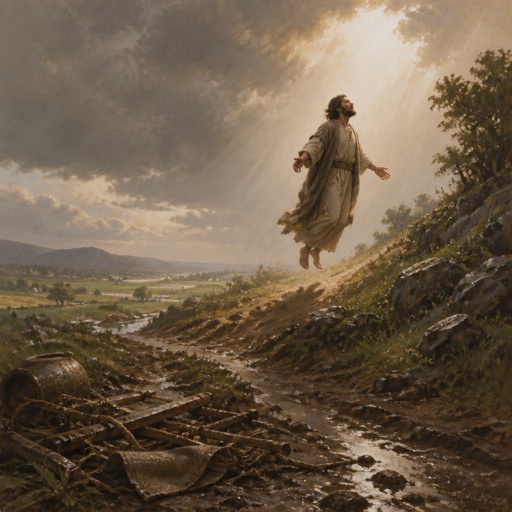
Job 5:10 Artwork

Job 5:10 - "Who giveth rain upon the earth, and sendeth waters upon the fields:"

"Who giveth rain upon the earth, and sendeth waters upon the fields:" - Job 5:10

Job 5:10-12 - "He gives rain on the earth and sends waters on the fields; he sets on high those who are lowly, and those who mourn are lifted to safety. He frustrates the plans of the crafty, so that their hands achieve no success."
"He gives rain on the earth and sends waters on the fields; he sets on high those who are lowly, and those who mourn are lifted to safety. He frustrates the plans of the crafty, so that their hands achieve no success." - Job 5:10-12

Job 10:5 - "Are thy days as the days of man? are thy years as man's days,"

"Are thy days as the days of man? are thy years as man's days," - Job 10:5

Job 42:10 - "And the LORD turned the captivity of Job, when he prayed for his friends: also the LORD gave Job twice as much as he had before."

job 42:5

Job 10:10 - "Hast thou not poured me out as milk, and curdled me like cheese?"

Job 34:5 - "For Job hath said, I am righteous: and God hath taken away my judgment."

Job 1:5 no words

Job 1:5 no words

Job 20:5 - "That the triumphing of the wicked is short, and the joy of the hypocrite but for a moment?"

Job 1:5 no words

Job 5:5 - "Whose harvest the hungry eateth up, and taketh it even out of the thorns, and the robber swalloweth up their substance."

Job 5:14 - "They meet with darkness in the daytime, and grope in the noonday as in the night."

Job 18:10 - "The snare is laid for him in the ground, and a trap for him in the way."

Job 37:10 - "By the breath of God frost is given: and the breadth of the waters is straitened."

Job 1:5 - "And it was so, when the days of their feasting were gone about, that Job sent and sanctified them, and rose up early in the morning, and offered burnt offerings according to the number of them all: for Job said, It may be that my sons have sinned, and cursed God in their hearts. Thus did Job continually."

Job 22:5 - "Is not thy wickedness great? and thine iniquities infinite?"

Job 29:10 - "The nobles held their peace, and their tongue cleaved to the roof of their mouth."

Hebrews 10:5-10

Hebrews 10:5-10

Job 38:10 - "And brake up for it my decreed place, and set bars and doors,"

Job 26:5 - "Dead things are formed from under the waters, and the inhabitants thereof."

Job 5:16 - "So the poor hath hope, and iniquity stoppeth her mouth."

Job 21:10 - "Their bull gendereth, and faileth not; their cow calveth, and casteth not her calf."

Job 10:4 - "Hast thou eyes of flesh? or seest thou as man seeth?"

Job 4:10 - "The roaring of the lion, and the voice of the fierce lion, and the teeth of the young lions, are broken."

Job 12:10 - "In whose hand is the soul of every living thing, and the breath of all mankind."