What does Job 4:15 mean?
"Then a spirit passed before my face; the hair of my flesh stood up:" - Job 4:15
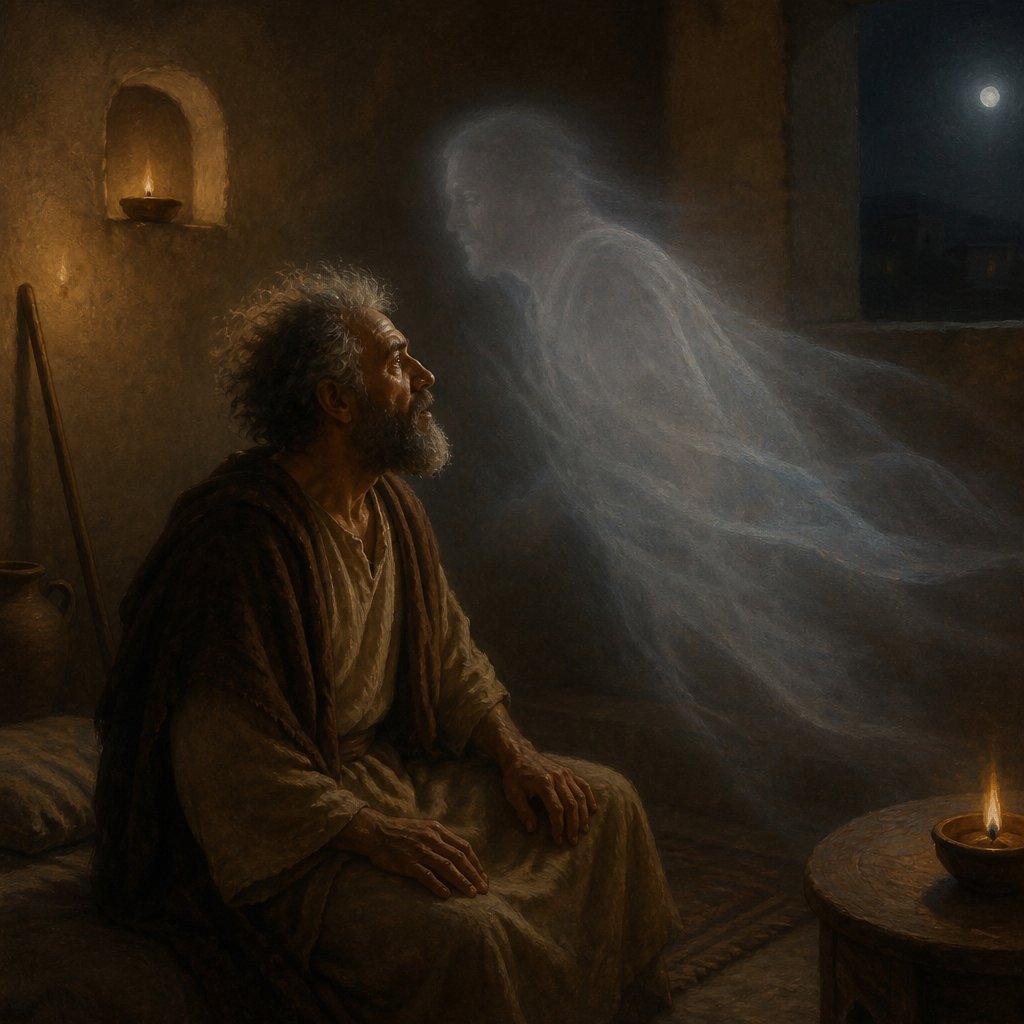
Job 4:15 (KJV) states: "Then a spirit passed before my face; the hair of my flesh stood up."
This verse comes from the Book of Job, a part of the Old Testament, which is known for its exploration of suffering and the nature of God. In this particular passage, Job's friend Eliphaz the Temanite is speaking, sharing a vision he had experienced. He describes a spirit passing before his face, causing the hairs on his flesh to stand up. This vision is a significant moment in the Book of Job as it sets the stage for Eliphaz to share his perspective on the source and nature of suffering.
One of the key themes in this verse is the supernatural encounter with a spirit. The concept of spirits and the supernatural is prevalent throughout the Bible, and in this particular instance, it serves as a moment of revelation for Eliphaz. The passing of the spirit before his face represents a glimpse into the spiritual realm, a moment where the natural and supernatural worlds intersect. This theme ties into the broader narrative of the Book of Job, where the characters are grappling with the unseen forces at work in their lives.
The reaction of Eliphaz to the spirit is also noteworthy. He describes the hairs of his flesh standing up, which is a physical manifestation of fear or awe. This reaction symbolizes the power and awe-inspiring nature of the spiritual realm. The encounter with the spirit serves as a reminder of the presence of forces beyond human understanding, and it evokes a sense of reverence and humility in the face of the divine.
Furthermore, the context of this verse within the Book of Job is crucial to understanding its significance. Job is a righteous man who faces immense suffering, losing his possessions, family, and health. His friends, including Eliphaz, come to offer him comfort and advice, and their dialogues make up the bulk of the book. Eliphaz's vision of the spirit is the catalyst for his subsequent speech to Job, in which he attempts to make sense of the suffering they are witnessing.
Eliphaz's interpretation of his vision and his subsequent advice to Job are rooted in the belief that suffering is a consequence of sin. He implies that the vision of the spirit serves as a divine revelation, reinforcing his conviction that Job's suffering must be a result of his own wrongdoing. This sets the stage for the theological debate that unfolds throughout the book, as Job vehemently denies any wrongdoing and questions the justice of his suffering.
In addition to its thematic significance, the verse Job 4:15 also serves as a powerful literary device. The imagery of the spirit passing before Eliphaz's face and the physical reaction it evokes create a vivid and evocative scene. This contributes to the overall dramatic and profound nature of the Book of Job, adding depth and intensity to the dialogue between the characters and the exploration of profound theological and existential questions.
In conclusion, Job 4:15 (KJV) is a rich and multi-layered verse that contributes to the broader themes and narrative of the Book of Job. It captures a moment of supernatural revelation and sets the stage for the theological dialogue and exploration of suffering that unfolds throughout the book. The encounter with the spirit, the physical reaction it evokes, and its contextual significance all contribute to the verse's depth and significance within the biblical text.
Have questions about Job 4:15?
Dive deeper into this scripture with Bible Chat — an AI-powered tool for exploring God's Word through conversation. Ask questions, get context, and grow in your understanding of the Bible.
Get Our Apps


Job 4:15 Artwork

Job 4:15 - "Then a spirit passed before my face; the hair of my flesh stood up:"
"Then a spirit passed before my face; the hair of my flesh stood up:" - Job 4:15

Job 15:4 - "Yea, thou castest off fear, and restrainest prayer before God."

Ephesians 4:1-5

"Yea, thou castest off fear, and restrainest prayer before God." - Job 15:4

Eliphaz speaks to Job in Job 4.

Job 15:15 - "Behold, he putteth no trust in his saints; yea, the heavens are not clean in his sight."

Job 15:1 - "Then answered Eliphaz the Temanite, and said,"

Job 42:15 - "And in all the land were no women found so fair as the daughters of Job: and their father gave them inheritance among their brethren."

Job 29:15 - "I was eyes to the blind, and feet was I to the lame."

Job 32:15 - "They were amazed, they answered no more: they left off speaking."

Job 3:15 - "Or with princes that had gold, who filled their houses with silver:"

Job 32:4 - "Now Elihu had waited till Job had spoken, because they were elder than he."

Job 36:15 - "He delivereth the poor in his affliction, and openeth their ears in oppression."

Job 15:11 - "Are the consolations of God small with thee? is there any secret thing with thee?"

Job 15:35 - "They conceive mischief, and bring forth vanity, and their belly prepareth deceit."

Job 38:15 - "And from the wicked their light is withholden, and the high arm shall be broken."

Job 4:4 - "Thy words have upholden him that was falling, and thou hast strengthened the feeble knees."

Job 4:1 - "Then Eliphaz the Temanite answered and said,"

Job 38:4-7

Job 15:34 - "For the congregation of hypocrites shall be desolate, and fire shall consume the tabernacles of bribery."

Job 15:32 - "It shall be accomplished before his time, and his branch shall not be green."

Job 17:15 - "And where is now my hope? as for my hope, who shall see it?"

Job 15:19 - "Unto whom alone the earth was given, and no stranger passed among them."

Job 15:18 - "Which wise men have told from their fathers, and have not hid it:"

Job 15:31 - "Let not him that is deceived trust in vanity: for vanity shall be his recompence."

Job 28:15 - "It cannot be gotten for gold, neither shall silver be weighed for the price thereof."

Job 15:5 - "For thy mouth uttereth thine iniquity, and thou choosest the tongue of the crafty."

Job 41:15 - "His scales are his pride, shut up together as with a close seal."

Job 15:9 - "What knowest thou, that we know not? what understandest thou, which is not in us?"