What does Job 42:7 mean?
"¶ And it was so, that after the LORD had spoken these words unto Job, the LORD said to Eliphaz the Temanite, My wrath is kindled against thee, and against thy two friends: for ye have not spoken of me the thing that is right, as my servant Job hath." - Job 42:7
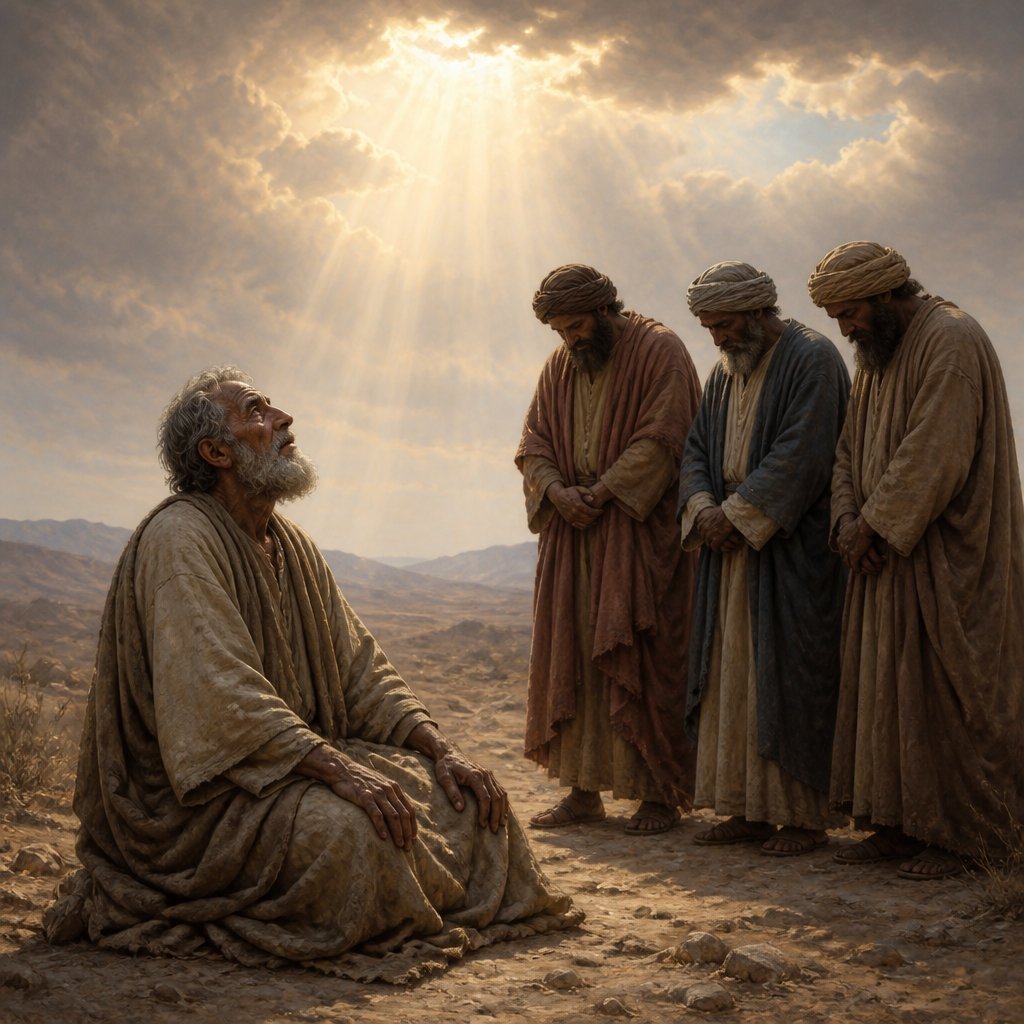
Job 42:7 (KJV) reads, "And it was so, that after the Lord had spoken these words unto Job, the Lord said to Eliphaz the Temanite, My wrath is kindled against thee, and against thy two friends: for ye have not spoken of me the thing that is right, as my servant Job hath."
This verse comes at the end of the book of Job, which is about a man named Job who experienced immense suffering and loss, despite being a righteous and blameless man. Throughout the book, Job and his friends engage in a series of debates about the nature of suffering, the justice of God, and the nature of wisdom. In this verse, God speaks directly to Eliphaz, one of Job's friends, expressing His anger at Eliphaz and the other two friends for not speaking what is right, unlike Job, who is considered His servant.
The context of this verse is significant in understanding its meaning. Throughout the book of Job, his friends – Eliphaz the Temanite, Bildad the Shuhite, and Zophar the Naamathite – seek to comfort Job by explaining that his suffering is a result of his sin. However, Job maintains his innocence, asserting that his suffering is undeserved and unjust. The book of Job addresses the problem of innocent suffering and raises questions about the nature of God's justice.
In the verse, God specifically singles out Eliphaz and his two friends, identifying their failure to speak what is right compared to Job. This indicates that their words were not an accurate reflection of God's truth or wisdom. This is a powerful statement, as it suggests that even well-intentioned attempts to understand and explain suffering can fall short of the truth. It highlights the limitations of human wisdom and understanding, and emphasizes the importance of seeking God's wisdom and truth.
One of the central themes of this verse is the nature of wisdom and the limits of human understanding. Throughout the book of Job, the characters grapple with the mystery of suffering and the ways of God. Job's friends, in their attempts to explain his suffering, rely on their understanding of divine justice, yet they ultimately fail to grasp the deeper truth of the situation. This verse serves as a reminder that human wisdom is limited and that true wisdom comes from God.
Another important theme in this verse is the idea of divine justice. God's rebuke of Eliphaz and his friends suggests that their words and actions were not in accordance with God's justice. This serves as a reminder that human attempts to understand and explain suffering must be aligned with God's divine justice. It also raises questions about the nature of suffering and the ways in which we perceive and respond to the suffering of others.
The symbolism in this verse is also noteworthy. The rebuke of Eliphaz and his friends serves as a symbol of the limitations of human understanding and the necessity of seeking God's truth. It also symbolizes the importance of humility and the recognition of our own limitations in the face of divine wisdom. This verse can be seen as a call to seek God's wisdom and truth in the midst of suffering, rather than relying solely on our own understanding.
In conclusion, Job 42:7 (KJV) holds significant meaning within the context of the book of Job. It serves as a reminder of the limitations of human wisdom, the importance of seeking God's truth, and the necessity of aligning with God's divine justice. This verse raises profound questions about the nature of suffering, the ways in which we seek to understand and explain it, and the role of divine wisdom in the face of human suffering. Ultimately, it calls us to humble ourselves before God, seeking His wisdom and truth in all circumstances.
Have questions about Job 42:7?
Dive deeper into this scripture with Bible Chat — an AI-powered tool for exploring God's Word through conversation. Ask questions, get context, and grow in your understanding of the Bible.
Get Our Apps


Job 42:7 Artwork

Job 42:7 - "¶ And it was so, that after the LORD had spoken these words unto Job, the LORD said to Eliphaz the Temanite, My wrath is kindled against thee, and against thy two friends: for ye have not spoken of me the thing that is right, as my servant Job hath."
"¶ And it was so, that after the LORD had spoken these words unto Job, the LORD said to Eliphaz the Temanite, My wrath is kindled against thee, and against thy two friends: for ye have not spoken of me the thing that is right, as my servant Job hath." - Job 42:7

Job 42:1 - "Then Job answered the LORD, and said,"

Job 42

Job 42:17 - "So Job died, being old and full of days."

job 42:5

"Then Job answered the LORD, and said," - Job 42:1

Job 42:10 - "And the LORD turned the captivity of Job, when he prayed for his friends: also the LORD gave Job twice as much as he had before."

Job 42:16 - "After this lived Job an hundred and forty years, and saw his sons, and his sons' sons, even four generations."

Job 42:15 - "And in all the land were no women found so fair as the daughters of Job: and their father gave them inheritance among their brethren."

Job 42:13 - "He had also seven sons and three daughters."

Job 42:6 - "Wherefore I abhor myself, and repent in dust and ashes."

"So Job died, being old and full of days." - Job 42:17

Job 42:9 - "So Eliphaz the Temanite and Bildad the Shuhite and Zophar the Naamathite went, and did according as the LORD commanded them: the LORD also accepted Job."

Psalm 42:7

Job 42:5 - "I have heard of thee by the hearing of the ear: but now mine eye seeth thee."

Job 42:14 - "And he called the name of the first, Jemima; and the name of the second, Kezia; and the name of the third, Keren-happuch."

Job 42:2 - "I know that thou canst do every thing, and that no thought can be withholden from thee."

Nehemiah 7:42 - "The children of Harim, a thousand and seventeen."

Job 42:4 - "Hear, I beseech thee, and I will speak: I will demand of thee, and declare thou unto me."

Job 42:12 - "So the LORD blessed the latter end of Job more than his beginning: for he had fourteen thousand sheep, and six thousand camels, and a thousand yoke of oxen, and a thousand she asses."

"He had also seven sons and three daughters." - Job 42:13

"Wherefore I abhor myself, and repent in dust and ashes." - Job 42:6

Job 42:8 - "Therefore take unto you now seven bullocks and seven rams, and go to my servant Job, and offer up for yourselves a burnt offering; and my servant Job shall pray for you: for him will I accept: lest I deal with you after your folly, in that ye have not spoken of me the thing which is right, like my servant Job."

"And the LORD turned the captivity of Job, when he prayed for his friends: also the LORD gave Job twice as much as he had before." - Job 42:10

Numbers 7:42 - "¶ On the sixth day Eliasaph the son of Deuel, prince of the children of Gad, offered:"

Job 42:3 - "Who is he that hideth counsel without knowledge? therefore have I uttered that I understood not; things too wonderful for me, which I knew not."

"The children of Harim, a thousand and seventeen." - Nehemiah 7:42

Jeremiah 42:7 - "¶ And it came to pass after ten days, that the word of the LORD came unto Jeremiah."

"And in all the land were no women found so fair as the daughters of Job: and their father gave them inheritance among their brethren." - Job 42:15